


Quick Specs
- Author: Jo Graham
- Type: Practical spirituality / devotional polytheism workbook
- Size/Quantity: 1 volume
- Best for: Modern polytheists, Hellenistic mythology study, devotional practice for solitary practitioners
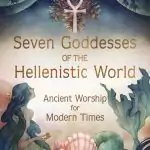
Seven Goddesses of the Hellenistic World: Who and Why
Jo Graham’s book covers seven goddesses who were venerated across a wide geographic and cultural range between roughly 320 BCE and 200 CE: Tyche (the Greek goddess of fortune, known to Romans as Fortuna), Isis (the Egyptian mother goddess who became one of the most widely worshiped deities in the ancient world), Athena (companion of heroes and goddess of wisdom), Atargatis (the Syrian mermaid goddess of the Great River), Epona (the Celtic horse goddess whose cult reached as far as Egypt), Aphrodite (queen of the sea and desire), and Cybele (the Phrygian goddess of death and rebirth). These selections are not arbitrary: Graham chose goddesses who crossed cultural borders repeatedly, attracting diverse worshipers rather than remaining confined to a single region or people.
The Hellenistic period, shaped by Alexander the Great’s campaigns and the subsequent blending of Greek, Egyptian, Near Eastern, and Persian religious traditions, produced a uniquely syncretic spiritual landscape. Deities traveled with merchants, soldiers, and slaves across the Mediterranean world, gaining new epithets and hybrid identities as they crossed borders. Understanding these goddesses in their Hellenistic context, rather than in the isolated Classical or purely Egyptian sense, reveals how ancient polytheism operated: pragmatically, relationally, and across cultures.
Workbook Structure and Practical Devotion
Graham structures each goddess’s chapter as a working sequence rather than purely informational reading. Practitioners encounter each goddess first through a story, then through guided journaling and contextual reading, then through a meditation designed to make the goddess present in a modern context, and finally through a rite suitable for a solitary practitioner or small group. The format reflects how ancient domestic worship functioned: through regular, small-scale devotion at home shrines rather than grand temple ceremonies. Graham suggests having an altar space and using libations and incense, grounding the work in historically attested practice.
This book belongs to a growing library of Hellenistic devotional resources alongside reconstructionist and revivalist works that treat ancient polytheism as a living practice rather than an academic subject. It’s well-suited for practitioners who have worked with Greek mythology at the surface level and want a firmer foundation in the ritual and relational dimensions of goddess veneration. Pair it with titles from my spellcraft and witchcraft books for a well-rounded library on magical practice and deity work.
How to Use Seven Goddesses of the Hellenistic World
Three approaches to getting the most from this workbook-style Hellenistic goddess guide.
- Read Sequentially by Goddess
Read each goddess chapter in sequence. Graham builds the narrative encounter before journaling and ritual, and the order matters: earlier chapters establish relational frameworks that make later goddess sections more meaningful.
- Set Up a Simple Devotional Altar
Graham recommends a basic altar space for libations and incense. A small bowl for water or wine, a candle, and a symbol of the goddess you are working with are sufficient. No elaborate equipment is needed to begin.
- Journal Between Chapters
Engage with the journaling prompts between the story and the rite rather than skipping them. The workbook format is intentional: journaling clarifies your existing relationship with each goddess before you enter the ritual section.
The Tarot Fellow Standard
I carry this book because the Hellenistic goddess space is underserved by practical workbooks. Most devotional polytheism titles focus on Norse or Celtic traditions, and the Greek material tends to split between academic myth retellings with no ritual dimension and modern Wiccan frameworks that flatten the historical context. Graham occupies a useful middle ground: the historical grounding is real, the seven goddesses are genuinely cross-cultural in their Hellenistic form, and the workbook format makes the material actionable for a practitioner rather than just readable. Find it alongside similar titles in my books and journals collection for broader comparative browsing.
Frequently Asked Questions
Jo Graham covers Tyche, Isis, Athena, Atargatis, Epona, Aphrodite, and Cybele. All seven crossed cultural borders widely during the Hellenistic era, earning devotees across Greek, Egyptian, Syrian, and Celtic-influenced regions of the ancient world.
Yes, though it assumes some curiosity about Hellenistic history. The workbook format, with stories, journaling prompts, meditations, and rites, makes it accessible to new practitioners while offering depth for those with prior background.
The Hellenistic period (323 to 31 BCE) followed Alexander’s campaigns and blended Greek, Egyptian, and Near Eastern traditions. Goddesses like Isis and Cybele gained wide international followings as spiritual practices crossed borders.
Yes. Graham writes the rites for solitary practitioners or small groups, using simple altar setups with libations and incense. No group or temple affiliation is needed to work through the goddess chapters and complete the devotional exercises.



Reviews
There are no reviews yet