

Quick Specs
- Brand: Ritual Athames (RA)
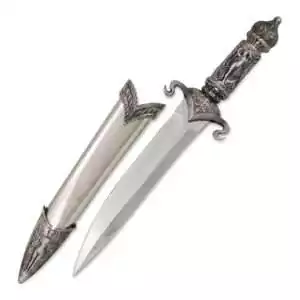
- Type: Sgian Dubh Scottish ritual athame with sheath
- Size/Quantity: 6 3/4 inches overall, 3 1/2 inch single-edged blade, black molded grip, black sheath
- Best for: Circle casting, energy direction, altar work, Scottish and Celtic pagan practice
The Sgian Dubh: A Blade with Deep Scottish Roots
The sgian dubh (Scottish Gaelic, pronounced skee-an doo) translates literally as “black knife,” and its history in the Scottish Highlands runs centuries deep. Traditionally worn tucked into the top of the kilt hose with only the hilt visible, it was the last remaining blade a guest was permitted to carry openly in a host’s home, all other weapons having been left at the door as a mark of peaceful intent. The name’s “black” referred not to blade color but to concealment, suggesting origins as a hidden blade worn beneath the armpit before Highland dress formalized into the tradition that portraits from the early nineteenth century regularly depicted.
This version features a single-edged blade, a black molded grip that keeps the piece lightweight and functional for ritual work, and a fitted black sheath. The overall length of 6 3/4 inches with a 3 1/2 inch blade places it firmly in the traditional compact size range of the historical sgian dubh, neither a full dagger nor a pocketknife, but something purposeful in between. Please note this item cannot be shipped to Massachusetts or California due to blade regulations in those states.
The Athame in Wiccan and Celtic Pagan Practice
An athame is a ritual knife, but it is emphatically not a cutting tool in most ceremonial and Wiccan traditions. The Wiccan athame, drawing from Gerald Gardner’s foundational texts and later from Doreen Valiente’s refinements, is used to direct energy, cast and close the ritual circle, invoke the elements, and inscribe symbols or sigils. It does not cut herbs, cord, or physical material in most traditions; that task belongs to the bolline, the white-handled knife. The athame’s edge is symbolic, not practical, representing will made manifest in the physical plane.
In Celtic and Scottish pagan paths, the blade carries elemental associations that vary by tradition. Many practitioners working within the Western Mystery Tradition associate the blade with the element of Fire and the direction South, connecting it to will, passion, and transformation. Others, particularly those in the Golden Dawn lineage, place the knife with Air and the East, linking it to intellect and the rational mind. A practitioner using a sgian dubh as their athame brings the additional layer of Scottish cultural provenance to the tool, connecting the blade to a specific geographical and historical tradition.
How to Use a Sgian Dubh Athame
An athame is used to direct energy and cast circles, not to cut physical materials. These steps outline standard ritual use across Wiccan and Celtic pagan traditions.
- Consecrate the Athame Before First Use
Before ritual use, cleanse and consecrate your sgian dubh. Common approaches include passing the blade through incense smoke, anointing the hilt with a consecrated oil, and charging it under moonlight while stating its purpose aloud.
- Cast and Close Your Circle with the Blade
Hold the athame in your dominant hand, blade pointing outward. Walk clockwise around your ritual space while projecting intent through the blade to cast your circle. To close, walk counterclockwise and draw the energy back inward.
- Store Separately from Mundane Blades
Keep your athame sheathed and separate from everyday knives. Many practitioners store it on or near the altar wrapped in cloth or leather. Treating it as a dedicated ritual object, handled only in practice, maintains its ceremonial function.
The Tarot Fellow Standard
I chose this sgian dubh because it brings genuine cultural specificity to the athame category. Most ritual knives sold in the metaphysical market are generic double-edged ceremonial blades with no particular cultural heritage; this one is rooted in a real Scottish tradition that gives Celtic and Highland-path practitioners a tool with actual provenance. The lightweight plastic grip and compact size also make it practical for practitioners who want a working ritual blade rather than a display piece. Browse my athame collection for additional blade options, and explore my ritual supplies for tools to build out a complete altar practice.
Frequently Asked Questions
A sgian dubh is a small single-edged Scottish Highland knife worn tucked into the kilt hose as part of formal Highland dress. Its name means black knife in Scottish Gaelic, referencing its origins as a concealed blade carried secretly.
Yes. Scottish and Celtic pagan practitioners often use a sgian dubh as their ritual athame for circle casting, energy direction, and elemental invocation. Like all athames, it is not used to cut physical objects in most traditions.
Traditions differ. Many Wiccan systems associate the athame with Fire and the South, connecting it to will and transformation. The Golden Dawn tradition links blades with Air and the East. Check your own tradition for the correct attribution.
No. This item cannot be shipped to Massachusetts or California due to blade length regulations in those states. If you are in either state, check local laws before ordering any fixed-blade knife from any retailer.




Reviews
There are no reviews yet