
Quick Specs
- Material: Natural shungite (Type II / Black Shungite)
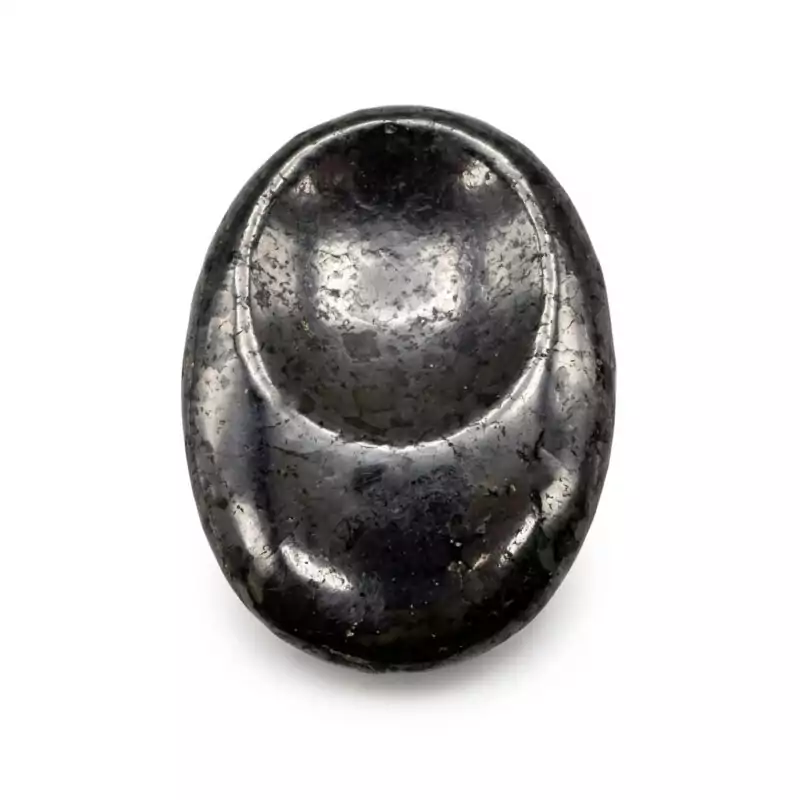
- Form: Smooth polished oval palm stone with thumb indent
- Origin: Karelia, Russia
- Size: 1.5″
Shungite: Karelian Carbon and the Grounding Tradition
Shungite is a non-crystalline carbon mineraloid found almost exclusively in the Shunga village region of Karelia, Russia, near Lake Onega. Geological dating places its formation at approximately two billion years old, making it one of the oldest carbon-based minerals accessible on Earth’s surface. What makes shungite mineralogically distinct is its fullerene content: hollow carbon-60 molecules that form naturally in the stone and were not confirmed to exist in nature until the 1990s, when the discovery of fullerenes in meteorites and minerals won the Nobel Prize in Chemistry in 1996. Russian healing traditions have worked with shungite since at least the seventeenth century, when Tsar Peter the Great established the Marcial Waters spa near Shunga, crediting the spring water, filtered through local shungite deposits, with restorative properties.
In contemporary crystal practice, shungite is strongly associated with the root chakra, Muladhara, and with protective, grounding, and purifying work. The matte black surface and notable weight of this polished palm stone give it a distinctive physical quality: cool to the touch, heavier than it looks, and smooth in a way that invites repetitive thumb-rubbing, which is precisely what worry stone practice is designed for. The tactile anchor of stone-in-palm is a well-documented technique for interrupting anxiety spirals and returning attention to the present moment.
Practical Applications in Crystal and Energy Work
Practitioners use shungite worry stones in several distinct ways. The most common is as a desk stone placed near electronic devices such as computers or phones during work hours, where the stone serves as both a tactile grounding object and a symbolic boundary between the practitioner and the constant connectivity demands of digital life. A second use is in meditation practice, held in the non-dominant hand at the root chakra level or placed on the mat near the base of the spine to anchor the lower body during breathwork. Shungite pairs particularly well with selenite, which many practitioners use to keep it cleansed between sessions.
How to Use the Shungite Worry Stone
Three ways to use the shungite worry stone in grounding practice and daily ritual work.
- Establish a daily grounding practice
Keep the shungite worry stone on your desk or workspace within reach. When you notice mental scatter, tension, or reactive urgency building during the day, pick up the stone and press your thumb into the smooth indent.
- Use in seated root chakra meditation
Hold the shungite palm stone in your left hand at the level of your lap, just below the navel. Close your eyes and breathe into the base of your body, visualizing the stone’s weight drawing excess mental energy downward into the earth below you.
- Cleanse and maintain the stone
Cleanse shungite in sunlight for a few hours, in dry earth for twenty-four hours, or on a selenite plate overnight. Avoid salt water soaking, which can mark the polished surface. Wipe with a dry cloth after handling to maintain the matte finish.
The Tarot Fellow Standard
I carry shungite worry stones for practitioners who need a grounding anchor they can actually use throughout the day without it looking out of place at a desk. The matte black surface is unassuming and the oval format fits any palm. Browse my worry and palm stones collection for shungite alongside other grounding and protective stones, and find complementary chakra tools in my chakra and meditation section.
Frequently Asked Questions
In crystal practice, shungite is valued primarily for its grounding and purifying associations, and for its particular affinity with spaces where electronic devices are present, a use distinct from the protective focus of tourmaline.
The oval palm stone with thumb indent invites repetitive tactile engagement. Stroking the smooth surface activates sensory feedback that interrupts rumination loops and redirects the nervous system toward immediate physical sensation.
The deposit is ancient, dating to approximately two billion years ago. Small amounts of shungite-like carbon materials exist elsewhere, but Karelian shungite is the primary source of the stone sold in the crystal market worldwide.
Shungite resonates primarily with the root chakra, Muladhara, at the base of the spine. It anchors the lower energy centers during meditation, especially when a session drifts into upper-chakra states without an earth connection.

Reviews
There are no reviews yet