
Quick Specs
- Stone: Amethyst (purple quartz, silicon dioxide)
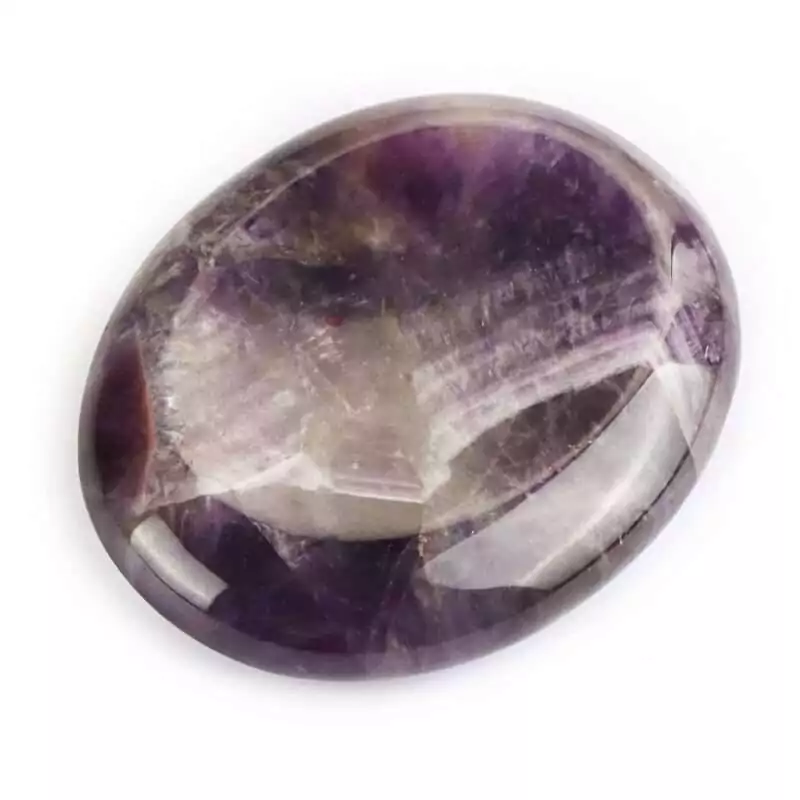
- Form: Polished oval worry stone with thumb indentation
- Size: 1″ to 1.75″
- Color: Pale lavender to deep violet purple
- Chakra: Third Eye, Crown
- Best for: Calming anxious thoughts, sobriety support, spiritual protection, meditation deepening
Amethyst History: From Greek Sobriety Lore to Crown Chakra Work
Amethyst is a variety of quartz colored purple by iron impurities within the silicon dioxide crystal lattice, with the intensity of color ranging from pale lavender to deep violet depending on the concentration and arrangement of those trace elements. The name derives from the ancient Greek word amethystos, meaning not intoxicated, and the mythology behind it is direct: the Greeks believed that drinking from amethyst vessels or wearing the stone would prevent drunkenness. Medieval European jewelers mounted amethyst in the rings of Catholic bishops and cardinals for the same reason, associating the purple stone with sobriety, clarity, and spiritual authority rather than worldly indulgence.
That ancient association between amethyst and freedom from addiction has carried forward intact into contemporary crystal healing, where it is consistently cited as the stone of sobriety. It is frequently recommended to those working through addiction recovery programs as a tactile reminder of their commitment to clarity and the spiritual principles of those programs. The connection is symbolic and cultural rather than pharmacological, but the symbolic power of having a physical object that embodies an intention is well-documented in behavioral psychology, where it supports commitment through what researchers call concrete representation.
Third Eye and Crown Chakra: Calming the Overactive Mind
In contemporary chakra frameworks, amethyst is associated primarily with the third eye and crown chakras. The third eye governs intuition, inner perception, and the ability to recognize patterns at a level deeper than rational thought. The crown connects to higher consciousness and spiritual development broadly. Working with amethyst in meditation is understood to quiet the relentless chatter of the analytical mind, making it easier to access still, receptive states. Crystal workers frequently describe the stone’s effect as stilling rather than stimulating, a quality that makes it particularly suited to evening practice and pre-sleep ritual.
As a worry stone, amethyst brings both its calming tradition and its spiritual-protection reputation to a daily-carry format. The thumb groove provides the tactile grounding mechanism common to all worry stones, while the purple color provides instant visual identification that makes it easy to distinguish from other stones in a collection or pocket. Amethyst is also one of the more widely recognized crystals to the general public, making it an accessible entry point to the broader practice of working with stones intentionally. Browse my anxiety and stress relief crystals for other stones suited to calming work.
How to Use Amethyst Worry Stone
Three uses for an amethyst worry stone in daily calming practice, spiritual protection, and sobriety support.
- Calming Hold During Anxious Moments
When anxious thoughts spiral, take out the amethyst stone, hold it between thumb and index finger, and rub the groove slowly while exhaling long and deliberately. Amethyst’s long calming tradition reinforces this portable anxiety grounding response.
- Pre-Sleep Crown Chakra Placement
In the final minutes before sleep, hold the amethyst stone against your sternum or near your head on the pillow. Breathe slowly and release the day’s tension. Amethyst is associated with quieting overactive thoughts and easing the shift into rest.
- Sobriety and Intention Anchor
Hold the amethyst stone and restate your chosen intention, clarity, sobriety, or peace, each morning. Carry it through the day. When distraction arises, touching the stone recalls the intention set during that earlier calm and deliberate moment.
The Tarot Fellow Standard
I stock amethyst worry stones because amethyst is the most culturally loaded stone in the worry-stone lineup. Its history across Greek mythology, medieval Christianity, and modern recovery culture gives it a weight of symbolic meaning that most other polished stones simply do not carry. That history matters to practitioners who want an object that connects them to something larger than the present moment of stress. The polished oval form lets the color depth show through the stone’s surface in a way that tumbled stones do not always reveal, and the thumb groove puts the tactile grounding mechanism exactly where it needs to be. For a broader look at spiritual protection and cleansing supplies, explore my protection and cleansing collection.
Frequently Asked Questions
The link comes from ancient Greece, where amethystos meant not intoxicated and the stone was believed to prevent drunkenness. Medieval clergy wore it for this reason. Today it is used as a sobriety symbol in recovery work and commitment rituals.
Amethyst is associated with the third eye chakra, governing intuition, and the crown chakra, connected to higher consciousness. Both associations make it useful for meditation, spiritual protection, and quieting an overactive analytical mind.
Crystal healing traditions associate amethyst with calming anxious thoughts and easing the shift into sleep. It is frequently placed near the pillow or held before bed. The worry-stone format also provides genuine tactile grounding on its own terms.
Natural amethyst ranges from pale lavender to deep violet and often shows color zoning, uneven purple distribution within the stone. Uniformly vivid stones may be dyed or synthetic. Natural amethyst feels cool and resists scratching by a coin.



Reviews
There are no reviews yet