

Quick Specs
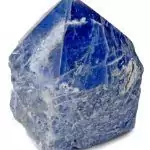
- Type: Top-polished crystal point, single specimen
- Size: 2.5″
- Size/Quantity: One sodalite generator, weight approximately 1.21 lbs
- Best for: Throat chakra work, communication, mental clarity, altar display
Sodalite: Mineral Identity and Metaphysical Character
Sodalite is a sodium aluminum silicate chloride mineral with a rich royal-blue to blue-grey coloration and distinctive white calcite veining running through the matrix. It was first described mineralogically from specimens found in Greenland in 1811 and has since been quarried extensively in Brazil, Canada, Namibia, and India for both decorative and metaphysical use. Sodalite is a tectosilicate, meaning its silicon-oxygen tetrahedra form a continuous three-dimensional network, which gives it a dense, smooth feel when polished. The white veining is calcite that formed alongside the sodalite in the host rock, and it is a natural identifying feature rather than an impurity.
Sodalite is frequently confused with lapis lazuli because both stones share deep-blue tones and white mineral inclusions. The distinction matters for practitioners making informed choices: lapis lazuli contains pyrite (golden flecks) and is a metamorphic rock rather than a single mineral species. Sodalite is typically lighter and more uniformly blue, without pyrite. In crystal healing terms, sodalite is more specifically associated with rational thought, mental clarity, and the calming of emotional reactivity, while lapis carries stronger associations with wisdom, truth, and third eye activation.
The Top-Polished Point Form and Its Uses
A top-polished crystal point has a rough natural base and sides with only the apex facet ground and polished smooth. This hybrid form preserves the raw matrix character that many practitioners prefer for grounding and elemental connection while adding the directing capability of a polished point. The polished apex focuses energy upward through the point and into the surrounding environment, making it function as a generator in crystal grid work. It is also a more visually striking altar piece than either a fully polished sphere or a fully rough specimen, combining the textures of both in a single tower form. Explore my crystal points and generators collection to see related tower and generator forms.
Practitioners working with the throat and third eye chakras together often position this sodalite point between the two centers in a body layout, angled toward the head. Its weight and density provide a grounding physical presence that helps anchor a session, preventing the floaty disconnection that lighter stones sometimes produce during extended meditation.
How to Use a Sodalite Top Polished Point
Three practical approaches to working with sodalite generator energy in ritual and healing.
- Direct Energy on Your Altar
Place the sodalite point with its polished apex facing upward on your altar or workspace. Its directing tip channels clarifying energy through the space, supporting focused thought during journaling, study, or reading sessions.
- Grounding Before a Presentation
Hold the sodalite point at your throat during a speaking or vocal practice exercise. Breathe steadily and notice how the cool mineral weight in the palm grounds nervous energy before presentations or difficult conversations.
- Chakra Layout Placement
Position the point at the throat chakra in a crystal layout, with the polished apex aiming toward the chin. Leave it in place for ten to fifteen minutes while doing controlled breathing to support honest self-expression.
The Tarot Fellow Standard
I carry this sodalite point because the top-polished form is genuinely useful, not just visually appealing. The rough base grounds the piece on an altar without a stand while the polished apex directs its energy clearly. At roughly 1.21 lbs, it has enough presence to anchor a grid or hold its own as a desk piece in a workspace where mental clarity matters. Sodalite is an honest stone: dependable, consistently beautiful, and not inflated in spiritual claims the way some trend-driven crystals can be. For practitioners building a complete communication and clarity toolkit, my full crystals collection includes sodalite in tumbled, raw, and carved forms.
Frequently Asked Questions
A top-polished point has a natural rough base and sides with only the apex facet ground and polished smooth. This hybrid form combines raw specimen character with a directing point for energy focus and altar display.
Sodalite is a rich royal-blue sodium aluminum silicate mineral with white calcite veining. It is not lapis lazuli, though both stones share deep-blue tones. Sodalite typically shows lighter, more uniform blue with white marbling.
Sodalite is closely associated with the throat and third eye chakras. Practitioners work with it for honest communication, rational thought, mental clarity, and calming emotional reactivity in heated or high-pressure situations.
Sodalite pairs naturally with lapis lazuli for deep truth-seeking meditations, with clear quartz to amplify clarity, and with blue lace agate for gentle vocal confidence. Place them together in a communication-focused altar layout.


Reviews
There are no reviews yet