
Quick Specs
- Author: Alison Davies
- Format: Hardcover
- Pages: 224
- Dimensions: 6.69 x 9.06 in
- Deck Reference: Rider-Waite-Smith based
- Publisher / Manufacturer: Leaping Hare Press
- Weight: 1.9 lb
78 Cards, 78 Stories, One Long Walk with the Fool
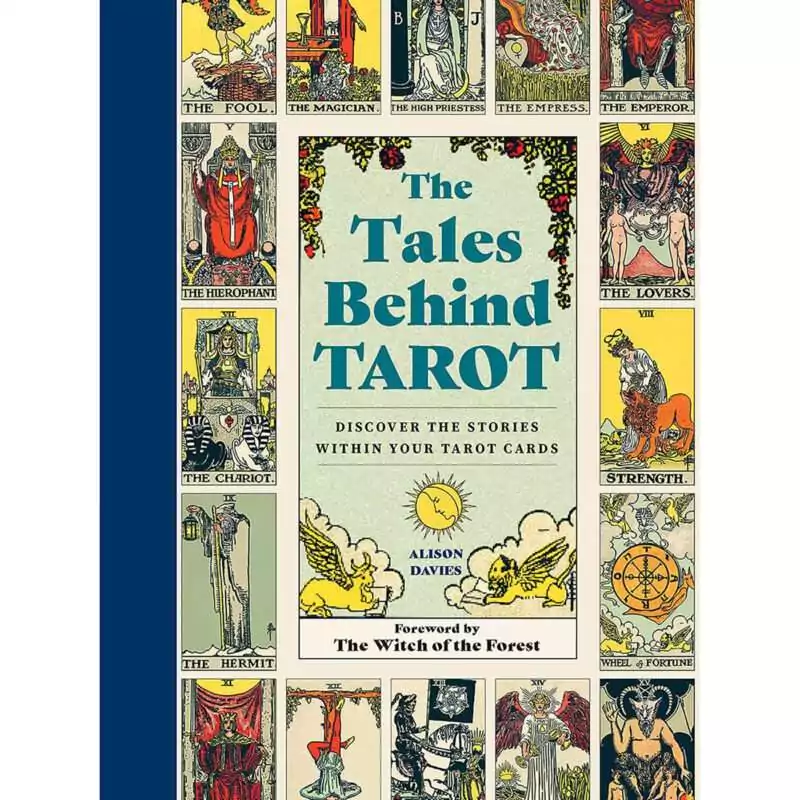
Alison Davies teaches through narrative for a living. She runs workshops across UK universities on how storytelling supports learning, healing, and early childhood development, and The Tales Behind Tarot applies that same instinct to the deck. Instead of handing you a keyword list for each card, she gives every one of the 78 cards in the Rider-Waite-Smith tradition its own short story, so the meaning arrives the way memory actually works, through narrative rather than definition.
The book follows the Fool’s journey through all twenty-two cards of the Major Arcana as a connected arc, then moves into the four suits of the Minor Arcana, where each suit gets its own thread, such as three sisters rising to power across the Suit of Pentacles or the way a single idea catches fire and spreads through the Suit of Wands. That structure means you’re not just learning what the Ten of Cups means in isolation. You’re watching how it fits into a larger story about family and fulfillment that the Cups suit tells across all fourteen of its cards.
At 224 pages, this hardcover is substantial enough to sit as a permanent reference on a shelf, not a slim pamphlet you’ll outgrow in a month. The stories are written to work whether tarot is completely new to you or you’ve been reading for years and want a fresh way back into cards you thought you already knew.
Because the stories are built around the Rider-Waite-Smith deck’s imagery, the details Davies references, a particular gesture, a background object, a facial expression, line up directly with the most widely used tarot deck on the market. If you’re reading with a Rider-Waite-Smith deck or one of its many modern variants, the symbolism in the stories should map onto your cards without much translation. If your deck departs further from that classic imagery, the underlying arc of each story still holds, even if a specific visual detail doesn’t match exactly.
What I like about this book as a teaching tool is that it solves the problem most beginners hit first, which is that keyword lists don’t stick. You can memorize that the Eight of Swords means feeling trapped, but a story about how that trap got built and what it takes to walk out of it is a lot harder to forget. Experienced readers get something out of it too, since even a card you’ve read hundreds of times can shift when you see it through someone else’s narrative lens.
I keep this on the shelf as a companion piece rather than a standalone method. Read it alongside your own deck, whichever one you use, and treat the stories as one more layer of meaning to draw on during a reading rather than the only lens available to you.
Practical Ritual Applications
Read this one card at a time, alongside whatever deck you already own and use regularly. Pull a card as you normally would, then look up its story in the book before you interpret the spread. The narrative gives you context for the keyword you already know, which is especially useful when a reading feels flat or when you keep landing on a card whose meaning hasn’t quite clicked yet.
It also works well read straight through, front to back, before you ever pick up a deck. Following the Fool’s full journey across the Major Arcana in order gives you the throughline that a lot of beginner references skip, since most teaching methods treat each card as its own island.
For more ways to build out a reading practice, browse the shop’s tarot and divination books, and if you’re still working through the fundamentals, the books for beginners collection has more entry points.
How to Read Tarot Through Story with This Book
This is one way to fold the stories into a reading practice you already have.
This is one way to fold the stories into a reading practice you already have.
- Read the Major Arcana Straight Through First
Start at the beginning and read the Fool’s journey across all twenty-two Major Arcana stories in order, even before you touch a deck. This gives you the connected arc that most keyword-based tarot books skip, since the Major Arcana was written here as one continuous story rather than twenty-two separate entries. Once you know how the Fool moves from card to card, individual Major Arcana pulls in a real reading will carry more weight, because you’ll recognize where that card sits in the larger arc instead of reading it alone.
- Pair Each Daily Draw with Its Story
When you pull your regular daily card, look up its story in the book before you write down your interpretation. Read the story once for the plot, then again while holding your current situation in mind, and notice which details in the story actually speak to what’s going on for you right now. This is slower than glancing at a keyword list, but it builds a much deeper association between the card and its meaning, one that holds up even when you’re reading without the book in front of you.
- Use the Suit Arcs to Learn the Minor Arcana
Once you’re comfortable with the Major Arcana, read through one suit’s full story arc at a time rather than jumping between suits. Each suit tells its own connected story across all fourteen cards, so reading Wands together, then Cups, then Swords, then Pentacles, helps you see how the numbered cards build on each other instead of memorizing them as unrelated entries. This is usually where the book saves the most time, since the Minor Arcana’s forty pip cards are the part most beginners struggle to retain.
Tarot Fellow Standard
I keep The Tales Behind Tarot near the register because it answers the question I hear most from new readers, which is why a keyword list never actually sticks. Alison Davies teaches through story for a living, and she brings that skill directly to the deck here, walking the Fool through the Major Arcana and giving each suit its own arc in the Minor Arcana. I recommend it to beginners who’ve bounced off drier references, and to longtime readers who want a card they thought they knew to feel new again.
Frequently Asked Questions
Yes. Alison Davies bases the book’s 78 stories on the Rider-Waite-Smith deck’s imagery and symbolism, following its established figures, colors, and background details closely. If you read with a Rider-Waite-Smith deck or one of its many modern variants, the visual details in each story should line up closely with your own cards. Decks with very different artwork can still use the underlying story arcs, though specific visual references, a gesture, a background object, may not match exactly card for card.
It’s written to work for both beginners and experienced readers at once. New readers get card meanings delivered as memorable, connected stories instead of dry keyword lists to memorize, which tends to stick better than rote repetition, and experienced readers get a fresh narrative lens on cards they’ve already been reading for years, often noticing details in the Rider-Waite-Smith imagery they’d previously skipped past.
This hardcover edition runs 224 pages, covering all 78 tarot cards through the Fool’s journey across the twenty-two Major Arcana cards and a connected story arc for each of the four Minor Arcana suits, Wands, Cups, Swords, and Pentacles, giving every card its own place in a larger narrative rather than treating each one as an isolated entry you have to memorize on its own.
No. You can read it cover to cover as a standalone book of tarot-inspired stories without ever laying out a spread. That said, it’s designed to work best alongside a physical deck, since each story is meant to deepen a card you’re actually pulling and interpreting during your own readings, not just to be read as a piece of fiction on its own.



Reviews
There are no reviews yet