
Quick Specs
- Brand: Weiser
- Author: Jenna Matlin
- Subtitle: A Chthonic Journey of Death, Mediumship & the Art of Guiding Souls
- Format: Paperback, 272 pages
- Dimensions: 6 x 9 in
- ISBN-13: 9781578639304
A Descent Through the Major Arcana and Back
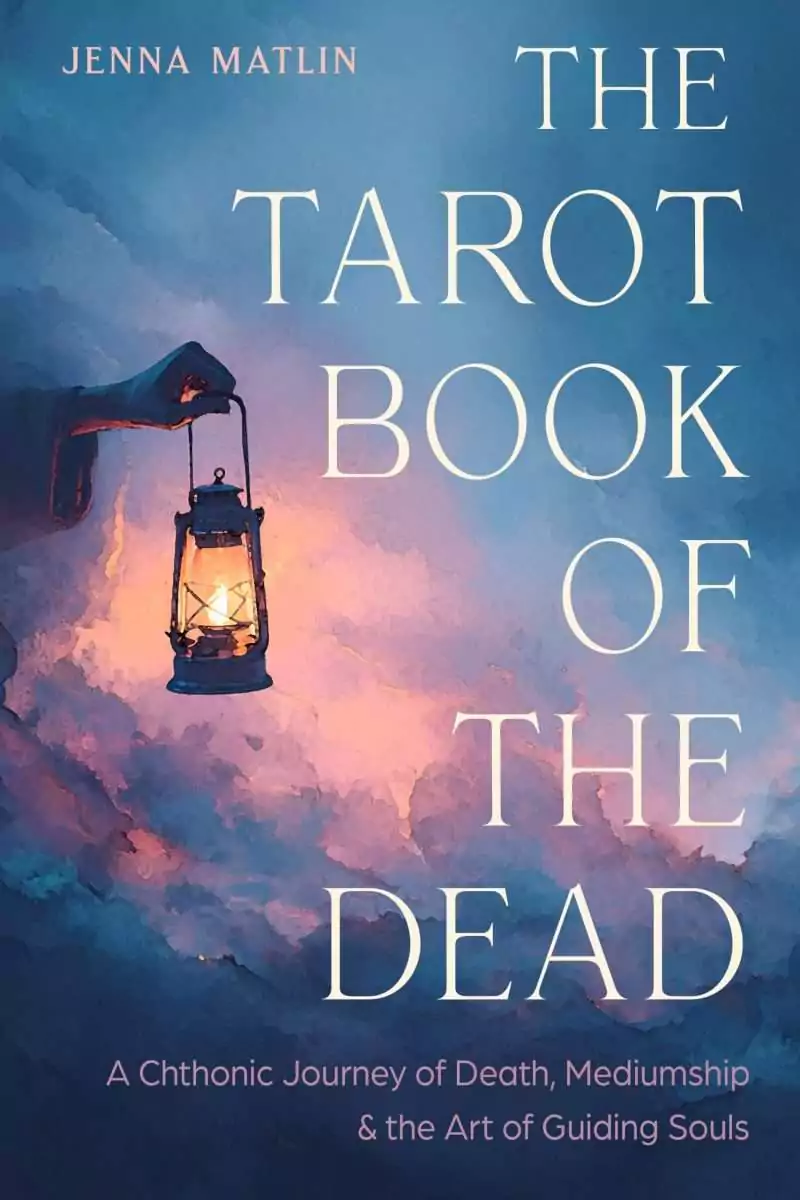
The Tarot Book of the Dead is a guide to Tarot mediumship, grief work and psychopomp practice. The publisher presents it as a chthonic, or underworld, journey in four stages: a descent into the Underworld, a trial in its depths, an ascent with wisdom, and a return to the living world. Three themes run through it: the dying, the dead and the grieving. Matlin describes it as a book that, like its namesakes, the Egyptian and Tibetan Books of the Dead, guides you to death and the afterlife and back. The Major Arcana serve as gatekeepers along the way. Each card offers an invitation, a lesson, a challenge and permission to continue to the next gatekeeper, so the book asks you to do the work as well as read it. The publisher calls it an initiatory process and a hands-on guide for deepening your Tarot practice and your relationship with death. You can use it for personal work, or carry it into work that touches death: the publisher names death midwives and doulas, grief workers, hospice caregivers and mediums. The cover shows a hand holding a lit lantern against a blue and pink sky.
Jenna Matlin holds an MS in organizational psychology and a BA in anthropology, trained as an end-of-life doula through INELDA, and has kept a full-time Tarot practice since 2012, which the publisher describes as known for its highly intuitive and innovative techniques. The book rests on her premise that Tarot, in the form it takes today, emerged in Europe after the ravages of the Black Death, and it sets out to return the cards to what she presents as their original purpose. Nancy Antenucci, author of Psychic Tarot, says the historical overview traces the deck’s characters and imagery to the danse macabre of the 1400s. That is a late-medieval theme in art and verse in which Death leads people from every rank of society toward the grave, and its earliest known example is a mural painted in a Paris cemetery in 1424 and 1425. Mary K. Greer, author of Essence of Tarot, calls the book a training for readers who want to learn mediumship with Tarot. Chris-Anne, author of Tarot for Light Seers, calls it well researched, and Theresa Reed, author of The Cards You’re Dealt, singles out the sample readings. Publishers Weekly included the book in a February 2026 roundup of new books and decks about dealing with death.
Practical Ritual Applications
Keep your deck beside you while you read. Each Major Arcana gatekeeper sets a challenge, and a deck you know well, perhaps from my Tarot decks collection, keeps your attention on the work. Take the stages in order and read a few gatekeepers at a time, with a notebook open for what each challenge raises. Ethony Dawn, author of Become an Exceptional Tarot Reader, calls it essential reading for anyone who provides Tarot mediumship services. If you read for others, the book’s guidance for people in death-related fields can inform how you sit with a client who is grieving. If you’re reading for personal work, you can sort your notebook under the three themes as you go. A Tarot study circle can take one stage per meeting and compare notes on the challenges.
How to Work Through the Book’s Four Stages
Use this sequence to take the descent, the trial, the ascent and the return at a pace you can sustain.
- Begin the Descent With Your Deck and a Notebook
Start with the opening stage, the descent into the Underworld, and set aside a quiet hour for it. Read the first gatekeepers slowly, one at a time, and let each card's lesson settle before you reach for the next. Keep your deck and a notebook within reach, and stop for the day whenever you've had enough.
- Meet Each Gatekeeper in Order
Treat every Major Arcana card as a stop on the route. Read its invitation, take in the lesson, and then do the challenge before you turn the page, since the card's permission to continue comes last. Write a few lines about what came up. If a challenge stirs up grief, rest there and return when you're ready.
- Return to the Living World With Your Notes
The journey ends with a return to the living world, changed by what you've met. Read back through your notebook and decide where the practice goes next: your own Tarot readings, time with someone who is grieving, or work alongside the dying. Mark the passages you expect to revisit, so the book stays useful after the first read-through.
The Tarot Fellow Standard
I stock The Tarot Book of the Dead because it gives Tarot readers a structured, card-by-card way into death, grief and mediumship. It sits with my Tarot and divination books, alongside other titles for readers who want to go deeper with the cards. The subject matter is tender, so read at your own pace and put the book down whenever you need a break. It is a spiritual and divinatory guide, and it does not replace licensed grief counseling or medical or legal advice. If a loss feels heavy, reach out to a licensed counselor or your doctor.
Frequently Asked Questions
A psychopomp is a creature, spirit or deity whose role is to escort the newly dead to the afterlife. The word comes from the Greek for guide of souls, and Hermes, Hekate and Anubis are among the figures named as psychopomps in myth. The book's subtitle, the Art of Guiding Souls, points to this role, and Publishers Weekly notes that Matlin writes that readers can join their ranks, too.
Mediumship is the practice of mediating communication between the living and the spirits of the dead, and Tarot mediumship uses the cards as the channel. Matlin believes a Tarot deck is a naturally mediumistic tool, an interface between realms, and The Tarot Podcast describes her book as a framework anyone can use to communicate with spirit, psychically gifted or not.
A death doula, also called an end-of-life doula, is a non-medical companion who supports a dying person and their family, much as a birth doula supports childbirth. The work can include end-of-life planning, emotional and spiritual support, sitting vigil at the bedside, and help with funeral or memorial arrangements. Training varies, since no single body governs the role; INELDA, the organization behind Matlin's training, is one provider.
Tarot guides read the Death card, number XIII in the Major Arcana, as an ending and a transformation. Most describe it as a symbol of change, and Reed writes that the card by itself doesn't mean your number is up. Antenucci describes Matlin's book as a pilgrimage through the Major Arcana with Death as its narrator.

Reviews
There are no reviews yet