
Quick Specs
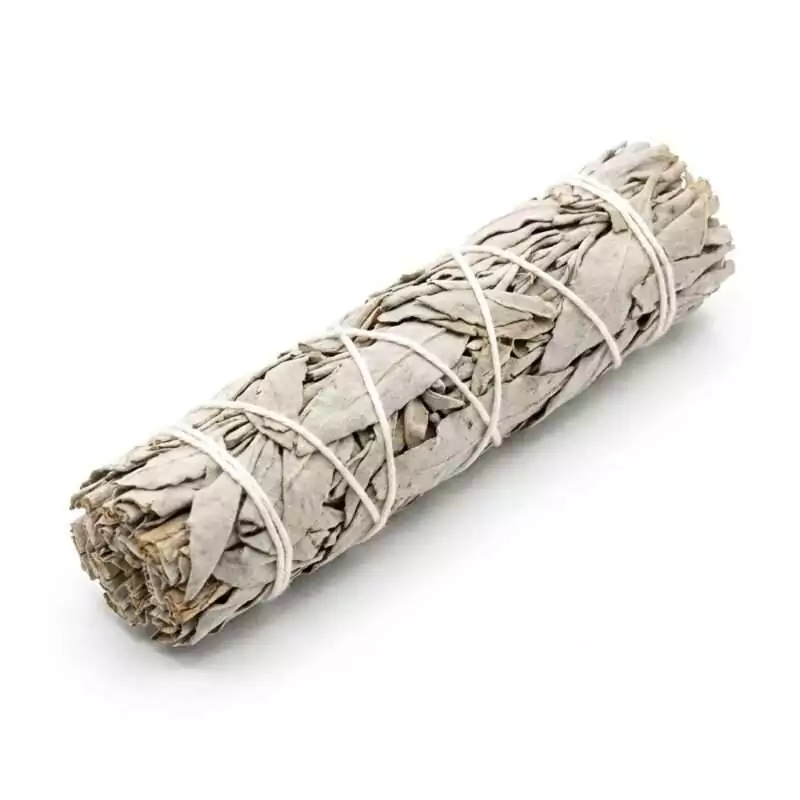
- Plant: Salvia apiana (white sage)
- Length: 5-6 inches
- Diameter: approximately 1 inch
- Binding: natural cotton twine
- Form: dried leaf bundle, hand-wrapped
- Burn time: approximately 20-40 minutes (partial burns extend life)
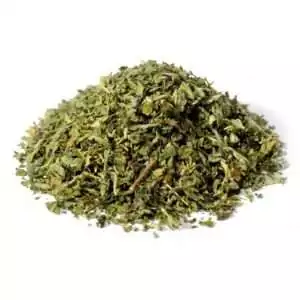
- Color: silvery-green to pale grey when dried
The Deepest Smoke in the Store
Salvia apiana grows nowhere else on earth except the coastal sage scrub of Southern California and northern Baja California. That narrow strip of habitat — wedged between the Pacific and the inland deserts, shaped by drought and salt air — produced a plant unlike any other sage in the genus. I want to be specific about its chemistry, because most product pages gloss over it: white sage’s essential oil is dominated by 1,8-cineole (eucalyptol), camphor, and alpha- and beta-pinene. Notably, unlike common garden sage (Salvia officinalis), S. apiana does not contain thujone — the neurotoxic compound that limits how much culinary sage you should burn in an enclosed space. White sage’s aromatic profile is cleaner for extended use, which is part of why it became the smudging plant of choice in its home region. (Scientific Reports, 2023)
The Chumash, Cahuilla, and Kumeyaay peoples have worked with this plant for thousands of generations. It appeared in coming-of-age ceremonies, in hunters’ preparations before a hunt, as medicine, as food (the seeds are nutritious and were ground into flour), and as gift — bundles presented as offerings between communities. The practice of burning it to carry prayers and clear a space is sacred, not decorative. I say that not to tell you how to feel about your practice, but because the commercialization of white sage over the past two decades has caused genuine ecological harm. Metric tons of white sage are poached annually from public lands in Southern California; the California Native Plant Society estimates 50% of white sage populations have already been lost to urbanization, and poaching is compounding that loss in the surviving habitat. (California Native Plant Society) (Cal State Long Beach)
On the science side: a 2007 study published in the Journal of Ethnopharmacology found that burning medicinal herbs in a closed room reduced airborne bacterial counts by over 94% within one hour, with the cleared-air effect persisting for 24 hours — and certain pathogenic bacteria remaining absent 30 days later in an open room. (Nautiyal et al., PubMed 17913417) The study used a mixed-herb Indian oblation blend, not white sage alone, so I will not overclaim. What it does confirm is that aromatic plant smoke has measurable antimicrobial properties — consistent with the long ethnopharmacological record across cultures worldwide. A 5-6 inch stick is enough material to work a mid-sized room thoroughly without burning through your whole supply in one session. It is the practical size: substantial enough to hold comfortably, small enough to extinguish and reuse across multiple practices.
How to Use a White Sage Smudge Stick
A straightforward lighting and use sequence for a white sage smudge stick.
- Light and establish the ember
Hold the stick at the unbound end. Light the tip, let it flame for several seconds, then blow it out. A thick white smoke should rise steadily.
- Move through your space
Move the smoldering stick around your space, object, or body. Work from low to high or corner to corner. Let the smoke reach every area you want cleared.
- Extinguish and store safely
Rest the stick in a fireproof dish or abalone shell. It will self-extinguish. Store it in a cool, dry place once fully cool to the touch.
Tarot Fellow Standard
White sage sourcing is a real issue, and I take it seriously. I stock these through a supplier whose consistency I have tested across multiple orders — the bundles arrive uniformly wrapped, the leaves are fully dried with no mold or damp spots, and the scent holds the characteristic sharp, resinous quality of true Salvia apiana. I cannot tell you the name of every farm that grew this plant, and any retailer claiming to trace every bundle to a specific plot is likely overstating their knowledge of the supply chain. What I can tell you: I do not stock any white sage that arrives with green or damp leaves, loose binding, or an off smell — those are the signs of hastily harvested, improperly dried material, often the result of poaching. If something comes in that does not meet that bar, it does not go on the shelf.
One practical note: white sage smoke is dense and assertive. In a small room with no ventilation it can become overwhelming quickly. Start with a shorter burn — get the stick going, make one pass, then let it rest. You do not need to reduce the room to a fog. The point of smudging is intentional presence, not saturation. And if you are new to white sage and want to explore other smoke-cleansing options alongside it, browse our full white sage smudge stick collection or explore other herbs and tools in our smudge sticks and palo santo section.
Frequently Asked Questions
A stick this size burns for roughly 20 to 40 minutes depending on how fully you light it. Partial burns are fine – press the tip into sand or soil to extinguish and reuse.
Salvia apiana does not contain thujone, the compound that makes common sage (S. officinalis) unsuitable for long burns. The volatiles in white sage are primarily 1,8-cineole and camphor.
Opening a window is a personal choice. A small crack lets smoke and anything suspended in it exit the space. In a sealed room, smoke can become heavy and trigger smoke alarms.
That is a cultural label. Smoke cleansing with dried herbs exists across many traditions worldwide. If you are outside a Chumash, Cahuilla, or Kumeyaay lineage, calling your practice smoke cleansing is more accurate and respectful.

1 review for White Sage Smudge Stick — 5–6 Inch Salvia Apiana for Cleansing