

Quick Specs
- Size: Approximately 1 1/2 inches
- Type: Druzy Cabochon (teardrop shape)
- Material: Natural amethyst (silicon dioxide, SiO2)
- Origin: Uruguay
- Best For: Wire wrapping, bezel setting, pendant making, altar display
A Crystal Surface Worth Noticing
Amethyst is a variety of quartz (silicon dioxide, SiO2) colored by trace amounts of iron and natural irradiation within the host rock. It ranges from pale lilac to deep grape-purple depending on how those conditions played out in the original geode. These particular pieces come from Uruguay, a country that’s been producing some of the world’s most richly colored amethyst geodes for decades. The specific geology there, volcanic basalt cavities, creates unusually dense crystal formations. What you’re looking at here is the result of millions of years of that process in a teardrop-shaped, hand-cut piece.
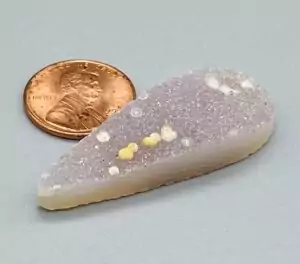
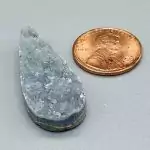
A druzy cabochon is different from a typical polished stone. The base is flat and shaped, but the face isn’t polished smooth. Instead, it keeps the natural crust of small crystals that formed on the inside of the geode cavity. That crust is called druse, and it gives this piece its signature sparkle and texture. Each cabochon is cut from a different section of amethyst, so you might receive something with deep violet coverage, lighter lavender tones, or a mix. The crystal density and pattern on the face will vary from piece to piece. That variability isn’t a flaw; it’s what makes each one genuinely one-of-a-kind.
Wire wrappers and jewelry makers appreciate this shape because the flat base provides a stable foundation for bezel settings and wirework wraps. The teardrop profile gives finished pendants a clean, elongated silhouette. I carry this alongside other geodes, clusters, and druse pieces because the quality on these Uruguayan specimens is consistently worth it, and the druzy surface is something you can’t really replicate with a standard tumbled stone. If you’re looking to pair this with a finished piece, browse my crystal and gemstone pendants for inspiration on settings and styles.
How to Use Your Amethyst Druse Cabochon
Three steps to assess, prepare, and place your amethyst druse cabochon.
- Choose Your Setting or Display Spot
Hold the cabochon face-up under good light so you can see the full druse surface. Check crystal coverage and color depth. Pieces vary considerably, so take a moment to appreciate what makes yours unique before deciding how to use it.
- Prepare for Wire Wrapping or Setting
Place the cabochon flat-side down on a soft cloth. Measure the width at the widest point of the teardrop before choosing wire gauge or bezel size. The flat base sits flush, which keeps it steady for pendants or ring settings.
- Set an Intention and Position It
Hold the piece in both hands, close your eyes, and take three slow breaths. State your intention quietly or aloud. Then place it on your altar, in a display case, or in a finished jewelry setting. It catches light well from any angle.
The Tarot Fellow Standard
I stock these Uruguayan amethyst druzy cabochons because the source is consistent about quality control. The pieces arrive with genuine druse coverage, not just surface dusting, and the teardrop shapes are clean cuts. I’ve handled enough cabochons to know when something is worth carrying, and these earn their place in the inventory on merit. The variability in color and coverage is real, as the product description states clearly, so expect something unique rather than a replica of any image you’ve seen.
One practical note: the small crystals on the druse face are fragile. Don’t store these loose in a bag with other hard stones. Wrap them in a soft cloth or keep them in a padded box if they’re not going straight into a setting. The face sparkles precisely because those crystals are tiny and delicate, and rough handling will dull them over time.
Frequently Asked Questions
Druse is a crust of small crystals lining a surface or cavity. On this cabochon, the face of the teardrop is covered in tiny amethyst crystals rather than polished smooth. The result is a sparkly, textured surface that’s entirely natural.
No, and that’s part of the appeal. Each piece is cut from its own section of amethyst geode, so crystal coverage, color, and formation all vary. You might get deep violet, soft lavender, or a mix. No two pieces are exactly alike.
Yes. The flat base sits stable and makes it straightforward to wrap or set. The teardrop shape works with standard wirework patterns and most bezel templates. Handle the crystal face gently so you don’t dislodge surface crystals while wrapping.
These are sourced from Uruguay, known for producing amethyst with particularly rich, deep color. Uruguayan geodes tend to have dense, well-formed crystals, which is why I stock them. That quality shows up in the druse surface on each piece.



Reviews
There are no reviews yet