


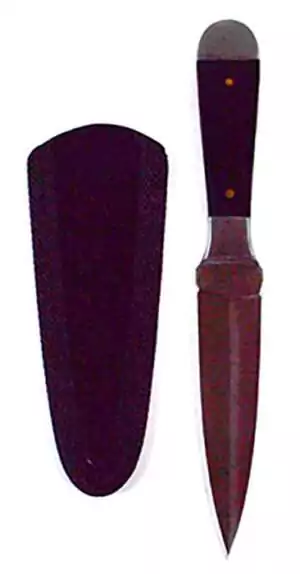
Quick Specs
- Type: Bollock Athame, Wood Handle
- Size: 12 inches overall length
- Best for: Wiccan ritual, spellcasting, altar work, energy direction
Bollock Athame: Medieval Origins of a Ritual Blade
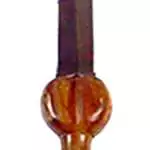
The bollock dagger takes its name from the distinctive guard design: two rounded kidney-shaped lobes that flare outward on either side of the blade, a shape characteristic of daggers produced across Northern Europe from roughly the 13th through 17th centuries. Medieval craftsmen favored this form because the lobes provided a natural hand stop, keeping the grip secure in combat, and the design appears in manuscript illustrations, museum collections from London to Stockholm, and countless archaeological finds across Britain and the Low Countries. Its civilian popularity made it one of the most common sidearms of the medieval period, carried by merchants, soldiers, and tradespeople alike.
That utilitarian heritage translates directly into ritual work. The bollock athame carries the grounded, practical energy of an everyday working blade rather than the ornate ceremonial gravity of a court sword, making it well-suited for practitioners who want their tools to feel earned rather than decorative. At 12 inches overall, this is the largest athame in my collection, giving it a presence on the altar that smaller ceremonial knives can’t match, and its length allows for wide, deliberate gestures when casting the circle or directing energy through the cardinal directions.
Wood Handle and Earth-Element Connection
Where many athames feature metal, bone, or synthetic handles, the wood grip on this blade brings a direct earth-element correspondence into every use. Wood is a living material shaped by years of growth and environmental influence, and many practitioners find that it develops a personal energy connection more readily than cold metal handles. The grain and natural variation in the handle mean no two pieces are identical, giving this athame a handmade quality consistent with the medieval aesthetic of the bollock form. Wood also provides comfortable insulation during extended ritual work, particularly outdoors in cooler temperatures.
In Wiccan practice the athame is associated with the element of Air in the Gardnerian stream, though a number of traditions align it with Fire. Either way, a wood-handled blade introduces a secondary elemental layer that practitioners working with complex elemental correspondences will find useful, especially in rituals addressing growth, grounding, or ancestral connections. The pairing of steel blade and organic wood handle represents the alchemical marriage of fire-forged metal and living earth.
The Largest Athame in the Line
At 12 inches, this bollock athame is a full blade-and-handle piece designed for confident, visible ritual gestures. High priests, high priestesses, and solitary practitioners who work in larger ritual spaces or open-air settings often prefer a longer blade precisely because the sweep of the athame through the air needs to read clearly, both physically and symbolically. The size also makes it a natural focal piece for an altar display when not in active use, resting alongside the chalice, wand, and pentacle as a statement of intent. It is not a subtle tool, and that is part of its value.
How to Use a Bollock Athame
Three core uses for a bollock athame in ritual practice.
- Cast the Circle
Hold the athame at arm’s length and walk clockwise, tracing the boundary of your circle in the air or just above the floor. Visualize a line of light or flame extending from the tip as you move through each quarter.
- Direct Energy in Spellwork
Point the blade toward the candle, herb bundle, or object you are charging. Hold the posture steady for several breaths, focusing the working through the tip. Lower the blade deliberately when the sending feels complete.
- Close the Circle and Ground
Walk counterclockwise with the athame, drawing the cast boundary back in. Once closed, place the athame flat on the altar surface with the blade toward the center, and take a moment to ground residual energy before storing.
The Tarot Fellow Standard
I stock this bollock athame because it fills a specific gap: practitioners who want historical grounding in their tools, not just the generic double-edged look that dominates most retail athame selections. The medieval bollock form is a real historical design with a documented lineage, and the wood handle connects it to the natural world in a way that all-metal pieces don’t. At 12 inches it’s the most commanding athame I carry, suited to practitioners who work in large ritual spaces or simply want a blade with genuine presence on the altar. If you’re building out your ritual toolkit, browse my ritual supplies collection for compatible tools.
Frequently Asked Questions
A bollock athame takes its name from the medieval bollock dagger, which features two rounded kidney-shaped lobes on the guard. The design originated in Northern Europe around the 13th century and remains a recognized ritual blade form.
The 12-inch length suits practitioners who work in larger spaces or prefer broad gestures when casting circles. For smaller altars or indoor work it still functions well; it simply commands more physical space than shorter athames do.
Wood brings an earth-element correspondence to the tool, valued by practitioners who layer elemental symbolism. It also develops a personal bond over time and offers a warmer, more comfortable grip than metal handles in cold-weather ritual work.
Most traditions hold that the athame cuts energy, not physical matter, so sharpness is not required for ritual function. Many practitioners keep their athame dull as a safety measure and a reminder that this tool is reserved for ceremonial use.




Reviews
There are no reviews yet