

Quick Specs
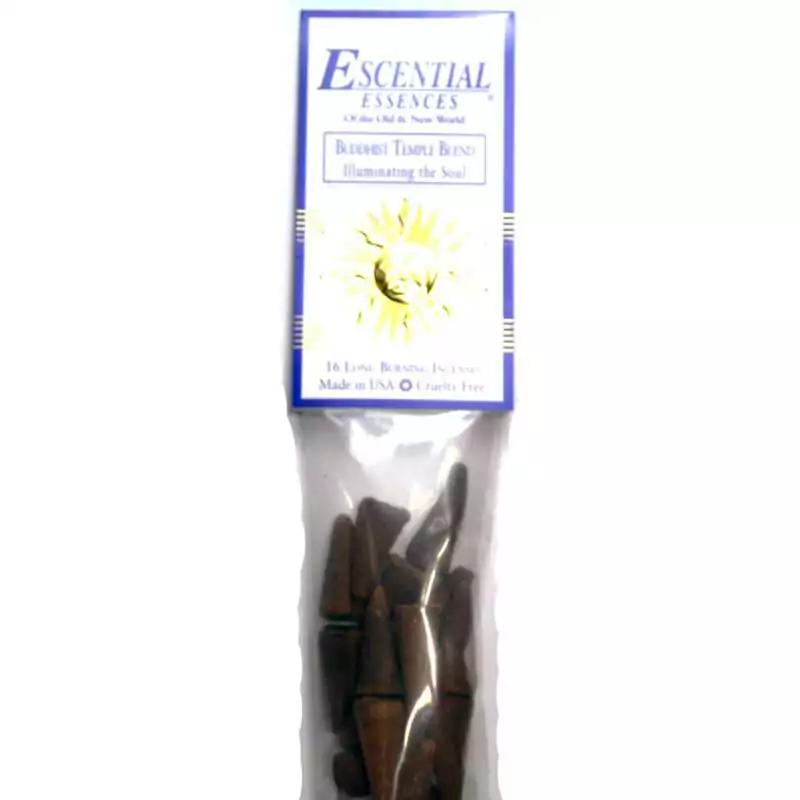
- Brand: Escential Essences
- Type: Incense cones
- Size/Quantity: 16 cones per package
- Best for: Buddhist meditation, dharma practice, temple-inspired altar work
Sacred Woods and the Buddhist Temple Blend
Incense has held a central place in Buddhist practice since the tradition spread from India across Asia more than two thousand years ago. The Pali Canon references fragrant offerings as one of the traditional ways to honor the Triple Gem of the Buddha, the Dharma, and the Sangha. In temple settings from Sri Lanka to Japan, the burning of sandalwood, cedar, vetivert, and patchouli creates the layered, earthy aroma that practitioners associate with concentrated practice and quiet devotion. The Escential Essences Buddhist blend uses exactly these four notes to recreate that temple atmosphere in a home or personal altar setting.
Sandalwood (Santalum album) has been the most revered incense wood in Buddhist ceremonial contexts for centuries, prized for its ability to calm the mind and support sustained concentration. Vetivert (Chrysopogon zizanioides), a grass native to India, adds a deep, smoky-rooty earthiness that grounds the blend. Cedar contributes a clean, slightly sharp woody note, while patchouli rounds the whole accord into something rich and unhurried. Together they form a scent profile that is meditative rather than decorative. Browse my full incense collection for holders and complementary blends.
Meditation Practice and Dharma Application
In Zen and Theravada traditions, incense marks the threshold between ordinary time and practice time. Lighting a cone before sitting signals to the body and mind that a shift in attention is beginning. The consistent scent becomes, over repeated sessions, a conditioned anchor for the meditative state, making it easier to settle quickly even when the mind arrives restless. This is a practical, tested function rather than a merely symbolic one.
For practitioners building a home dharma space, the cone format offers some advantages over stick incense in this context. There is no bamboo core to alter the scent during the burn, and the contained ash is easier to manage on a small altar table. Each cone burns for approximately 20 to 30 minutes, which aligns well with a standard beginner sitting period. More experienced practitioners may prefer to burn the cone before sitting and allow the residual scent to carry through a longer session.
How to Use Buddhist Temple Incense Cones
Use these Buddhist temple blend cones to mark meditation sessions, dharma study, and home altar offerings.
- Position the Holder
Place a small ceramic or soapstone holder on your altar or meditation cushion table. Buddhist practice traditionally keeps incense at eye level when seated, allowing the smoke to rise naturally and carry the offering upward.
- Light with Intention
Light the tip gently and let the flame hold for five seconds before blowing it out. In Buddhist tradition, the correct method is to wave out or fan the flame rather than blow directly, as blowing is considered disrespectful.
- Begin Your Sit
Sit in your chosen meditation posture and allow the vetivert, cedar, sandalwood, and patchouli blend to settle the mind. Many practitioners use this scent as an anchor to mark the beginning and end of a sitting period.
The Tarot Fellow Standard
I carry the Escential Essences Buddhist Temple blend because the scent is genuinely well-researched. The vetivert-cedar-sandalwood-patchouli combination mirrors what you actually encounter in Southeast Asian and East Asian temple spaces, not a simplified or sweetened approximation. It earns its place on the shelf for customers with a serious meditation or dharma practice. For those pairing incense work with sound healing tools, my sound healing collection includes singing bowls and bells that complement cone-marked sits.
Frequently Asked Questions
The Buddhist blend uses vetivert, cedar, sandalwood, and patchouli to recreate the layered scent profile common in Theravada and Mahayana temple spaces. It is earthy, woody, and quietly resinous rather than sweet.
Incense has been a core offering in Buddhist practice for over 2,000 years. In both Tibetan and Zen traditions, the rising smoke is understood as a carrier of devotion and a way to cultivate mindfulness during seated meditation.
Yes. The cone format burns without a bamboo core, so there is no woody undertone to distract from the sandalwood and vetivert blend. Cones also burn faster than sticks and suit shorter sitting periods or pre-ritual preparation.
These cones pair naturally with a singing bowl or bell for marking the start and end of a sit. For altar work, a small ceramic dish or soapstone holder keeps the ash contained and protects wooden surfaces beneath.






Reviews
There are no reviews yet