


Quick Specs
- Stone: Lapis lazuli (lazurite, calcite, pyrite)
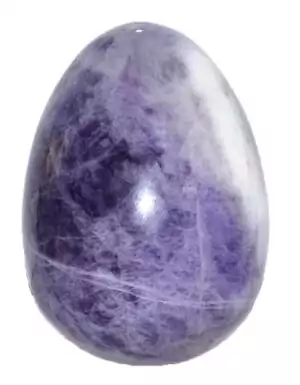
- Form: Polished egg
- Size: 2-3 inches (natural variation)
- Finish: Polished
A Stone That Carries History in Its Color
Lapis lazuli is not a single mineral but a rock made up of three: lazurite, which gives it that deep, saturated blue; pyrite, which shows up as gold flecks scattered through the surface; and calcite, which appears as white veining. The finest lapis comes from the Sar-e-Sang mines in the Badakhshan province of Afghanistan, a source that has been mined for more than 6,000 years and still produces stone with a depth of color that other deposits rarely match.
Lapis has one of the longest documented histories of any stone in human use. Ancient Egyptians ground it into eye cosmetics and powdered it to produce the pigment ultramarine, one of the most expensive colorants in the medieval and Renaissance world. Sumerian and Babylonian cultures traded it along what historians now call the Lapis Lazuli Road, one of the earliest long-distance trade routes on record. In Buddhist tradition, lapis is associated with the Medicine Buddha and carries symbolic weight as a stone of inner clarity, wisdom, and freedom from negative thought.
The egg form adds its own layer of meaning. Across many traditions, eggs represent new beginnings, rebirth, and unrealized potential. I carry polished stone eggs for exactly that reason: they work well as meditation objects, altar pieces, and grounding tools. This one sits comfortably in the hand and has enough visual presence to anchor a workspace or shelf. Each piece is unique because lapis lazuli is. The distribution of pyrite and calcite shifts from stone to stone, which means yours will not look exactly like anyone else’s.
How to Work with Your Lapis Egg
Three ways to use and care for your polished lapis lazuli egg.
- Set an Intention Before Meditating
Hold the lapis egg between both palms, close your eyes, and take three slow breaths. In Tibetan Buddhist practice, lapis is linked to inner clarity. Name what you want to understand or release before you begin your session.
- Display It as a Focal Point
Place the egg on your altar, a windowsill, or your bedside table. Its polished surface and deep blue color make it a natural focal point. You can pair it with a candle or set it atop a cloth dedicated to truth and wisdom work.
- Clean and Care for the Polish
Rinse the egg briefly under cool running water to clear surface dust, then pat it dry. Lapis is rated 5 to 6 on the Mohs hardness scale, so avoid harsh chemicals, prolonged soaking, and abrasive surfaces that can scratch the polish.
The Tarot Fellow Standard
I stock lapis because it has a long, well-documented history across multiple traditions and it’s one of the more visually striking stones I carry. I work with suppliers who consistently provide polished pieces with good color depth and honest natural variation. Lapis is not dyed or treated in the pieces I carry, and the variation you see in the stone is real: different stones will show more or less pyrite, more or less white calcite, and slightly different intensities of blue. If your piece has more white veining than you expected, that’s natural lapis. It doesn’t affect the stone’s properties as described in any tradition.
One practical note: lapis scratches more easily than quartz-based stones. Keep it away from rough surfaces and other crystals that could nick the polish. A soft pouch works well for storage if you’re moving it around.
If lapis lazuli calls to you, you might also enjoy browsing my full crystal eggs and hearts collection or exploring other stones grouped by intention in my meditation, wisdom, and clarity category.
Frequently Asked Questions
Lapis lazuli is a rock made up of three main minerals: lazurite, which gives it the blue color; pyrite, which shows up as gold flecks; and calcite, which appears as white veining. High-quality stones have a deep, even blue with minimal calcite.
Afghan lapis from the Sar-e-Sang mines in Badakhshan province is considered the finest grade. It tends toward deep, saturated blue with appealing pyrite flecks and less white calcite than stones from other sources.
This egg is a natural stone, so each one varies slightly in size, color, and the distribution of pyrite and calcite. Some will show more gold flecks, others a deeper blue. That variation is part of what makes each piece its own.
In Buddhist tradition, lapis is linked to the Medicine Buddha and inner clarity. Ancient Egyptians ground it for eye cosmetics and the pigment ultramarine. Mesopotamian cultures used it in royal seals and sacred offerings.

Reviews
There are no reviews yet