

Quick Specs
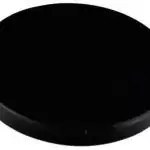
- Material: natural black obsidian (volcanic glass)
- Diameter: 2 inches
- Thickness: approximately 1/4 inch
- Finish: polished mirror surface
- Natural stone: minor inclusions and surface variations are normal
The Smallest Mirror, and a Real One
Black obsidian is volcanic glass, technically classified as a mineraloid rather than a true crystal. It forms when silica-rich lava cools so quickly that no crystalline structure has time to develop. The result is a material that’s amorphous, dense, and naturally glassy. That surface, once polished, becomes a mirror without any coating, just the stone doing what obsidian does.
Scrying mirrors have roots in a range of traditions. In Mesoamerican ritual practice, polished obsidian discs were used as reflective surfaces for divination centuries before European contact. In European ceremonial magic, black mirrors appear in grimoires and working records from the early modern period. The material doesn’t matter as much as the practice: the intent is to use a darkened, reflective surface as a focal point for internal vision rather than external observation.
I stock this 2 inch size because it’s the accessible entry point into obsidian scrying, and it’s genuinely useful on its own terms. It fits in a palm, which makes palm gazing a natural way to work with it. It tucks into a medicine bag or travel altar without taking up space. And it’s the right size to gift someone who’s curious about the practice but hasn’t committed to a dedicated altar setup yet.
How to Use a 2 Inch Obsidian Scrying Mirror
A simple approach to starting a scrying session with a small obsidian mirror.
- Set the Scene
Find a quiet spot and dim the lights. Hold the 2 inch mirror in your palm or rest it flat on a surface. Take a few slow breaths and let your gaze soften. You're not staring at it, you're looking through it. Give yourself two to three minutes.
- Hold Your Intention Lightly
Set a loose intention, not a demand. You might think: show me what I need to see, or simply hold a question in mind without forcing an answer. Obsidian is a grounding stone first. Let the session begin from a place of stillness rather than urgency.
- Close the Session
Close the session intentionally. Look away, take a breath, and set the mirror face down. Some practitioners wipe it with a dry cloth and store it wrapped in dark fabric. That step marks a clean boundary between scrying time and ordinary time.
The Tarot Fellow Standard
I source these obsidian mirrors through a distributor I’ve been working with consistently since I started the shop. What keeps me coming back is that their obsidian pieces hold up to scrutiny: the polish is even, the thickness is consistent, and the pieces I receive match what I order. That sounds like a low bar, but it’s not as common as you’d think in this category. I’ve passed on other sources that looked fine in photos and arrived with uneven edges or a finish that wasn’t truly mirror-grade.
One honest note: because this is natural stone, you may see minor inclusions, tiny bubbles, or a slight variation in the surface sheen. That’s not a defect. It’s what natural obsidian looks like. If you want a perfectly uniform surface, you want glass, not stone. This is stone, and it’s better for it.
This mirror pairs well with other divination tools. Browse my scrying and divination tools for pendulums, runes, and other mirrors, or explore my travel altars and spell kits if you’re putting together a portable practice.
Frequently Asked Questions
Obsidian is natural volcanic glass formed when lava cools rapidly. The mirror face is machine-polished to a flat, reflective finish. Because it's a natural material, no two pieces are identical. Minor inclusions and surface variations are normal.
The 2 inch size fits in a palm, a medicine bag, or a jacket pocket. It works well as a first scrying mirror, a travel piece for practitioners who already have a larger mirror at home, or a thoughtful addition to a crystal or divination kit.
Most people wipe it with a dry or very slightly damp cloth. Prolonged water contact won't destroy obsidian, but it can dull the polish over time. Avoid harsh chemicals. Store it wrapped or face down so the mirror surface doesn't pick up scratches.
There's no universal rule. Some practitioners cleanse new tools with smoke, sound, or moonlight before a first use. Others just pick it up and start. If cleansing feels right to your practice, do it. If it doesn't, the stone works either way.






Reviews
There are no reviews yet