

Quick Specs
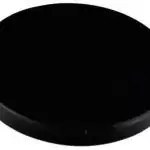
- Material: natural black obsidian (volcanic glass)
- Diameter: 5 inches
- Thickness: 1/4 inch
- Finish: polished mirror surface
- Note: natural imperfections are expected and normal
The Serious Practitioner’s Scrying Mirror
Black obsidian is volcanic glass, formed when silica-rich lava cools so fast that no crystal structure has time to grow. That’s what gives it the pure, deep black finish that has made it a scrying surface for millennia. The Aztec called polished obsidian discs tezcatl, meaning smoking mirror, and used them for divination, vision work, and ritual. The most famous surviving example is the mirror brought back by Spanish explorers and later used by John Dee, Queen Elizabeth’s court advisor and astrologer. It now lives in the British Museum in London.
I stock this 5-inch size because it’s the one that gets used. It’s large enough to hold a genuine, settled gaze without your eyes pulling to the edges, but small enough to live on an everyday altar without dominating the space. The 2-inch and 3-inch mirrors in my range are portable options for travel or pocket work. The 8-inch is the ceremonial piece. The 5-inch is the one you reach for on a Tuesday night when you actually sit down to practice.
Because obsidian is a natural material, each disc carries small variations. Faint flow lines, minor inclusions, or slight asymmetries in the polish are part of what you’re working with, not flaws to return. If you want a perfectly uniform black surface, you’d be buying synthetic glass. The natural material has character, and that’s the point.
How to Use a Black Obsidian Scrying Mirror
A simple three-step method for opening and closing a scrying session with your obsidian mirror.
- Prepare your space
Dim the lights and sit comfortably at your altar. Hold the mirror face-up in both hands for a moment, breathe slowly, and let your eyes relax. A candle or low lamp behind you gives the surface a useful depth without washing it out.
- Set your gaze and soften your focus
Rest the mirror on a flat surface or prop it at a slight angle. Soften your eyes and gaze into the center without straining. Let impressions rise on their own. Resist the urge to analyze anything until after you've closed the session.
- Close the session and cleanse the mirror
After your session, cover the mirror face-down with a cloth. This signals the work is done and keeps the surface clear between sessions. Wipe it gently with a soft dry cloth before wrapping, and store it in a dedicated pouch or box.
The Tarot Fellow Standard
I work with a small number of suppliers who have shown consistent quality control on natural stone items over multiple reorders. For obsidian pieces like this one, I look at the polish uniformity, the edge work, and how the supplier handles natural variation disclosures. I don’t stock pieces where the seller is pretending obsidian is a uniformly perfect material, because it isn’t. What I want is honest, well-finished material that does the job.
One practical note: obsidian is harder than most people expect (around 5 to 5.5 on the Mohs scale) but it’s also brittle. Drop it on tile and it may chip. Don’t store it loose in a bag with other stones. A cloth pouch or a padded box keeps it intact between sessions. A soft cloth is all you need to clean it.
If you’re building out a divination practice, you might also want to browse my scrying and divination tools or explore the broader crystals and stones collection for other pieces that work well alongside obsidian on an altar.
Frequently Asked Questions
The 5-inch is the size most practitioners settle on for regular work. It's large enough for a genuine gaze but compact enough to store on a modest altar. The 2-inch and 3-inch are travel sizes; the 8-inch is for ceremony.
Wipe it with a soft, dry cloth after each use. Avoid water, chemical cleaners, and abrasive fabrics. Obsidian scratches more easily than it looks. For energetic cleansing, pass it through incense smoke or set it under moonlight for a few hours.
Yes, and that's expected with natural volcanic glass. Tiny inclusions, faint flow lines, or minor surface variations are part of the material and don't affect the mirror's function. No two pieces form the same way, so each one is unique.
The Aztec used polished obsidian discs called tezcatl, or smoking mirrors, for divination and ritual. The most famous historical example is the mirror once owned by John Dee, Queen Elizabeth's court advisor, now in the British Museum in London.







Reviews
There are no reviews yet