



Quick Specs
- Length: 28 inches
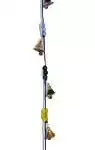
- Design: String of bells with 7 chakra-colored beads (red, orange, yellow, green, blue, indigo, violet)
- Use: Space clearing, door or window hanging, meditation room accent, ritual transitions
- Style: Cascading bell strand with color-coded chakra sequence
Why Sound Clears Space Differently Than Smoke
Bells have marked sacred thresholds for a long time. In Hindu temple tradition, the ghanta is rung at the entrance before worship to announce presence and dispel stagnant energy. In Tibetan Buddhist practice, the drilbu bell is paired with a ritual thunderbolt and used to call beings across realms. In Wiccan practice, a bell rung three times opens a circle, and three more strokes close it. The act of striking a bell doesn’t just make sound; it shifts the quality of a space. That’s something smoke and incense can’t replicate, and it’s part of why I carry tools from more than one tradition.
The 7 beads on this strand aren’t decorative filler. They map the chakra system in sequence from base to crown: red for Muladhara (root), orange for Svadhisthana (sacral), yellow for Manipura (solar plexus), green for Anahata (heart), blue for Vishuddha (throat), indigo for Ajna (third eye), and violet for Sahasrara (crown). That color sequence comes out of classical Indian yogic anatomy and has been consistent across lineages for centuries. When the bells ring, you’ve got both auditory resonance and visual symbolism working in the same moment.
At 28 inches, this string hangs well in a standard doorway or window frame. The bells respond to air movement passively, which makes them useful without any deliberate action. If you want intention behind the sound, pick up the strand and give it a shake before sitting down to meditate or opening a ritual. The tone is bright and short, more like a Japanese suzu bell than a singing bowl. It cuts through ambient noise cleanly and marks a moment. That’s what it’s for.
How to Use Chakra Hanging Bells
Three ways to work with your 28-inch chakra bell strand, from passive hanging to active chakra visualization.
- Hang the bells
Choose a doorway, window, or altar entrance. Hang the string at a height where the bells can move freely. Even a light draft will set them ringing without any effort from you.
- Ring before ritual
Before beginning meditation or a ritual, give the string a gentle shake. The bright tone shifts the ambient sound in the room, signaling a transition from ordinary time to focused practice.
- Work through the chakra sequence
Starting from the red bead at the bottom, move your attention upward through each color as the bells sound: root, sacral, solar plexus, heart, throat, third eye, crown.
Tarot Fellow Standard
I source through distributors that have shown consistent fill rates and packaging quality across a wide range of product types, and this bell strand ships the same way it arrives: intact, with beads seated correctly on the cord. That matters more than it sounds. Strung items from cheaper supply chains often arrive with beads loose or bells unseated. I’ve checked this one against multiple shipments and the construction holds. It isn’t a premium handcrafted piece, and I’m not going to tell you it is. The metal bells are light gauge, which gives you that bright, short tone rather than a deep resonant strike. If you want something heavier and more sustained, that’s a different product. For passive hanging and simple ritual marking, this does the job cleanly.
If you’re building out a meditation or chakra practice, you might also look at my chakra and meditation products or browse my wind chimes and sun catchers for other hanging options in the same family.
Frequently Asked Questions
The string measures 28 inches from top to bottom, long enough for a standard doorway or window frame with room for the bells to swing freely.
Each bead corresponds to one of the 7 chakras: red for root, orange for sacral, yellow for solar plexus, green for heart, blue for throat, indigo for third eye, and violet for crown.
Yes. It works well hung over an interior doorway, near a window, or at your altar entrance. The bells respond to air movement and can also be rung by hand before or after ritual.
No. These are small struck bells with a bright, short ring rather than the sustained resonance of a singing bowl. The tone is sharp and clear, good for marking transitions in a practice.





Reviews
There are no reviews yet