
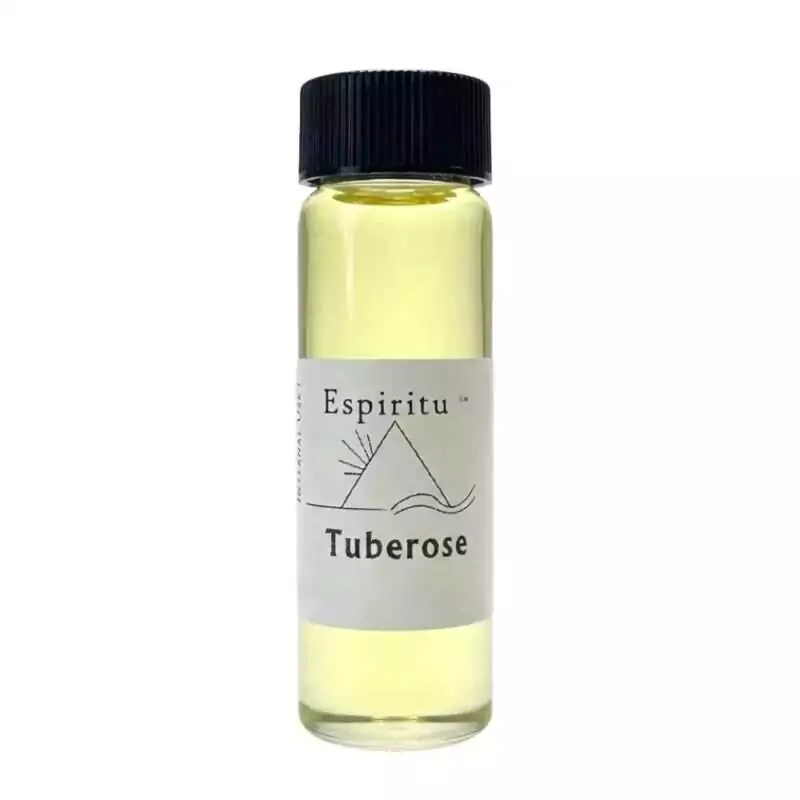
Quick Specs
- Brand: Espiritu
- Type: Ritual aroma oil (fragrance oil)
- Size/Quantity: 2 dram (approximately 0.25 oz)
- Best for: Sensuality work, psychic development, altar offerings, Day of the Dead and ancestor practices
Tuberose: The Night-Blooming Flower Across Cultures
Tuberose (Polianthes tuberosa) is a night-blooming perennial native to Mexico, where the Aztecs called it Omixochitl, meaning ‘bone flower.’ The Aztec association with bone was not morbid but reverential, connecting the flower to ancestors, divine offerings, and the threshold between living and dead. That tradition flows directly into the modern Mexican Dia de los Muertos, where tuberose garlands and petals appear on ofrendas alongside marigolds as an invitation for ancestral spirits to return and receive the offerings of the living.
Across South and Southeast Asia, tuberose carries complementary symbolism. In India, where it’s known as Rajnigandha, meaning night fragrance, it adorns bridal garlands and sacred temple offerings. In Hawaii, tuberose crowns called haku are woven for brides as symbols of love and purity. The night-blooming nature of the flower, releasing its heaviest fragrance after dark, has consistently connected it to lunar energy, the unconscious mind, and psychic perception across these separate traditions.
Ritual Applications for Tuberose Oil
Espiritu’s tuberose formula is a ritual aroma oil, not an essential oil, and it’s priced and formulated for spiritual practice rather than aromatherapy. The scent profile is rich and intensely floral, appropriate for altar work, candle dressing, and anointing. Practitioners working in the Spiritualist and folk Catholic traditions use it to dress candles placed on ancestor altars, while those working in sensuality and attraction magic anoint a red or pink candle before petitioning for romantic connection.
For psychic work, tuberose oil is often applied to the temples or the back of the neck before meditation or divination sessions, with the intent of opening receptivity to intuitive impressions. Tuberose also blends well with jasmine, sandalwood, and rose formulas when building a more complex anointing oil. If you need a pure essential oil for aromatherapy or diffuser use, see my essential oils selection for that category.
How to Use Tuberose Ritual Aroma Oil
Three practical ways to work with this Espiritu ritual oil in your spiritual practice.
- Dress an Ancestor Altar Candle
Place a white or purple candle on your ancestor altar. Apply tuberose oil from base to wick while thinking of the ancestors you wish to honor. Light it and speak their names aloud, inviting their presence through the fragrance.
- Anoint for Sensuality and Attraction Work
Apply tuberose oil to a red or pink candle before a love or attraction ritual. Stroke from base toward the wick to draw energy toward you. Pair with rose or jasmine formulas for a layered floral blend used in romantic intention-setting work.
- Prepare for Psychic or Divination Work
Apply one drop of tuberose oil to each temple and the back of your neck before a tarot reading, dream journaling, or any practice aimed at developing intuitive awareness. Night-blooming flowers are traditionally linked to lunar, receptive states.
The Tarot Fellow Standard
Tuberose is one of the more unusual offerings in the Espiritu line, and I stock it because it fills a gap that most ritual oil vendors skip entirely. Most shops carry rose, jasmine, and lavender for floral-based attraction and psychic work, but tuberose has its own distinct depth and cultural history that those scents don’t replicate. The Aztec connection to ancestor work alone makes this worth keeping on hand for practitioners who incorporate Dia de los Muertos traditions or any form of ancestral veneration. Browse my full Espiritu oils collection if you’re looking to round out a comprehensive working oil set.
Frequently Asked Questions
Tuberose oil is used in ancestor veneration, attraction work, and psychic development. Its night-blooming origin links it to lunar and receptive states. Practitioners dress altar candles, anoint before divination, and honor ancestral spirits.
Yes. Tuberose, called Omixochitl by the Aztecs, has been part of Mexican spiritual tradition for centuries. Alongside marigolds, tuberose appears on Dia de los Muertos ofrendas as offerings to invite ancestral spirits to visit and be remembered.
No. Espiritu tuberose is a ritual fragrance oil, not a true essential oil. Tuberose absolute is among the costliest botanical extracts in perfumery. This oil captures the scent at a practical price point for candle dressing and anointing work.
Tuberose blends naturally with rose, jasmine, sandalwood, and vanilla formulas. For a layered love-drawing blend, combine tuberose with rose for emotional warmth and jasmine for magnetic attraction. Apply to a pink candle and set a clear intention.




Great spells and very useful, make me want to order more.