


Quick Specs
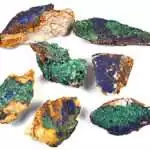
- Mineral: Azurite (copper carbonate hydroxide)
- Flat Weight: Approximately 3 to 5 pounds total
- Format: Bulk specimen flat for retail, apothecary, or collector use
- Best for: Crystal shops, collectors, practitioners focused on third eye and inner vision work
Azurite: Geology, History, and Third Eye Tradition
Azurite is a copper carbonate hydroxide mineral, most often found in the oxidized zones of copper ore deposits where surface water has interacted with copper sulfides over geological time. Its signature deep azure and indigo blue color comes from the specific way its crystal structure interacts with light, and it frequently occurs in association with malachite, chrysocolla, and cuprite, which share the same copper-rich parent rock. Major historical sources include the Copper Belt of central Africa, the American Southwest near Bisbee, Arizona, the Sinai Peninsula, and in Europe near Lyon, France. The mineral is relatively soft, rating only 3.5 to 4 on the Mohs scale, which means specimens should be handled with care to avoid surface scratching.
Ancient Egyptians, who had access to Sinai deposits, ground azurite into the vivid blue pigment used in tomb paintings, and some Egyptological research suggests the high priesthood kept polished azurite pieces in the sanctuary at Thebes for vision work and inner guidance rituals. Native American traditions, particularly among the Hopi and Navajo peoples of the Southwest, incorporated azurite into ceremonial practice as a conduit for connecting with spirit guides. In contemporary crystal practice, azurite is almost universally placed at the third eye chakra, Ajna, where practitioners work with it to sharpen psychic perception, cut through mental confusion, and access intuitive knowing during deep meditation.
Bulk Flat Format: Who This Is For
A specimen flat in the three to five pound range provides enough material for a crystal shop to build a rotating display, an apothecary practitioner to stock a dozen or more individual pieces for resale, or a serious collector to acquire multiple specimens showing the range of azurite’s natural formation patterns, from botryoidal clusters to prismatic crystals alongside druzy malachite matrix. Because azurite is a copper-based mineral, pieces should be kept in their natural state and handled briefly; prolonged skin contact with raw specimens is not advisable. Display in a shallow tray or behind glass where customers can examine the color without extended handling.
How to Work with Azurite Specimens
How to work with azurite specimens in ritual practice, crystal grids, and retail display.
- Set up for third eye meditation
Place a polished or sealed azurite specimen at the center of your altar or working space at eye level during seated meditation. Rather than holding raw azurite directly for extended periods, let it work as a visual and energetic focal point.
- Use in a crystal grid for inner vision work
Position azurite as the center stone in a grid focused on psychic development, lucid dreaming, or accessing intuitive guidance. Surround it with lapis lazuli, amethyst, or labradorite at the points for a complementary higher-chakra configuration.
- Display and rotate for retail or collection
For shops displaying the flat, arrange specimens on a dark cloth or wooden tray to contrast the deep blue against a neutral ground. Rotate the display periodically to show different faces of each piece.
The Tarot Fellow Standard
I source azurite flats for buyers who want genuine specimens at collector weight rather than small chips. The third eye correspondence is as strong as it gets in the mineral world, and having multiple pieces available lets shops and practitioners match the right specimen to the right purpose. You can explore individual crystal specimens alongside this flat in my crystal mineral specimens section, and find related third eye tools in my crystals and gemstones collection.
Frequently Asked Questions
Exact piece count varies based on specimen size. Buyers receive a representative selection of natural azurite material, which may include pieces with malachite matrix and varying crystal growth patterns.
Azurite is primarily associated with the third eye chakra and is used to sharpen intuition, enhance psychic perception, and deepen meditative states. Ancient Egyptians and Native American traditions incorporated it in vision and guidance rituals.
Azurite is a copper-based mineral. Brief handling for display and selection is fine, but avoid prolonged skin contact with raw specimens and wash hands after handling. Do not use raw azurite to make drinking water elixirs.
Lapis lazuli contains pyrite and calcite, emphasizing truth, communication, and royal wisdom traditions going back to Mesopotamia. Azurite has a more direct, piercing quality aimed at psychic vision and inner revelation.

Reviews
There are no reviews yet