
Quick Specs
- Type: Deity statue
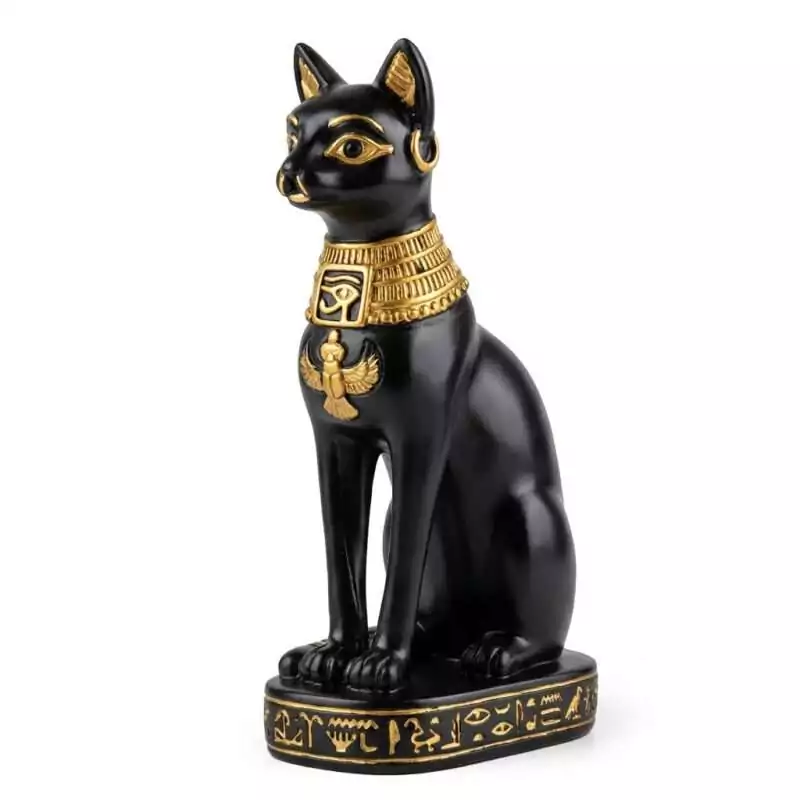
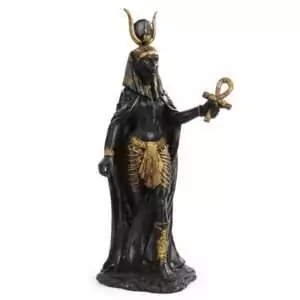
- Deity: Bastet (Bast), Egyptian cat goddess
- Material: Resin, satin black finish with gold highlights
- Size: 3 inches
- Best for: Egyptian deity devotion, home protection, altar work
Bastet: From Lion-Headed Warrior to Cat-Headed Protector
Bastet, also written as Bast, was one of the most widely worshipped deities in ancient Egypt, with her primary cult center at Bubastis in the Nile Delta region of Lower Egypt. Archaeological evidence for Bastet worship dates to the Second Dynasty, roughly 2890 BCE, making her one of the oldest named Egyptian deities. In her earliest form, she was depicted with the head of a lioness, sharing that fierce solar aspect with her sister Sekhmet, the goddess of war, pestilence, and divine retribution. The two goddesses were understood as complementary expressions of feline power: Sekhmet was the destructive heat of the desert sun, while Bastet represented the warm, life-giving aspect of the same force.
By the New Kingdom period, as domestic cats became integrated into Egyptian household life and cat mummies became common votive offerings at Bubastis, Bastet’s iconography shifted from lioness to the domestic cat, and her characterization softened accordingly. She became the goddess of home, fertility, childbirth, and protection of the household and young, a patron of women and children who kept the family safe from illness and malevolent spirits. This evolution is not a replacement but a theological refinement: Bastet retained her protective ferocity while adding the domestic intimacy of the household cat. Herodotus described the festival of Bastet at Bubastis as one of the most celebrated in Egypt, with hundreds of thousands of pilgrims attending by boat.
The 3-Inch Statue: Detail and Function
At 3 inches, this resin Bastet statue is detailed enough to serve as a recognizable devotional object while compact enough for a desk altar, windowsill, or travel shrine. The satin black finish with gold highlights evokes both the sleek coat of a black cat and the traditional Egyptian aesthetic of dark stone with gilded details seen in tomb furnishings and votive objects. Resin casting allows a level of surface detail that would be prohibitively costly in bronze at this size, making it a practical choice for practitioners who want a functional deity statue without the weight and expense of metal casting.
Working with Bastet means invoking a specific Egyptian deity, not using cat imagery as a general luck symbol. Those working within Kemetic practice will find this statue appropriate for deity-specific work, offerings, and ritual invocation of Bastet by name. Browse my full statues collection for other Egyptian and world deity pieces.
How to Use the Bastet Statue
Three practical approaches to working with the Bastet statue in devotional and protective practice.
- Establish a Bastet Altar Space
Place the statue on a small altar with offerings appropriate to Bastet: a bowl of milk or water, perfume or incense (she was linked to pleasant scents), and a gold or amber candle to honor the solar aspect of her protection and guardianship.
- Invoke Bastet for Home Protection
Hold the statue and state your intention to protect the household aloud. Place it near the main entrance or most-used room. Egyptian tradition understood Bastet as a continuous guardian, not only active during explicitly scheduled ritual sessions.
- Use in Kemetic or Egyptian-Focused Devotional Practice
Offer incense, flowers, or food to the statue on Bastet’s festival days or on new and full moons. Speak to her directly by name, stating what you seek her blessing for. Clear offerings after 24 hours as traditional Kemetic practice instructs.
The Tarot Fellow Standard
I stock this Bastet statue because the evolution from lion-headed Sekhmet-aspect to cat-headed household protector is a story that most competitor product descriptions completely omit. Understanding that Bastet and Sekhmet share a theological root matters for practitioners who want to invoke the right aspect: domestic protection, fertility, and gentle guardianship versus the warrior solar fire. The 3-inch size makes this an accessible entry point for Egyptian deity work without requiring a full shrine setup. For broader Egyptian-themed devotional jewelry and tools, explore my Egyptian deity necklaces collection.
Frequently Asked Questions
Bastet is the Egyptian goddess of home, fertility, childbirth, and protection. Originally lion-headed and connected to the fierce solar force shared with Sekhmet, she evolved into a cat-headed protector of households, women, children, and cats.
Bastet and Sekhmet are sister goddesses expressing complementary feline forces. Sekhmet is the lioness of war and fierce solar power. Bastet evolved from lion-headed warrior to cat goddess of domestic protection, household safety, and childbirth.
Traditional offerings for Bastet include milk, water, perfume, and incense, as she was linked to fragrance and joy. Cat figurines, flowers, and food placed with a gold or amber candle are common in contemporary Kemetic devotional altar practice.
Yes. This 3-inch resin statue with satin black and gold finish suits Kemetic devotional practice, home altar work, and Egyptian deity invocation. Compact for a desk or travel altar and detailed enough to serve as a Bastet devotional figure.
Reviews
There are no reviews yet