

Quick Specs
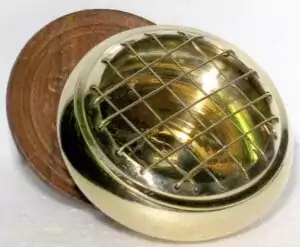
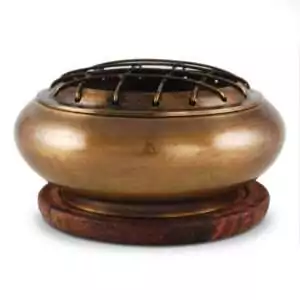
- Type: Brass incense burner for cone and resin incense
- Size/Quantity: 3 inch diameter dish
- Best for: Cone incense, resin incense on charcoal, compact altar use
Brass Incense Burners and Their Role in Altar Practice
Brass has been the material of choice for incense burners across many cultures for centuries. In Indian puja practice, brass censers called dhupdan are standard altar vessels for loose incense and resin. In Islamic tradition, brass censers are used for burning oud and bakhoor. In European folk and ceremonial magic, brass thurifers have served as portable and table-top censers for church, lodge, and home ritual. Brass’s high thermal conductivity makes it practically ideal for incense burning: it heats up quickly, distributes heat evenly across the dish, and sustains burning without the cold spots that can interrupt a charcoal disc in ceramic or low-quality metal.
The 3 inch diameter of this burner is a deliberate altar-scale choice. It’s large enough to accommodate a standard cone or charcoal disc without crowding, yet compact enough to fit in a small ritual space alongside candles, crystals, and other altar tools. The flat dish design is compatible with both cone incense and charcoal-based resin burning, making it genuinely multi-format rather than limited to one type. Practitioners who work with both HEM cone fragrances and loose resin blends can use a single burner for both, simplifying the altar layout. Find this alongside compatible incense options in my cone and granular incense burner collection.
Why Brass Outperforms Ceramic for Charcoal and Resin Work
The key difference between cone and resin burning is the heat source. Cone incense is self-contained and needs only a stable surface and an open flame to start. Resin incense requires a separate charcoal disc as an intermediate heat source, which the brass dish holds perfectly. Because brass conducts heat from the charcoal down through the dish, it actually improves charcoal performance compared to materials that insulate rather than conduct. The charcoal stays lit longer and produces a steadier heat, which matters for resin blends that require a consistent temperature to release their aromatic compounds fully.
How to Use a Brass Cone and Resin Incense Burner
This 3 inch brass dish handles both cone and resin incense formats. Here’s how to use it correctly for each.
- Burning cone incense
For cone incense, place a cone upright in the center of the brass dish and light the tip. Brass heats quickly and holds warmth, so the cone burns evenly from tip to base without the cold surface interruptions that affect some ceramic burners.
- Burning resin incense
For resin incense, place a self-lighting charcoal disc in the brass dish, light the disc edge, and wait for it to glow fully before adding a pinch of resin on top. The brass conducts heat from below, helping the charcoal stay lit longer.
- Cool down and clean
Allow the burner to cool fully before handling or cleaning. Brass discolors with heat over time, developing a natural patina. Wipe the dish with a dry cloth after each use to remove ash and resin residue before it eats into the metal.
The Tarot Fellow Standard
I carry this brass burner because it solves a real practical problem on the altar: you shouldn’t need a separate burner for every incense format you work with. The 3 inch brass dish handles cone and resin equally well, takes up a minimal footprint, and develops character over time as the brass patinas with use. It’s also genuinely more functional than similarly-sized ceramic options because of brass’s thermal properties. If you’re looking for incense to stock alongside it, browse my granular and resin incense collection for compatible blends in a range of traditions.
Frequently Asked Questions
Yes. A flat brass dish handles both formats. For cones, place the cone directly in the dish. For resin, set a charcoal disc in the dish first, light it, and add resin granules on top once the disc glows. No insert or conversion is needed.
Brass is an excellent heat conductor, which helps charcoal stay lit and cone incense burn more evenly. It’s also durable, compact, and develops an attractive patina over time. The 3 inch size keeps the altar footprint minimal.
Yes. Brass conducts heat efficiently, so the dish will be hot during and immediately after burning. Set it on a ceramic tile or wooden coaster, and never move it while in use or just after. Allow it to cool for several minutes before handling.
Wipe out ash and residue with a dry cloth once the burner cools. For built-up resin residue, a small amount of rubbing alcohol on a cloth removes it without damaging the brass. Polish occasionally with brass cleaner to reduce patina buildup.


Reviews
There are no reviews yet