
Quick Specs
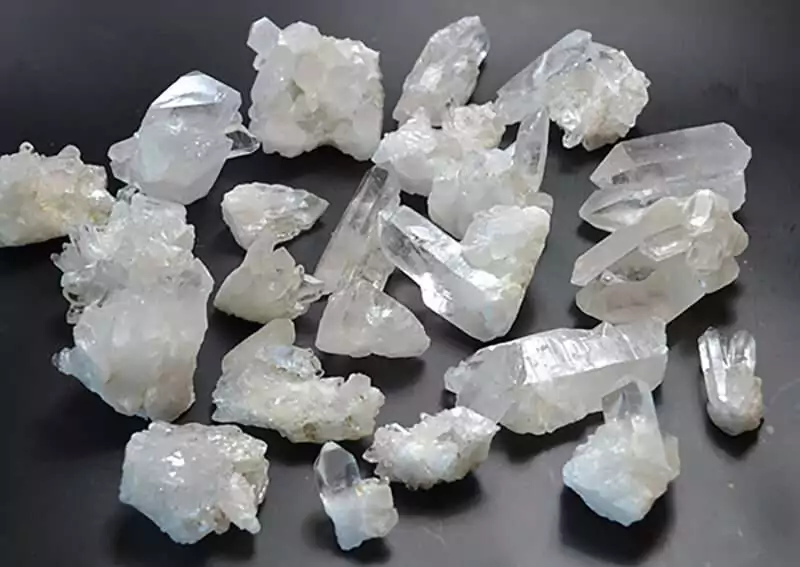
- Type: Raw quartz crystal clusters, bulk flat
- Approximate Weight: 3 pounds per flat
- Form: Natural, unpolished cluster specimens
- Best for: Crystal grids, retail resale, healing practice, display, collectors
Quartz Clusters: Formation, Origin, and What the Term Means
Quartz, silicon dioxide (SiO2), is among the most abundant minerals on Earth’s crust and forms in an extraordinary range of habits, from single points to massive druzy beds. A cluster is a formation where multiple quartz crystals have grown together from a shared matrix base, each point facing outward in a different direction. This growth pattern, occurring in cavities within volcanic or sedimentary rock, is why clusters are prized for display.
The majority of commercial quartz clusters in the wholesale market originate from Brazil and Arkansas, two of the world’s most prolific quartz deposits. Brazilian quartz tends toward water-clear transparency, while Arkansas material often shows a slightly milky quality from included water or gas pockets formed during crystal growth. Both are genuine natural quartz; the differences are regional characteristics rather than quality distinctions.
Bulk Flats: What You Receive and How Shops Use Them
A flat is a standard wholesale packaging format in the crystal trade, a shallow box or container holding multiple loose specimens at an approximate total weight. At approximately 3 pounds, this flat contains several individual quartz cluster pieces, with the number and size of each specimen varying naturally based on how the material breaks from its source matrix. No two flats are identical in piece count.
Crystal grids benefit significantly from cluster pieces as anchor or amplifier stones, because the multi-directional points of a cluster radiate outward toward surrounding grid stones in all directions simultaneously. Practitioners in Reiki, crystal healing, and feng shui often use a central cluster for this reason. Shop owners will find a 3-pound flat gives them several retail-grade specimens to display individually. Browse my crystal flats and bulk collection.
How to Use a Quartz Cluster Flat
How to sort, use, and display raw quartz cluster specimens from a bulk flat.
- Sort and Grade the Specimens
When your flat arrives, sort pieces by size and clarity. Larger intact clusters with clear point definition work well for retail display or altar use. Smaller or broken pieces are suitable for grid work, room placement, or inclusion in gift sets.
- Use as a Crystal Grid Anchor Stone
Place a quartz cluster at the center of a crystal grid as the anchor stone. The multi-directional growth of a cluster means surrounding stones each receive contact with at least one crystal point face, the principle behind using clusters as centers.
- Display and Clean the Clusters
Quartz clusters work well on bookshelves, windowsills, or desks for display. Keep them clean with a soft dry brush or a gentle rinse of room-temperature water followed by thorough air drying. Avoid sudden temperature changes to prevent fracturing.
The Tarot Fellow Standard
I stock this flat because quartz clusters are among the most versatile raw crystal forms in any collection or retail inventory. The approximately 3-pound bulk format gives shop owners and serious collectors a meaningful quantity without committing to a full wholesale pallet. Each specimen is a natural formation with its own character. For companion tools to pair with crystal work, explore my full crystals and gemstones collection.
Frequently Asked Questions
The number of pieces varies depending on specimen size. A 3-pound flat typically contains several clusters ranging from small palm-size pieces to medium specimens. Each cluster is a natural formation, so no two flats have identical piece counts.
These are natural, untreated raw quartz clusters that have not been dyed, coated, or artificially enhanced. Variation in clarity, color depth, and formation between pieces is a natural characteristic of quartz, not a quality indicator.
Yes, quartz clusters are commonly used as anchor or amplifier stones in crystal grids. Their multi-directional points radiate outward in all directions, allowing each surrounding stone to receive direct point contact from the cluster’s faces.
Raw quartz clusters can be gently rinsed with room-temperature water and allowed to air dry completely. A soft brush helps remove dust from between points. Avoid hot water or harsh cleaning agents, as rapid temperature change can cause fracturing.


Reviews
There are no reviews yet