
Quick Specs
- Stone: Azurite
- Bead Size: 4mm
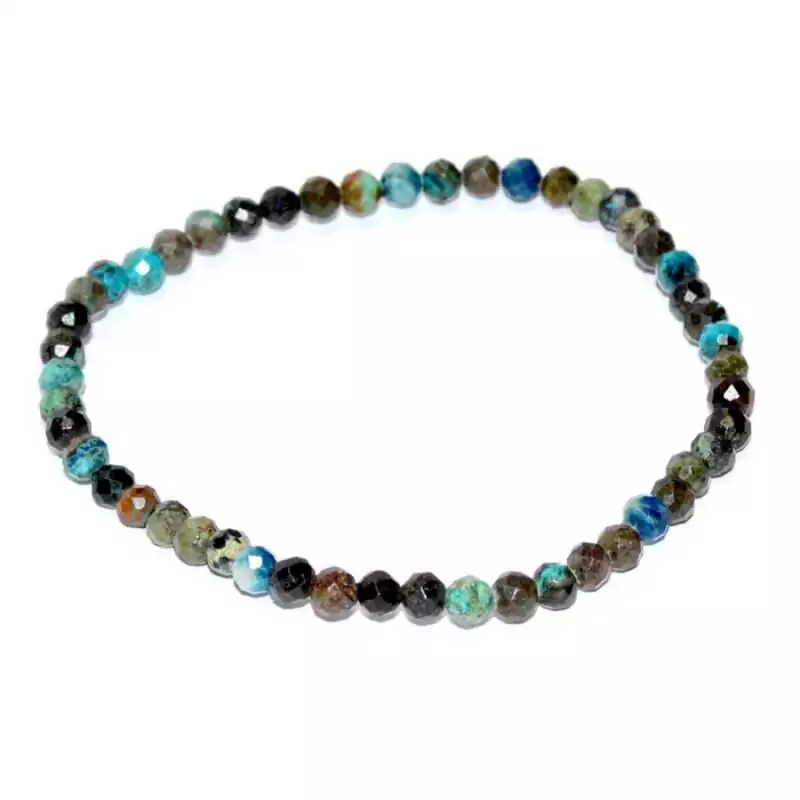
- Shape: Round, faceted
- Color: Near-black, olive, teal and bright blue
- Mohs Hardness: 3.5 to 4
- Closure: None, one continuous loop of beads
Faceted Azurite in a Mixed Palette
The strand is a mix of tones. Glossy near-black beads sit beside olive and brown-green ones, with teal beads and a few bright blue ones scattered through the loop, and each 4mm bead is cut with small flat planes that flash as the bracelet turns. Azurite is a copper carbonate, and its name alludes to its azure color. That color runs from light azure to very dark blue. Gem Society notes that even small azurite stones can look virtually black, which places the darkest beads within the stone’s range. The mineral rates 3.5 to 4 on the Mohs scale, and Wikipedia calls it soft and brittle, qualities that limit its use in jewelry. That makes this strand a piece for careful wear. A mixed palette gives the bracelet an earthy look, like a handful of river stones, and the faceting gives every bead a different glint, so the strand changes as the wrist turns. In a mixed strand the beads read as individual stones, and you can name each tone as you go around the loop. Under a window the bright blue beads stand out first, and the dark ones read as the grounding notes between them.
Crystals.com lists azurite among the stones that resonate with the third eye chakra, and names insight and intuition as the intentions it supports in crystal practice. Those associations belong to modern crystal lore, which borrowed the chakra scheme from Hindu and Buddhist traditions, and they work as symbolism: a deep color you can look at when you want to think something through. The black, olive and teal tones in this strand give it a muted, low-key look that fits dark clothing, leather cuffs and oxidized silver. Beads this small are comfortable to turn between a finger and thumb during a quiet sitting, and touching them one at a time can become a way to count breaths. At 4mm the beads are slim enough to wear with a watch, and they layer with a second 4mm strand in a single color if you want the mixed beads to stand out. Each bracelet carries its own arrangement of tones, which makes the strand you wear a one-off pattern of dark, olive, teal and blue.
Practical Ritual Applications
Slip the bracelet on for a set hour: a Tarot spread, a dream-journal entry, a short evening meditation. Take a moment to find the brightest blue bead, and let it serve as your starting point for the session. When you shuffle a deck, rest the bracelet on the table beside it, where the faceted beads catch lamplight. On a small altar, lay it on dark cloth near a single candle. Between sessions, a lined dish on a shelf away from the window keeps the beads out of strong light and away from moisture. Because azurite is soft, a pouch of its own keeps it from touching harder jewelry. If you like the slim size, my 4mm and 6mm beaded bracelets collection holds more stones in the same narrow beads.
How to Wear and Care for Your Azurite Bracelet
Three steps cover sorting the tones, wearing the bracelet for set hours, and cleaning and storing a soft stone.
- Sort the tones in good light
Turn the bracelet under a lamp or at a window and name the colors you see: near-black, olive, teal, bright blue. Find the single brightest blue bead and use it as your marker. Looking at the strand this way takes a minute and gives you a quiet habit to repeat each time you wear the bracelet.
- Wear it in short sessions
Put the bracelet on for a defined stretch of time, such as an evening of reading or a morning of planning, and remove it when the stretch ends. Azurite is soft and brittle, so keep it off during sports, gardening, cleaning and any task where the beads could knock against a hard surface. Touch the marker bead when you begin.
- Clean gently and store it in the dark
Use a soft brush or cloth with mild detergent and a little water, avoid acidic cleaners, and dry the beads thoroughly. Store the bracelet in a sealed pouch, in darkness and apart from harder gems, to limit its exposure to light and air. Azurite contains copper, so keep the beads out of the mouth.
The Tarot Fellow Standard
I stock this bracelet for the character of its beads: faceted azurite in 4mm, in a mix of near-black, olive, teal and bright blue. Azurite is soft, and the bracelet suits careful wear and quiet storage. The third eye and intuition links are modern crystal lore, and I offer them as symbolism to take or leave. Each bracelet differs in its balance of dark and bright beads, so the strand you receive has its own pattern. To see how azurite sits with other gemstones, browse my crystals, stones and gemstones collection, which gathers the shop’s minerals by stone.
Frequently Asked Questions
Azurite is a soft stone, rating 3.5 to 4 on the Mohs scale. Gem Society says its low hardness, perfect cleavage and brittle tenacity make it poorly suited to everyday wear, and it suggests occasional wear. Gemselect advises avoiding physical activity or high-impact work while wearing azurite. Treat the bracelet as a piece for calm hours and take it off for anything strenuous.
Azurite ranges from light to very dark blue. Minerals.net describes its color as blue to very dark blue, and Gem Society says even small stones can look virtually black. Beads cut small from the darkest material can therefore read as black, while lighter material shows the azure blue that gives the stone its name. A strand of mixed tones is within the stone's normal range.
It can. Gem Society says azurite gradually loses its blue when exposed to light, air and heat, and it advises storing the stone in darkness and sealed to limit air exposure. Geology.com adds that azurite slowly weathers to green malachite, and that heat can green or blacken it. Wikipedia describes azurite as unstable in open air compared with malachite.


Reviews
There are no reviews yet