

Quick Specs
- Type: Malachite freeform specimen, polished
- Weight: 5 pounds (box weight)
- Form: Natural freeform shape, no two pieces identical
- Best for: Display, altar centerpiece, crystal collection
Malachite Freeform Specimen: the 5-Pound Display Piece
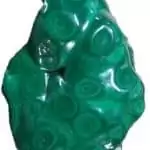
Malachite is a copper carbonate hydroxide mineral, chemical formula Cu2(CO3)(OH)2, prized for its vivid concentric banding in shades from pale mint to near-black forest green. The color comes entirely from copper content, and the characteristic swirling rings form as the mineral crystallizes in radiating or botryoidal masses inside oxidized copper ore deposits. This 5-pound freeform is the heavy-end display category, a size that shows the full depth of banding patterns not visible in smaller tumbled pieces.
A freeform specimen is cut and polished to follow the natural contours of the rough stone rather than shaped into a uniform sphere or tower. This preserves the original growth structure, which means the surface banding is uninterrupted and reads more organically than a geometric cut would allow. Every piece in this weight class is unique in outline and banding arrangement, making each one a one-of-a-kind display object. Browse my freeform crystal collection for other natural-form specimens at various sizes.
Origins and Practical Context
The Democratic Republic of Congo and Zambia are the dominant sources for display-grade malachite. Congolese material in particular is known for tight concentric eye patterns and deep, saturated green, making it the benchmark for collector-quality specimens. Russian and Australian deposits also produce fine material, though Congo remains the primary commercial source for the large polished freeforms seen in crystal shops. The mineral hardness of 3.5 to 4 on the Mohs scale means malachite polishes easily but also scratches if stored with harder stones, so keep large pieces on their own surface.
In metaphysical tradition, malachite has been associated with transformation and protection across multiple cultures, from ancient Egyptian amulet use to Renaissance-era apotropaic pigment applications. Crystal practitioners use large polished specimens as focal points for meditation spaces and altar arrangements, positioning them as grounding anchors rather than pocket stones. The significant weight and mass of a 5-pound piece give it a presence that smaller tumbled malachite simply does not carry.
One practical note on safety: malachite dust and raw chips are considered toxic due to copper carbonate content, which can irritate respiratory and skin tissue. Polished specimens like this one present minimal risk during normal display and handling, but you should wash hands after extended handling and keep the piece away from food prep surfaces. Do not sand, grind, or otherwise abrade the polished surface without appropriate dust protection.
How to Display a Malachite Freeform Specimen
Care and placement tips for a large polished malachite freeform.
- Choose a Display Location
Select a stable surface away from direct sunlight and moisture. Malachite’s green pigment does not fade, but prolonged humidity can dull the polished surface over time. A shelf or cabinet with steady airflow works best.
- Set the Piece in Place
Position the freeform with its flattest natural side down or use a display stand or ring to prevent rolling. The irregular shape of a freeform specimen means no two orientations show the same banding pattern, so try a few angles before settling.
- Clean and Maintain the Polish
Dust weekly with a dry soft cloth or a natural-bristle brush to keep the surface clean. Avoid water, acidic cleaners, and ultrasonic devices. Apply a light buff of mineral oil once or twice a year to restore depth to the polished surface.
The Tarot Fellow Standard
I stock this 5-pound freeform because display-grade malachite at this size is genuinely hard to find at a fair price point without going through a wholesale mineral dealer. The piece delivers real visual impact for an altar or shelf, and the freeform cut means the natural banding pattern is preserved rather than hidden inside a geometric cut. If you’re building a larger crystal display, you’ll find complementary large specimens in my crystal and mineral specimens collection.
Frequently Asked Questions
Malachite is a copper carbonate hydroxide mineral, chemical formula Cu2(CO3)(OH)2. It forms where copper deposits weather and oxidize, producing the vivid green color and distinctive concentric banding seen in polished display-grade specimens.
Congo and Zambia supply most commercial malachite. Deposits also occur in Australia, Russia, and the American Southwest. Congo malachite is prized for vivid concentric banding and deep green color in display-grade specimens.
Malachite dust and chips are considered toxic because the copper carbonate content can irritate lungs and skin. Polished pieces pose minimal risk with normal handling. Wash hands after extended contact and keep away from food preparation surfaces.
Dust with a dry soft cloth. Avoid water and chemical cleaners, as copper carbonate reacts to moisture. A small amount of mineral oil buffed lightly onto the surface restores polish if the piece loses its luster over time from dust or handling.
Reviews
There are no reviews yet