
Quick Specs
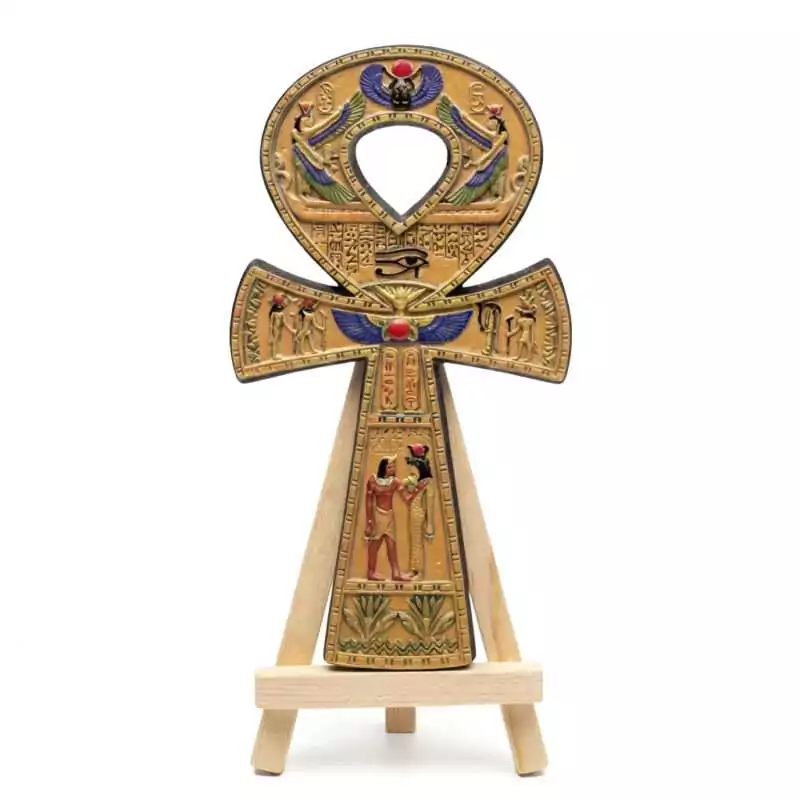
- Size: 6 inches tall
- Material: Cast resin
- Finish: Gold and yellow tones
- Includes: Easel stand for upright display
- Symbol origin: Ancient Egyptian ankh hieroglyph
The Ankh: A Symbol That Has Outlasted Empires
The ankh is one of the oldest symbols still in active use. In ancient Egyptian hieroglyphics, it reads as ankh, meaning “life” or “breath of life.” It appears tens of thousands of times across tomb walls, temple reliefs, and royal cartouches, held in the hands of gods like Ra, Osiris, Isis, and Thoth as a literal key to eternal existence. Pharaohs carried it as a marker of divine authority. The loop at the top has been interpreted as the sun cresting the horizon at dawn, as the union of male and female principles, and simply as a mirror of the human form. No single reading owns it.
The symbol’s reach didn’t stop with ancient Egypt. Coptic Christians adopted it as the crux ansata, a looped cross that merged the older hieroglyph with Christian iconography. Today it’s central to Kemeticism, the modern revival of ancient Egyptian religious practice, and it appears in African diasporic spiritual traditions as a marker of vitality, protection, and ancestral connection. I stock the ankh because it carries real historical weight, not because it photographs well.
This piece is 6 inches tall in cast resin with gold and yellow tones that echo the solar symbolism built into the symbol itself. Gold in Egyptian iconography represented the flesh of the gods and the eternal, undimming light of Ra. The included easel stand means it can hold its position on a shelf, a windowsill, or the center of an altar without needing a display mount or a lot of fuss.
How to Display and Use Your Gold Ankh
Three ways to display and work with your Gold Ankh.
- Set Your Ankh on the Easel
Place the ankh in the included easel stand on a shelf, altar, or dresser. Face it toward you or toward a window to catch light on the gold finish.
- Use It as a Ritual Focal Point
Light a candle near the ankh before meditation or prayer. Focus on the loop at the top as a symbol of the eternal cycle, and set your intention for the session.
- Pair It with Other Egyptian Symbols
Group the ankh with an Eye of Horus, a scarab, or a figure of Thoth or Isis. Building a small Egyptian-themed altar deepens the symbolism of each piece.
The Tarot Fellow Standard
I carry resin statues and display pieces because they hold detail well and arrive consistent. The cast resin process means every piece reproduces the same form with the same finish, which matters when you’re ordering something for a specific spot on an altar or shelf. The supplier I use for this line has held that consistency across a range of pieces, and that’s what keeps them in my catalog.
A practical note: resin is durable but not indestructible. It doesn’t like being knocked off a hard surface from a height, and the gold finish is paint-based, so avoid abrasive cleaners. A soft dry cloth handles dust without disturbing the finish. The easel stand is stable on flat surfaces but not designed for outdoor use or high-humidity environments.
If you’re building out a symbolic display or an Egyptian-themed altar space, browse the full statues collection or explore the broader home decor selection for complementary pieces.
Frequently Asked Questions
The ankh is the ancient Egyptian hieroglyph for life or breath of life. It appears in tomb art held by gods and pharaohs as a key to eternal existence.
No. It is cast resin with a gold and yellow tone paint finish. Resin makes it lightweight and durable for display without the cost of metal casting.
It is 6 inches tall and comes with an easel stand so it can be displayed upright on a shelf or altar without any additional hardware.
Both. Many people place it on Kemetic, Egyptian-themed, or general spiritual altars. It also works as standalone home decor on a bookshelf or nightstand.
Reviews
There are no reviews yet