

Quick Specs
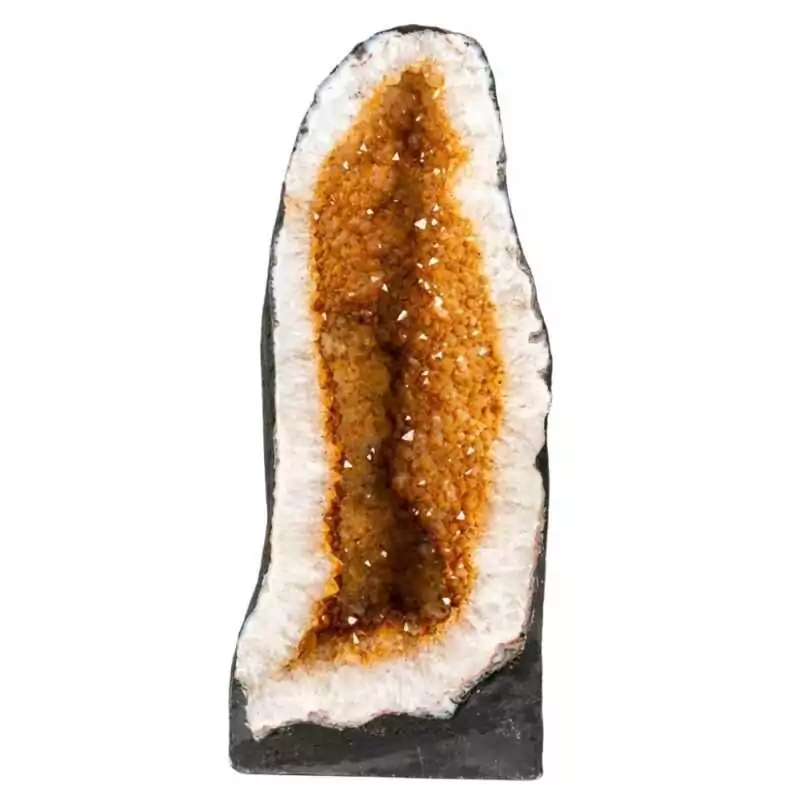
- Type: Natural citrine cathedral quartz cluster
- Weight: 69.4 lbs
- Size: 21 inches tall by 9 inches wide
- Formation: Cathedral cluster with multiple termination towers
- Best for: Museum display, collector acquisition, abundance focal point, solar plexus work, statement altar centerpiece
Natural Citrine Cathedral Cluster at Collector and Museum Scale
Citrine is a silicon dioxide mineral belonging to the quartz family, with its characteristic golden to amber coloration produced by trace iron impurities within the crystal lattice, combined with natural irradiation over geological time. True natural citrine of this quality and formation type is found primarily in Brazil, particularly in the Rio Grande do Sul state. Cathedral quartz refers to a specific growth formation in which a central tower is flanked by smaller parallel terminations, creating a spire-like structure that resembles a Gothic cathedral facade. At 69.4 lbs, this specimen occupies a tier that most collectors encounter once, not repeatedly.
Much of what is sold commercially as citrine is actually heat-treated amethyst, which turns from purple to yellow-orange when exposed to temperatures between 470 and 750 degrees Celsius. Natural citrine is distinguished by a paler, more transparent yellow to honey tone compared to the deeper orange-red of heat-treated material. Cathedral formations at this weight are rarely available outside institutional collections and major gem and mineral shows. This piece belongs in the same conversation as amethyst cathedral clusters that anchor serious collections, with the distinction that citrine’s solar energy associations place it in a fundamentally different symbolic register.
Solar Plexus Energy and Abundance Associations
In crystal healing traditions, citrine is most consistently associated with the solar plexus chakra, the third energy center located above the navel, which governs personal power, will, confidence, and manifestation. Amethyst cathedrals, by comparison, are aligned with the crown and third eye chakras and are used for spiritual development and intuitive work. Citrine cathedrals occupy the solar and earthly register: they are abundance stones, prosperity anchors, and focal points for work around creative confidence, business intention, and bringing ideas into material form. Many practitioners in feng shui traditions place citrine in the wealth corner of a space for these reasons.
At 69.4 lbs, this specimen is not a working crystal for personal sessions but a statement piece that defines the energy of the room it inhabits (and the biggest specimen I can ship!). Mineral collectors value cathedral formations for the complexity of their growth record, visible in the layering and internal inclusions readable through the termination towers. Each tower in a cathedral cluster grew under slightly different pressure conditions, producing the unique visual variation that makes no two cathedrals identical. Browse my geodes and clusters collection for additional large formation specimens.
How to Use a Citrine Cathedral Quartz Cluster
Use these steps to place, work with, and maintain a citrine cathedral quartz cluster of this scale.
- Position the Cathedral for Maximum Presence
A cathedral this size functions as an environmental anchor rather than a handheld tool. Place it where it receives natural light when possible, as citrine color intensifies under sunlight. Large cathedrals work best on a dedicated floor stand.
- Use It as an Abundance or Solar Plexus Focal Point
Practitioners set intentions at the cathedral base, written on paper or stated aloud, allowing the formation to hold focus over time. Citrine solar plexus associations make abundance, creative confidence, and manifestation the natural applications.
- Maintain with Occasional Dry Dusting or Compressed Air
Cathedral clusters collect dust in crevices between terminations. A soft bristle brush or compressed air removes debris without risking the tips. Avoid harsh cleaning solutions that etch the surface. Citrine is stable in light unlike amethyst.
The Tarot Fellow Standard
A 69.4 lb natural citrine cathedral does not come up often, and I stock it precisely because opportunities like this are rare. Natural citrine at collector scale is genuinely uncommon; most large formations on the market are heat-treated amethyst. This specimen is the kind of acquisition that defines a collection or a space rather than adding to it. For anyone serious about large-format mineral specimens or abundance-focused practice, this is an anchor piece. See my full crystals and gemstones collection for other significant specimens.
Frequently Asked Questions
This is a natural citrine cathedral cluster. Natural citrine gets golden color from iron impurities and irradiation. It differs from heat-treated amethyst sold as citrine, which produces an orange-red hue. Natural citrine at cathedral scale is rare.
Cathedral quartz is a formation where a central tower is surrounded by multiple smaller parallel towers, resembling a Gothic cathedral spire. Each tower records different growth conditions. This formation appears in quartz, amethyst, and citrine.
Citrine is most associated with the solar plexus chakra, the third energy center governing personal power, confidence, and manifestation. It is also linked to the sacral chakra in some traditions, making it the primary crystal for abundance work.
Both form as cathedral quartz clusters but minerals and uses differ. Citrine aligns with solar plexus energy, abundance, and manifestation. Amethyst aligns with crown and third eye work. Citrine color comes from iron; amethyst from manganese.






Reviews
There are no reviews yet