
Quick Specs
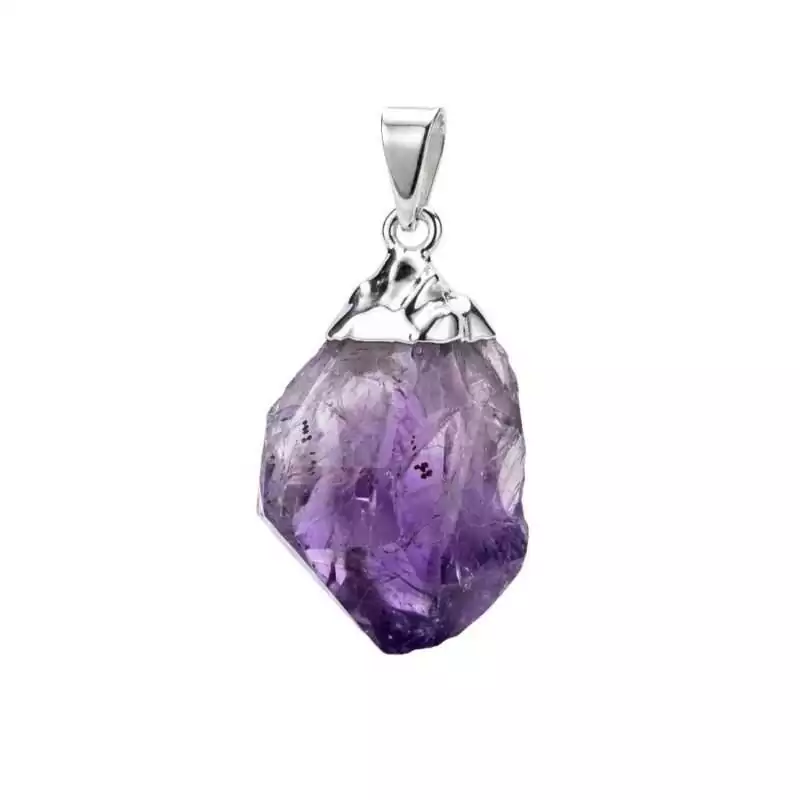
- Type: Raw amethyst point pendant
- Mount: Silver-toned bail cap on natural termination tip
- Best for: Crown chakra work, meditation, sobriety support, third-eye practices
Raw Amethyst Point: Iron Chemistry and Natural Termination
Amethyst is a variety of quartz whose purple color comes entirely from trace iron impurities locked into the crystal lattice during slow hydrothermal growth inside volcanic rock cavities. Natural background radiation, primarily from potassium-40 and uranium decay series, oxidizes the iron from Fe3+ to Fe4+, generating the color centers that produce purple. The deeper and more saturated the violet, the higher the iron concentration and the more intense the radiation exposure the stone received over millions of years, which is why no two raw points are identical in hue.
A raw termination, the naturally formed apex of a prismatic quartz crystal, is structurally distinct from a cut or tumbled stone. The hexagonal prism ends in a point where six rhombohedral faces converge, and this geometry is preserved intact in this pendant. The silver-toned bail caps the base of the point rather than wrapping or caging the body, leaving the full natural surface, striations, color zoning, and characteristic glassy luster of the termination visible.
Crown Chakra and Third-Eye Applications in Practice
In the chakra system used across modern crystal healing traditions, amethyst is assigned to the seventh chakra, Sahasrara, located at the crown of the head, as well as to Ajna, the third-eye center between the brows. Practitioners who work with chakra anatomy use the raw point format specifically because the terminated tip is understood to direct or focus intention. Holding the pendant with the point facing upward during seated meditation is the standard approach for crown-chakra concentration, while placing the stone against the forehead, point toward the hairline, is used in third-eye work.
Amethyst carries one of the oldest recorded associations with sobriety in Western tradition. The ancient Greeks derived the name from the prefix a- (not) and methystos (intoxicated), and carved drinking cups from amethyst in the belief that the stone prevented overindulgence. This connection persisted through medieval European gem lore and survives today in crystal healing circles, where amethyst is routinely recommended as a support stone for those working through dependency, compulsive habits, or mental fog. The raw, unpolished format is preferred by many practitioners who favor the stone’s unaltered natural state for this kind of sustained daily work.
Wearing and Caring for a Raw Crystal Pendant
Raw amethyst registers 7 on the Mohs hardness scale, meaning it resists most everyday scratches but can chip if struck hard against a rigid surface. Because the bail preserves the original termination rather than wire-wrapping the body, the pendant hangs with the point facing downward when worn on a chain or cord, which many practitioners prefer for channeling focused intention downward toward the heart center during wear. Keep amethyst away from extended direct sunlight, as prolonged UV exposure can bleach the iron color centers and fade the purple over time. Explore my crystal pendant collection for cord and chain options to pair with this stone.
How to Use the Amethyst Rough Point Pendant
Three focused ways to work with this raw amethyst point pendant in meditation, daily wear, and sobriety-support practice.
- Set Your Meditation Intention
Hold the raw point in your palm with the termination facing upward. Sit comfortably, close your eyes, and focus attention at the crown of your head. The pointed geometry anchors awareness at that chakra center during seated practice.
- Wear It for Third-Eye Work
Thread the pendant on a cord long enough to rest near your sternum, point facing down. Many practitioners find sustained contact throughout the day reinforces the clarity and focus associated with amethyst in third-eye traditions across lineages.
- Pair With Sobriety or Habit Work
Place the pendant on an altar or nightstand during intentional habit work. The stone's historic connection to sobriety, named in Greek as a-methystos, makes it a physical anchor for those working through dependency or mental clarity goals.
The Tarot Fellow Standard
I stock the raw point format specifically because it gives buyers what polished and tumbled amethyst cannot: the original crystal geometry intact, with real color zoning, natural surface texture, and the terminated apex that distinguishes this stone’s growth history. Most metaphysical shops stock tumbled amethyst almost exclusively, which makes a genuine unpolished pendant a harder find. The iron-chemistry angle and the sobriety tradition are rarely explained at point of sale, so I make that context available here. If you want to explore complementary pieces, browse my chakra and meditation collection for other tools commonly used alongside amethyst in crown and third-eye work.
Frequently Asked Questions
A raw point keeps the original hexagonal crystal geometry and natural termination intact. Tumbled stones are polished smooth, removing surface striations, color zoning, and the pointed apex that defines the crystal's natural growth structure.
Amethyst's purple color comes from trace iron impurities in quartz. Background radiation oxidizes iron from Fe3+ to Fe4+, creating color centers that absorb light. Higher iron concentration and greater radiation exposure produce deeper violet hues.
Amethyst corresponds to two chakras: Sahasrara, the crown at the top of the head, and Ajna, the third-eye between the brows. Practitioners use it for higher-consciousness meditation and for sharpening mental clarity and intuitive perception.
Yes, prolonged sunlight can bleach amethyst. UV exposure disrupts the iron color centers responsible for the purple hue, causing gradual fading. Keep the pendant away from bright windows and out of direct sunlight for extended periods.

Reviews
There are no reviews yet