


Quick Specs
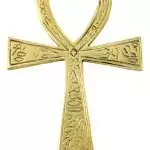
- Type: Brass altar piece, ritual symbol
- Size: 3 1/2 inches wide x 6 1/2 inches tall
- Best for: Egyptian-themed altars, ceremonial display, ritual working tools
The Ankh as an Egyptian Symbol of Eternal Life
The ankh is one of the most immediately recognizable symbols from ancient Egyptian culture, appearing in hieroglyphic inscriptions, temple carvings, and royal regalia across a span of roughly three thousand years. Its form combines the loop of the circle with the arms of the cross, a pairing that Egyptologists have long read as the union of masculine and feminine principles, or the merging of the earthly and the divine. In Egyptian art, gods and pharaohs are routinely depicted holding an ankh to the nose of the deceased or to statues of the living, the gesture representing the bestowal of life and breath. The symbol appears with particular frequency in association with Isis, Osiris, and Ra, all deities connected to life, death, and solar regeneration.
Modern practitioners working with Kemetic spirituality, a revival of ancient Egyptian religious practice, use the ankh as a focal point for altar work and meditation. Beyond dedicated Kemetic practitioners, the ankh has been adopted across a wide range of contemporary magical traditions as a symbol of vitality, protection, and the continuity of the soul. At 3 1/2 inches wide and 6 1/2 inches tall, this brass piece is substantial enough to serve as the visual centerpiece of an Egyptian-themed altar without requiring a pedestal or additional display hardware.
Working with Brass in Ritual and Altar Display
Brass has been used in sacred objects across many cultures precisely because of its gold-like appearance, durability, and resonance. In Western occult tradition, brass is associated with Venus and solar energies, making it a suitable material for objects connected to vitality and life force, qualities the ankh already carries symbolically. The warm color of polished brass echoes the gold that was so central to Egyptian religious aesthetics, where gold represented the flesh of the gods and the incorruptible nature of divine life. Browse my amulets and talismans collection for related Egyptian and symbolic pieces.
This piece works well displayed upright against a candle holder or propped on an altar tile. Some practitioners lay it flat as part of a ritual layout, placing offerings or stones in the loop of the cross to draw attention to the symbol’s circularity. It is a display and working piece, not a pendant, so the scale rewards being seen rather than worn. The brass will develop a patina over time with regular handling; light polishing with a soft cloth restores the original finish for those who prefer it bright.
How to Use Brass Ankh on Your Altar
How to display and use this substantial brass ankh in ritual, altar work, and Kemetic practice.
- Position as an Altar Focal Point
Stand the ankh upright at the back or center of your altar, where it can serve as the visual anchor for your working space. Its 6 1/2 inch height gives it enough presence to hold the eye without requiring additional risers or display stands.
- Use in Egyptian or Kemetic Ritual
When working with Egyptian deities such as Isis, Osiris, or Ra, place the ankh between candles of corresponding colors. Many Kemetic practitioners direct prayers toward a central altar symbol as a point of focus during devotional practice.
- Incorporate into a Life-Force Working
Place the ankh flat and arrange crystals, dried herbs, or small offerings within and around its form. The loop at the top has been associated with breath and vitality, and using it as a frame for intention work honors that symbolism.
The Tarot Fellow Standard
Most brass ankhs available online are either tiny pendant-scale pieces or very large and expensive decorative items. This one sits in a practical middle ground at 3 1/2 by 6 1/2 inches: large enough to read clearly on an altar, modest enough in scale to fit a working practitioner’s space rather than a museum display case. The brass construction gives it a weight and solidity that cheaper zinc or resin pieces lack. If you’re building an Egyptian-themed altar or exploring Kemetic practice, I’d also point you toward my full altar supplies collection for cloths, offering bowls, and other foundational tools.
Frequently Asked Questions
This ankh measures 3 1/2 inches wide and 6 1/2 inches tall. That size makes it substantial enough for a clear altar display without being so large that it overwhelms a standard home altar or ritual workspace setup.
The ankh is an ancient Egyptian symbol of eternal life and the union of masculine and feminine principles. It appears in art associated with Isis, Osiris, and Ra, and is used today in Kemetic and broader magical traditions.
This piece is scaled for altar display and ritual use, not for wearing. At 6 1/2 inches tall, it functions as a standing altar centerpiece. If you need a wearable ankh, look for pendant-sized pieces in the jewelry section.
Yes, brass develops a patina with handling and exposure to air. Many practitioners appreciate the aged look. If you prefer a brighter finish, wipe the surface occasionally with a soft, dry cloth. Avoid harsh chemical cleaners on ritual pieces.


Reviews
There are no reviews yet