
Quick Specs
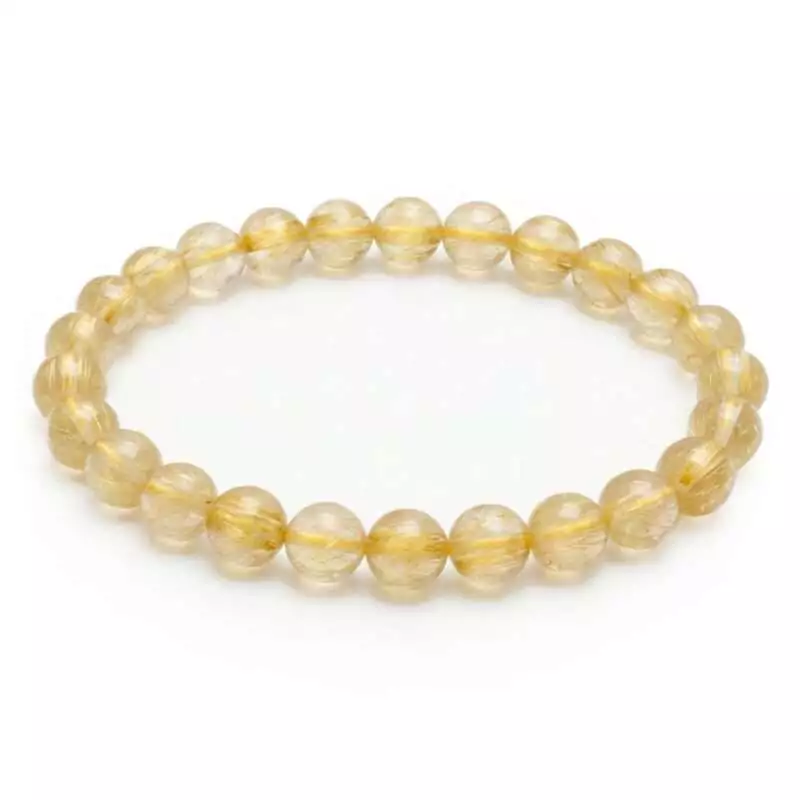
- Stone: Natural citrine (quartz, SiO2 with iron impurity coloration)
- Bead size: 6mm round polished beads
- Fit: One size fits most, elastic stretch band
- Best for: Solar plexus chakra work, confidence, personal power, abundance intention
The Merchant’s Stone: What Citrine Actually Is
Citrine is a yellow variety of quartz, and its color comes from trace amounts of iron within the silicon dioxide crystal lattice. The iron oxidizes at high temperatures, shifting the stone from colorless or smoky quartz into the warm yellow and gold hues that make citrine immediately recognizable. Natural citrine forms slowly in geothermal conditions deep underground, which is why genuinely natural specimens are relatively uncommon.
Roughly 90 percent of the citrine sold today is actually heat-treated amethyst. Amethyst is far more abundant, and heating it in a kiln converts its purple iron compounds to yellow-orange hues associated with citrine. The result is a legitimate quartz stone, but it starts as purple amethyst rather than developing its color naturally in the earth. Natural citrine tends toward a paler, more even champagne or lemon yellow, while heat-treated material often shows bright orange, concentrated color at the tips, and white zones at the base of the crystal.
Solar Plexus Chakra and the Folk Tradition of the Cash Register
In chakra systems, citrine is the solar plexus stone. The solar plexus chakra, positioned above the navel, governs personal power, self-confidence, motivation, and willpower. Practitioners working to overcome self-doubt, build assertiveness, or sustain momentum through difficult projects reach for citrine as the traditional support stone for this energy center. The yellow spectrum of the stone is considered to correspond with the warm, activating quality attributed to the third chakra.
The folk name “merchant’s stone” comes from a genuine retail tradition. Business owners and market traders have historically placed citrine in cash registers and near point-of-sale areas with the intention of drawing prosperity and keeping finances moving. This practice appears across folk magic traditions in Europe and the Americas. Wearing citrine as a bracelet extends that same intention to the wrist, where it stays close to the pulse and in the field of daily activity. Browse my 4mm and 6mm stone bead bracelet collection to see the full range at this bead size.
Wearing and Caring for Citrine
Citrine fades with prolonged direct sunlight exposure. The iron impurities that give it color are sensitive to UV radiation, which can gradually bleach the stone over months of outdoor wear or windowsill display. Keep the bracelet out of extended direct sun when not wearing it. The 6mm bead size makes this bracelet lighter and more layerable than 8mm options, sitting comfortably under a sleeve or stacked with other bracelets without adding bulk.
How to Use Your Citrine Bracelet
Three practical steps for wearing and caring for your citrine bracelet.
- Set a Solar Plexus Intention
Hold the bracelet in both hands before wearing it. Breathe slowly and name one specific area where you want to build confidence or momentum, whether a project, a conversation, or a habit you are working to establish.
- Wear It on Your Dominant Wrist
Practitioners traditionally place action-oriented stones on the dominant wrist, where they are thought to project intention outward. The 6mm beads sit low-profile under sleeves and are easy to wear through a full workday without bulk or notice.
- Store Away From Direct Sunlight
Citrine’s iron-based color is UV sensitive and will gradually fade if left in direct sunlight on a windowsill or car dashboard. Keep the bracelet in a pouch or drawer when not in use to preserve the color of the stone over time.
The Tarot Fellow Standard
I stock this citrine bracelet as a standalone single-stone piece because so much of what gets sold as citrine is actually heat-treated amethyst. The honest distinction matters, and the 6mm bead format gives you a lighter, stackable option that works as an everyday wrist piece rather than a statement bracelet. The merchant’s stone tradition and the solar plexus chakra association make this a focused choice for anyone building a practice around confidence and personal power. Browse my crystals, stones, and gemstones collection to explore more options.
Frequently Asked Questions
Most citrine on the market is heat-treated amethyst. Natural citrine forms in the earth via geothermal heat and shows a pale, even yellow tone. Heat-treated material is often brighter orange-yellow with white zones at the base of the bead.
Citrine is the traditional solar plexus chakra stone. The solar plexus governs personal power, confidence, and willpower. Some practitioners also pair citrine with the sacral chakra for creativity and motivation work alongside the third chakra.
The folk name comes from a tradition of placing citrine in cash registers to attract prosperity. This practice appears across European and American folk magic traditions and remains one of citrine’s most recognized historical associations.
Citrine’s color comes from iron impurities that are sensitive to UV exposure. Extended direct sunlight, especially on a windowsill or in a car, can gradually bleach the stone. Store it away from direct sun when not wearing it to preserve color.


1 review for Citrine Stretch Bracelet 6mm — Abundance, Confidence & Solar Plexus Crystal