

Quick Specs
- Material: Black soapstone (steatite)
- Size: 8 inches total length
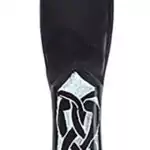
- Design: Celtic knotwork carved handle, ceremonial blade form
- Best for: Wiccan ritual, Druidic and Celtic tradition practice, altar display, group and family practice
Celtic Soapstone Athame: A Ceremonial Tool, Not a Blade
This 8-inch athame is carved entirely from black soapstone, also called steatite, a metamorphic rock composed primarily of talc with varying amounts of chlorite, pyroxenes, and micas. Soapstone has a Mohs hardness of 1 to 2, making it one of the softest workable stones and genuinely softer than a fingernail. That fact is important: this athame has no sharp edge and cannot cut anything. It is a ceremonial energy-directing tool in the form of an athame, carved from stone rather than forged from metal. The distinction matters both practically and symbolically, and many practitioners deliberately prefer a stone athame for exactly this reason.
Why Stone Instead of Metal: Safety, Energy, and Tradition
Metal athames dominate the category and carry strong associations with the element of Air in most Wiccan traditions. A stone athame shifts the elemental and energetic conversation toward Earth. Some practitioners prefer stone for group ritual settings, family practice with children, or teaching environments precisely because the absence of a real blade removes any safety concern entirely. A soapstone athame in a student’s hands or in a group ritual where focus should be on the working is a practical choice with genuine ceremonial validity.
Soapstone also has a distinctive tactile quality: it absorbs body heat quickly, becoming warm to the touch within seconds of being held. This warmth is something metal athames can’t replicate, and many practitioners find it grounding and centering during ritual use. The black coloration develops from iron and other mineral inclusions in the stone matrix, giving this piece a deep matte black surface that takes carving detail beautifully. Browse my altar supplies collection for tools that pair with this athame in a complete ritual setup.
Celtic Knotwork: Symbolism and the Insular Art Tradition
The handle is carved with Celtic knotwork, a style of decorative art developed in the Insular period (roughly 5th through 9th centuries CE) across Ireland, Scotland, and the British Isles. Celtic knots are characterized by continuous interlaced patterns with no visible beginning or end, and in both medieval and pagan interpretive traditions they have been read as symbols of eternity, interconnection, and the unbroken flow of life and fate. For practitioners working in Druidic, Wiccan, or British Isles-rooted traditions, the knotwork connects this tool to a specific aesthetic and spiritual lineage.
How to Use the Black Celtic Soapstone Athame
Three steps for working with and caring for your black Celtic soapstone athame.
- Cast Circle and Direct Energy
Hold the athame in your dominant hand, point extended outward. Trace your ritual space clockwise to cast a circle, visualizing energy flowing through the stone tip into the boundary. Soapstone warms quickly in your grip, grounding you in the work.
- Use in Elemental and Deity Invocations
Use the athame to invoke elemental quarters and draw invoking or banishing pentagrams in the air. The 8-inch length provides good reach for aerial drawing in ritual. Some practitioners assign this stone tool to Earth rather than conventional Air.
- Store and Clean with Care
Soapstone scratches against harder stones or rough surfaces. Wrap the athame in cloth or store in a dedicated pouch. Clean with a dry or barely damp cloth. Avoid abrasive cleaners that dull the carved Celtic knotwork detail on the handle.
The Tarot Fellow Standard
I carry this athame because it fills a specific gap: a genuinely beautiful, ceremonially complete athame that’s appropriate for any setting, including group work, family practice, and beginners who aren’t ready to work with a metal blade. The soapstone carving quality on the Celtic knotwork is precise and the black finish is deep and even. I want customers to know this is a carved stone ceremonial tool, not a metal blade, and that the Mohs 1-2 softness means it needs careful storage. That transparency is the kind of honest curation I aim for across my altar tools. See all options in my ritual supplies collection.
Frequently Asked Questions
No. Soapstone rates Mohs 1 to 2, softer than a fingernail, so it cannot hold a sharp edge and will not cut. This is a carved ceremonial energy-directing tool only. Practitioners needing a cutting function in ritual use a metal blade athame.
Soapstone, or steatite, is a talc-rich metamorphic rock prized for its carvability and smooth feel. It absorbs body heat rapidly, becoming warm within seconds of being held. This tactile warmth makes it grounding and ideal for carved ritual tools.
Celtic knotwork, from Insular art of the 5th through 9th centuries CE, features continuous interlaced patterns with no beginning or end. They symbolize eternity and interconnection, meaningful for Druidic, Wiccan, and British Isles practitioners.
Metal athames hold a sharp edge and are assigned to Air in most Wiccan practice. Soapstone athames have no sharp edge, suit group or family use, and are often assigned to Earth. Stone also warms to body temperature, giving a distinct tactile feel.




Reviews
There are no reviews yet