
Quick Specs
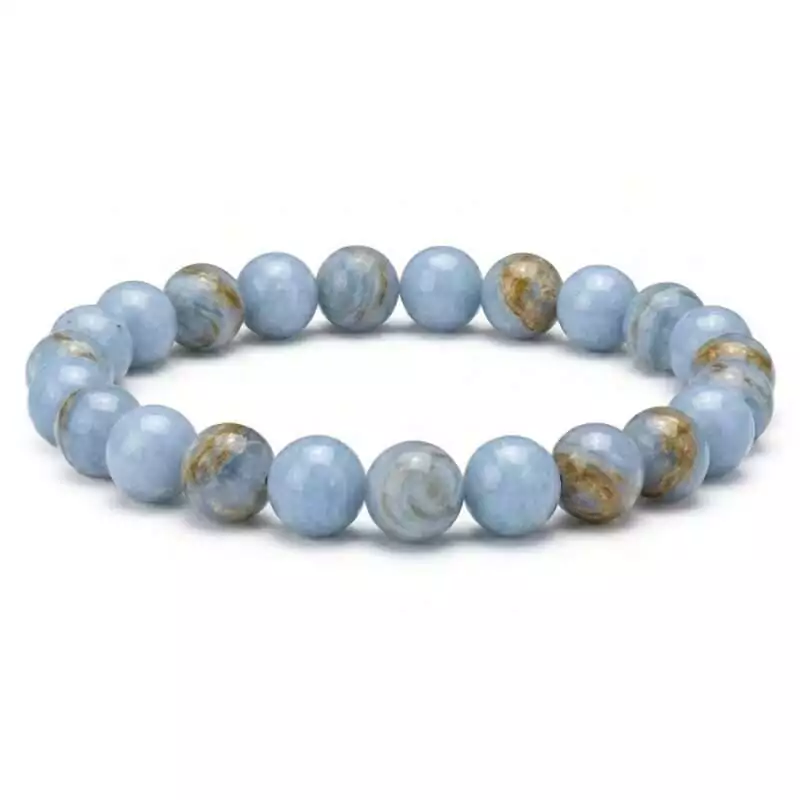
- Stone: Angelite (anhydrite, CaSO4)
- Bead Size: 8mm round, polished
- Fit: Elastic stretch band, fits most adult wrists
- Best for: Throat chakra work, angelic communication, inner calm
Angelite Crystal Bracelet and the Angelic Realm
Angelite is the trade name for anhydrite, the anhydrous (water-free) form of calcium sulfate (CaSO4). It forms when gypsum deposits lose their water content over geological time, typically leaving a compact, fine-grained mineral in colors ranging from pale blue to periwinkle and lavender-gray. The name is a direct reference to its most enduring folk association: the angelic realm and celestial guidance. Unlike heavier grounding stones such as black tourmaline or hematite, angelite carries a distinctly soft, upward-facing quality in metaphysical practice, which is why it tends to attract practitioners focused on spiritual communication rather than earthly protection.
Crystal practitioners most commonly pair angelite with throat chakra work. The throat chakra governs communication, self-expression, and truth, and angelite’s pale blue coloring aligns with the traditional blue-spectrum assignment for that energy center. It also finds use in crown chakra practices, where it is said to create a cleaner channel between the practitioner and higher guidance. Many who work with guides, angels, or spirit communication keep angelite nearby during sessions, not as a guarantee of contact, but as a way to settle the nervous system and create a receptive state of attention.
Anhydrite Bracelet Angel Stone: Care and Honesty
Angelite sits at only 3.5 on the Mohs hardness scale, in the same fragile territory as selenite and calcite. This means it scratches easily against harder surfaces and, critically, it is water-soluble over time. Unlike quartz-family stones that can be rinsed and charged in water, angelite should never be submerged, soaked, or left in humid environments. If you store it with harder stones such as clear quartz (Mohs 7) in an unpadded bag, the angelite will surface-scratch. A separate soft pouch is the right storage solution. These are not reasons to avoid the stone, they are reasons to understand what you are working with.
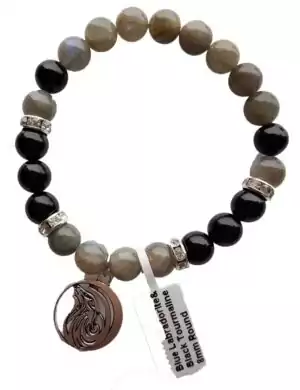
Browse my full bracelet collection to compare other 8mm stone bracelets. This angelite piece differs from goldstone (a Venetian glass), African turquoise (fossilized jasper), smoky quartz, black tourmaline, sodalite, and rainbow hematite in one key way: its specific and consistent folk association with the angelic and celestial rather than the earthly or protective. If you want grounding, reach for tourmaline or hematite. If you want a gentler, sky-facing quality in your practice, angelite is the more distinctive choice.
How to Use Your Angelite Bracelet
Three practical steps for working with your 8mm angelite bracelet.
- Set Your Intention
Hold your angelite bracelet in both hands and set a calm intention before wearing it. Angelite is linked to the throat chakra, so practitioners often pause to breathe slowly and focus on openness before putting it on.
- Choose Your Wrist
Wear the bracelet on your left wrist to emphasize receptive energy, or your right wrist to project calm outward. Many crystal wearers pair angelite with meditation or quiet morning routines to reinforce the stone’s serene, celestial associations.
- Care and Storage
Keep angelite away from water and moisture. It rates only 3.5 on the Mohs scale, meaning it scratches and dissolves more easily than quartz. Remove it before washing hands, showering, or swimming, and store it in a soft pouch or dry drawer.
The Tarot Fellow Standard
I stock angelite because it fills a specific gap in my bracelet lineup. Most of my 8mm stone bracelets lean toward grounding or protection. Angelite is the outlier: it is the one stone in the collection with a distinct and consistent celestial tradition. I am also honest about its fragility. Angelite is a Mohs 3.5 mineral that needs to stay dry, and I tell customers that upfront rather than glossing over it. Explore my crystal and gemstone collection to find stones that complement angelite’s gentle energy in your practice.
Frequently Asked Questions
Angelite is a trade name for anhydrite, the anhydrous form of calcium sulfate (CaSO4). Unlike gypsum, which contains water in its crystal structure, anhydrite does not, giving it a denser look and pale blue to lavender-gray color.
No. Angelite rates 3.5 on the Mohs hardness scale, making it fragile in water. Prolonged moisture exposure can cause the surface to cloud or degrade. Keep it dry, store it away from humidity, and never soak it in any cleansing bath.
Angelite is most strongly linked to the throat chakra (communication, truth) and the crown chakra (spiritual connection). Practitioners use it during meditation, channeling sessions, or any work intended to invite angelic or higher-realm guidance.
Yes. Angelite pairs well with selenite, which shares a similarly gentle, celestial quality. The two are often used together in angel communication practices. They also share care requirements: both are water-sensitive and should be stored dry.


Reviews
There are no reviews yet