
Quick Specs
- Type: Ritual athame, ceremonial dagger
- Size/Quantity: 11.75 inches overall length, single piece
- Best for: Wiccan and ceremonial magic circle casting, grimoire tradition work, Golden Dawn practice, medieval occult altar display
Medieval Athame: Grimoire Tradition and European Occult Heritage
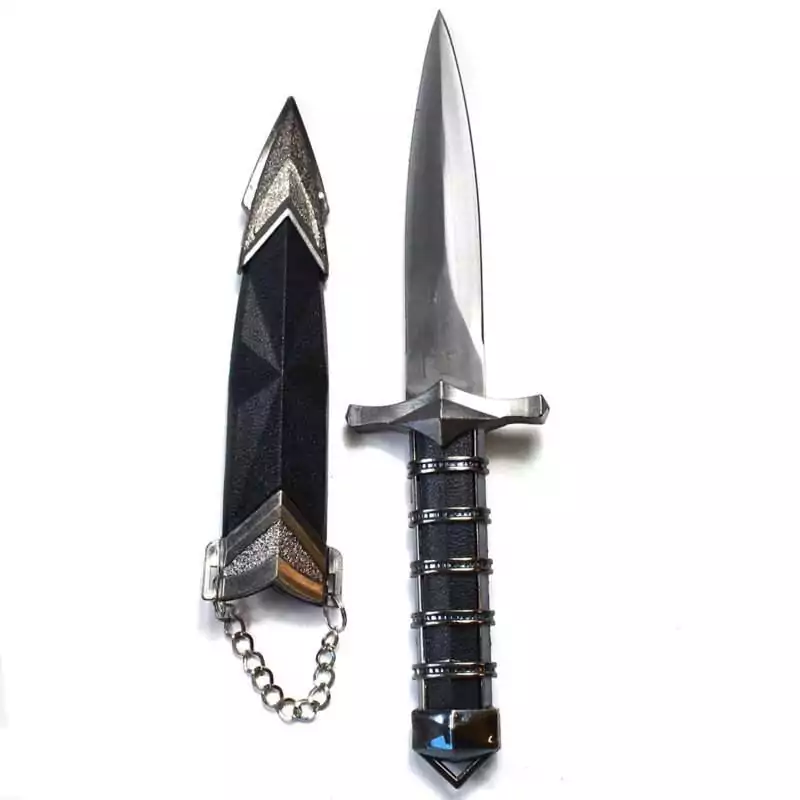
The athame’s traceable history in Western occultism runs through the Key of Solomon, a Renaissance grimoire that specifies a black-handled knife, called the arthame, as a primary tool for circle-casting and spirit work. Gerald Gardner, who formalized Wicca in the 1950s, drew on this grimoire tradition when establishing the athame as one of the four elemental tools of his system. The medieval athame design evokes that European ceremonial lineage, with handle details and blade styling that reference the historical aesthetic of the grimoire tradition, making it a natural choice for practitioners working within the Golden Dawn, Ceremonial Magic, or historically-rooted Wiccan frameworks.
In the Golden Dawn tradition, the athame or dagger is associated with the element of air and the direction east, in contrast to Gardnerian Wicca where it typically corresponds to fire and south. This distinction matters for practitioners who align their circle-casting and elemental invocations with a specific ceremonial lineage. The medieval styling of this 11.75 inches overall length athame fits naturally in a working space that includes grimoire-derived sigils, parchment, and historically-informed altar arrangements. The blade remains intentionally dull, confirming its function as a purely energetic and ceremonial tool rather than a cutting implement.
Elemental Correspondences and Altar Placement
The athame sits on the altar’s southern quadrant in Gardnerian Wicca, representing fire, or the eastern quadrant in Golden Dawn-influenced systems, representing air. Either placement acknowledges the tool’s role as the primary instrument of will and direction in the ritual space. The medieval aesthetic of this piece, with its evocative handle design and proportional blade, makes it effective as both a working tool and a visual anchor for the altar’s ceremonial character. At 11.75 inches overall length, it is sized for comfortable single-hand use during circle-casting and quarter invocations.
Practitioners working from the European grimoire tradition may wish to inscribe sigils or planetary symbols onto the handle or blade using a wood burner or engraving tool, following the customization instructions found in the Key of Solomon and related manuscripts. The athame should be consecrated before first use and stored in a dedicated pouch or sheath, kept on the altar or in a ritual cabinet between workings, never mixed with mundane household tools.
How to Use a Medieval Ritual Athame
How to consecrate and use a medieval ritual athame within grimoire, Golden Dawn, and Wiccan ceremonial practice.
- Consecrate Using Grimoire-Informed Method
Following Key of Solomon tradition, cleanse the blade with four elements and state a consecration intent. Some practitioners engrave planetary sigils onto the handle before consecrating to align the tool with their specific ceremonial magic lineage.
- Cast the Circle and Invoke the Quarters
Stand at the east or south of the ritual space per your tradition. Hold the athame blade outward and trace the circle clockwise. At each cardinal direction, draw an invoking pentagram in the air while stating the associated elemental guardian name.
- Use for Evocation, Spell Direction, and Symbolic Rite
Point the athame at candles, sigils, or spell focal points to direct intention. For the Great Rite, touch the blade to the chalice as symbolic union. At ritual close, trace counterclockwise to open it, then store away from mundane objects.
The Tarot Fellow Standard
The medieval athame speaks directly to the European ceremonial magic tradition that produced Wicca and the Golden Dawn system. For practitioners who value historical lineage in their tool selection, the medieval styling gives this piece a visual authenticity that a generic commercial dagger lacks. It is well-proportioned for altar use and circle-casting at 11.75 inches overall length, and the handle design holds up to display and regular ritual handling. Browse my full athame collection to see all available styles, and explore Wicca and paganism books for grimoire and ceremonial magic reference texts.
Frequently Asked Questions
The athame traces to the Key of Solomon, a Renaissance grimoire specifying a black-handled knife for circle work. Gerald Gardner brought it into Wicca in the 1950s, using this tradition. The medieval style reflects that European ceremonial heritage.
In Gardnerian Wicca the athame represents fire and sits in the south. In Golden Dawn tradition it represents air and sits in the east. Both agree the athame directs energy and casts the circle. Elemental placement depends on your ceremonial lineage.
Both are 11.75 inches overall length ritual athames with dull blades for ceremonial use. The Medieval piece references European grimoire and Golden Dawn tradition via historical handle styling. The Marines athame draws on military heritage and warrior archetype magic.
Engraving is optional. Grimoires like the Key of Solomon describe symbols for blade and handle, but modern Wiccan practice does not require them. If working within a coven or ceremonial tradition, follow that lineage’s established protocol.


Reviews
There are no reviews yet