


Quick Specs
- Subject: Shiva Nataraja, Lord of the Cosmic Dance
- Material: Painted resin
- Height: 9″
- Best for: Hindu devotional altar, meditation space, home decor
Shiva Nataraja: Iconography of the Cosmic Dance
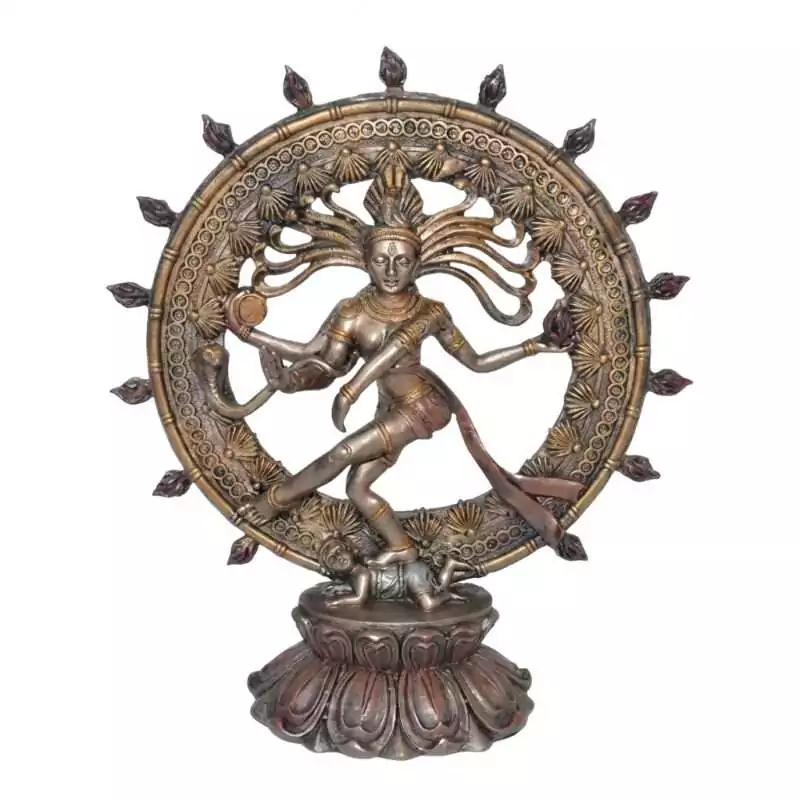
Shiva Nataraja, the Lord of the Cosmic Dance, is one of the most iconographically precise images in all of Hindu art. Every element of the form carries specific meaning. Shiva stands in the ananda tandava, the dance of bliss, with his right foot planted on the dwarf demon Apasmara, who represents ignorance and heedlessness. His left foot is raised in a gesture of liberation, pointing to the lifted foot as the means of escape from the cycle of samsara. In his upper right hand he holds the damaru, a small hourglass drum whose two-headed beat represents the primordial sound from which creation emerged. His upper left hand holds a tongue of flame, symbolizing the destruction that is the necessary precondition of renewal.
The ring of fire encircling the figure, called the prabhavali or tiruvasi, represents the continuous cycle of creation, preservation, and destruction that Shiva governs as one of the Hindu Trimurti. This iconographic form was first codified in Chola bronze sculpture from Tamil Nadu between the 9th and 13th centuries and became the canonical representation of Shiva in his role as the destroyer who makes room for new creation. The 9″ scale of this statue brings that full symbolic program into a home altar or meditation space without requiring the monumental scale of a temple installation.
Hindu Devotional Use and Placement
In Hindu devotional practice, a Nataraja murti is typically placed facing east or north, and offerings of flowers, incense, and water are traditional. Shaivite practitioners recite the Panchakshara mantra, “Namah Shivaya,” before the form during puja. The Nataraja is particularly associated with the Tamil Shaiva tradition and the temple at Chidambaram in Tamil Nadu, where the bronze Nataraja is considered the primary image of Shiva and the cosmic dance is understood as taking place at the center of the universe. Explore my statues collection for additional Hindu and world spiritual forms.
This resin statue captures the essential elements of the classical Nataraja form: the four arms, the raised foot, the ring of fire, and the demon underfoot. Resin allows for the detailed painting and gilding that defines the visual impact of this iconography, and at 9″ it has genuine altar presence. It is not a generic figurine: this is a devotional object appropriate for a Shaivite puja space, a yoga studio altar, or the collection of anyone with serious interest in Hindu cosmology and sacred art.
How to Use 9″ Shiva Nataraja
How to set up and use the Shiva Nataraja statue for Hindu devotional practice.
- Set Up Your Altar Space
Place the Nataraja on a clean surface facing east or north, the traditional orientations for a Shaivite altar. Elevate him on a small base or cloth if desired. Clear the area of clutter to create a focused devotional space around the murti.
- Offer Puja
Traditional puja offerings for Shiva include flowers, especially jasmine or champaka, a bowl of water, incense, and a lit lamp. Recite the Panchakshara mantra, Namah Shivaya, five syllables meaning homage to Shiva, as you make each offering.
- Use for Meditation on Cosmic Cycles
The Nataraja form is a visual meditation on impermanence: creation from the drum, destruction in the flame, liberation in the raised foot. Sitting with this image and reflecting on each element deepens engagement with Hindu cosmological thought.
The Tarot Fellow Standard
I stock this Nataraja because the form deserves to be presented with its iconographic context intact, not just described as a dancing figure. The Shiva Nataraja is one of the most philosophically dense images in world religious art, and at 9″ this resin casting has enough presence to serve as a genuine devotional murti rather than a shelf ornament. I choose statues for my collection based on accuracy of iconography and quality of finish, and this one holds its own. If you are building a broader altar or meditation practice, browse my chakra and meditation products to complete the space.
Frequently Asked Questions
Shiva Nataraja is Shiva in his role as the cosmic dancer, depicting the cycle of creation, preservation, and destruction. Each element, the drum, flame, raised foot, and demon underfoot, carries specific cosmological meaning in Shaivite tradition.
The ring of fire, called the prabhavali or tiruvasi, represents the endless cycle of the cosmos. It encircles Shiva to show that creation and destruction are a continuous revolving process over which he presides as the Lord of the Dance.
Place the Nataraja facing east or north on a clean altar surface. Offer flowers, water, incense, and a lamp during puja. Reciting the Panchakshara mantra, Namah Shivaya, is the central devotional practice in Shaiva Hindu tradition.
Many practitioners outside Hindu tradition keep a Nataraja for its power as a symbol of cosmic impermanence, using it as a meditation aid. For devotional puja, it belongs specifically within the Shaivite Hindu tradition and its ritual context.
Very detailed and ornate heavy made with quality would definitely order more statues from this company