
Quick Specs
- Stone: African turquoise (a jasper)
- Chip Size: 5-8mm
- Form: Irregular chips
- Colors: Teal green, olive, grey, tan and rust, with dark matrix
- Hardness: 6.5 to 7 on the Mohs scale
- Closure: None, one continuous loop of beads
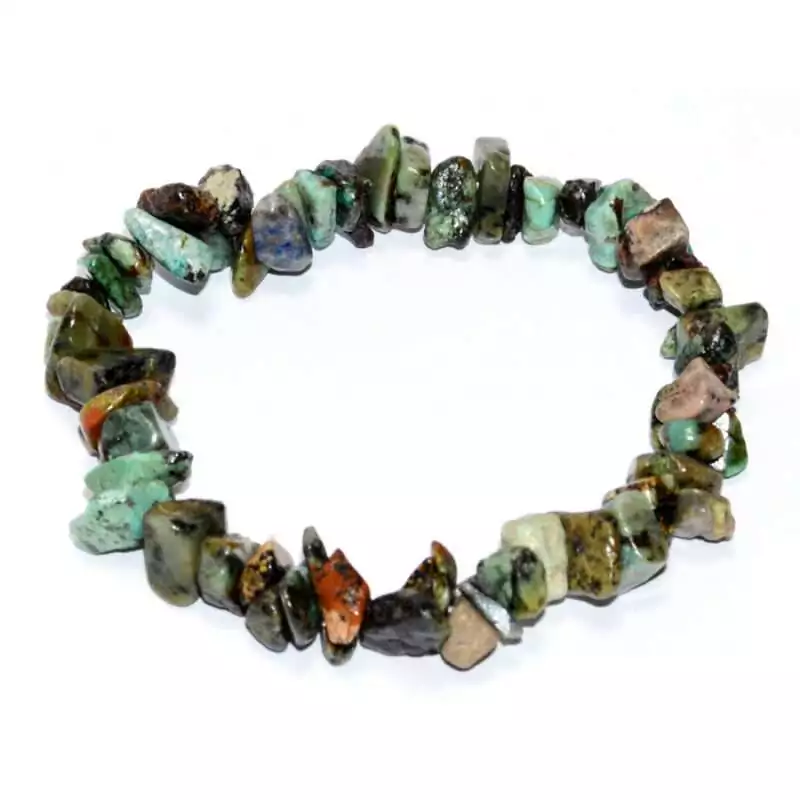
Mottled African Turquoise Chips
African turquoise is the trade name for a jasper from Africa, and the name refers to color: its teal and green patches resemble turquoise. Turquoise itself is a hydrated copper aluminum phosphate, according to GIA. African turquoise is silica, SiO2, in the quartz and chalcedony family, and minerals.net describes jasper as an opaque form of chalcedony that often contains an abundance of impurities. Those impurities, iron and copper compounds among them, paint the mottled patterns you see across the strand. Here the chips run from clear teal and mint to olive, grey and tan, with a few rust-orange and blue-grey pieces and flecks of dark matrix. Each chip is an irregular fragment between 5 and 8mm, so the outline of the loop is pebbled and the color changes from piece to piece. Jasper ranks 6.5 to 7 on the Mohs scale, a hardness that suits everyday wear on a bracelet. Bead references describe the classic look as a teal or turquoise-blue body with a black matrix of lines and dots, and the darker flecks across these chips follow that pattern.
In modern crystal lore, African turquoise is linked with growth, positive change and transformation, and with an earthy, grounding quality. Those are crystal-practice associations, and you can take them as symbolism: a stone with mottled earth colors that you wear during a move, a new job or any season of change. The chips suit that purpose because every piece differs from its neighbors, so the strand carries a varied mix of colors. The earthy palette sits well with copper, silver, wood and black stone, and the 5 to 8mm chips layer with smooth round bracelets, where the irregular outline adds a pebbled texture to the stack. A closed loop with no clasp slides over the hand and settles at the wrist, and the colors read as green and teal from a distance and as olive, rust and tan up close. The chips also vary in thickness, with some chunky pieces and some thin flakes, so the strand has a lively, uneven surface to run a finger along. The teal chips stand out against bare skin, and the olive and tan pieces blend with sleeves and leather straps.
Practical Ritual Applications
Wear the bracelet through a season you want to mark as a change: a move, a new job, a new habit. When the day feels unsettled, turn the strand and find the teal chip nearest your thumb, then take three slow breaths. In a journal practice, lay it on the page while you write about what you’re growing into. On an altar, set it on a green or brown cloth beside a small plant, a bowl of soil or a seed packet, where the earthy colors echo the materials around it. At a desk, a small dish beside the keyboard keeps the strand in view between tasks, and for a friend starting a new chapter, a bracelet like this makes a thoughtful gift. To compare more chip strands, browse my stone and crystal chip and nugget bracelets collection.
How to Wear and Care for Your African Turquoise Bracelet
Three steps cover looking over the chips, adding a daily cue, and caring for the surface.
- Look over the chips in daylight
Hold the bracelet near a window and turn it slowly. Find the brightest teal chip, the darkest olive one and a piece with rust in it; that spread is the natural mottling of jasper. Then decide what change or habit you want the bracelet to mark, and put it into one sentence you can remember.
- Pair it with a daily cue
Put the bracelet on and rest your thumb on your favorite chip for one slow breath before you start the day. In crystal practice African turquoise is tied to growth and to positive change, so the chip becomes a prompt to check in with the change you named. Use the same chip each morning and the gesture turns into a habit.
- Clean it gently and store it apart
Wipe the chips with a soft cloth dampened with warm soapy water, then dry them. Gem care guidance for African turquoise advises keeping it away from ultrasonic and steam cleaners, extended heat, harsh chemicals and excess moisture. Store the bracelet in a soft cloth or padded pouch on its own, so harder gemstones and metal stay clear of the chips.
The Tarot Fellow Standard
I stock this bracelet for the earthy, mottled palette of African turquoise in chip form. The stone is a jasper, and each chip carries its own mix of teal, olive, tan and rust. The growth and change associations come from modern crystal lore, and I offer them as symbolism for anyone who likes a color cue at the wrist. The 5 to 8mm chips are small enough to layer and varied enough to hold their own on a bare wrist. For more strands in other stones and sizes, browse my stone and crystal beaded bracelets collection.
Frequently Asked Questions
No. African turquoise is a variety of jasper, a silica stone (SiO2) in the quartz and chalcedony family that ranks 6.5 to 7 on the Mohs scale. Turquoise is a hydrated copper aluminum phosphate that ranks 5 to 6, according to GIA. The name refers to the teal and green colors the two stones share. Bead and gem references that cover African turquoise consistently describe it as jasper.
The patches come from mineral inclusions. Jasper is an opaque variety of microcrystalline quartz with abundant impurities, and gem references say the mottled teal, green, brown and black patterns of African turquoise come from inclusions such as iron and copper compounds. Bead sellers describe African jasper as typically carrying more natural inclusions than turquoise, among them copper, iron ore and quartz, which is why the chips differ so much from one to the next.
Use warm soapy water and a soft cloth, then dry the chips. Gem care guidance for African turquoise recommends avoiding ultrasonic and steam cleaners, and keeping it clear of extended heat, harsh chemicals and excess moisture, since these can alter its appearance or damage the polish. Store the bracelet in a soft cloth or padded bag away from harder gemstones and metal, which can scratch jasper.


Reviews
There are no reviews yet