
Quick Specs
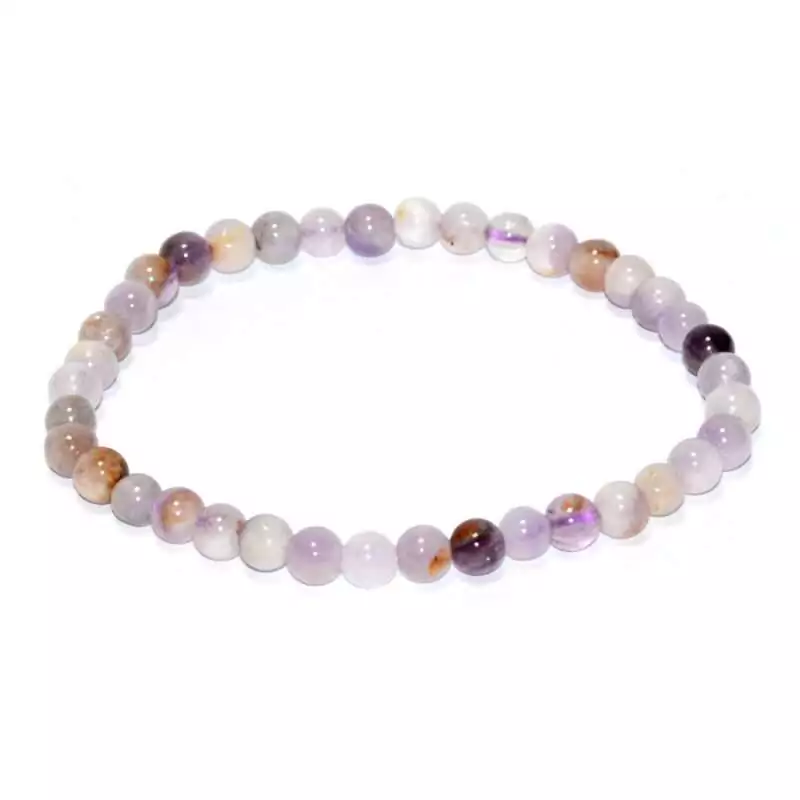
- Stones: Amethyst and jade
- Bead Size: 5-6mm
- Shape: Round, smooth
- Color: Lavender and lilac with white, grey and tan
- Closure: None, one continuous loop of beads
Lavender Amethyst and Jade in Slim Beads
This strand is built from two materials. Amethyst is the purple variety of quartz, and its color ranges from light lilac to deep royal purple, often in zones of darker and lighter shade. Jade is the name used for two different stones, jadeite and nephrite, both fine-grained and tough, and lavender is one of the recognized colors of jadeite, described as light purple or light grayish violet. Jadeite also occurs in green, yellow, reddish orange, white, grey, black and brown, so lavender is one of many colors the same stone can show. Together they give the bracelet a soft, powdery range of lilac: pale lavender beads, milky white and grey-lilac ones, a few deeper violet beads, and some flecked with tan and brown. The beads are round, smooth and 5 to 6mm across, a slim size that sits lightly on the wrist and shows each bead’s color clearly. Because the strand mixes two stones, the surfaces vary from glassy and clear in some beads to soft and milky in others, and that variety is the main charm of the piece. Each bead has its own tone, so the bracelet looks different from every angle.
In modern crystal practice, amethyst is linked with the crown chakra and with calm and meditation, and jade is linked with the heart chakra and with harmony. The chakra scheme grew out of medieval Hindu and Buddhist tantric texts, so these links are modern crystal lore, and you can take them as symbolism: purple for the top of the head, a gentler lavender for the heart. Jade has a deep history of its own, since Chinese craftspeople have worked it for thousands of years, mostly as nephrite in the early periods. The colors stay in the pastel range, so the strand layers easily with silver, with white pearls and with soft grey clothing, and it stands out against darker colors such as navy and black. Worn alone, the strand reads as a soft lavender band, and layered with a darker purple strand it becomes the lighter step in a purple gradient. Amethyst also carries an old piece of lore: its name comes from the Greek amethystos, meaning not intoxicated, and ancient Greeks believed the stone guarded its owner against drunkenness.
Practical Ritual Applications
Wear the bracelet through a stretch of days when you want to move more gently: a week of early mornings, a quiet month of study, a season of slow planning. Before you meditate, take it off and set it on a white or lavender cloth in front of you, then put it back on when you finish as a small closing gesture. Put it on at the start of a quiet week and keep it on through the week as a reminder to leave room in your schedule. On a desk, a dish beside your Tarot journal keeps the pale color in view while you write. If you like to build a stack, my stone and crystal beaded bracelets collection shows other stones in beaded form that pair with lavender.
How to Wear and Care for Your Amethyst and Jade Bracelet
Three steps cover looking at the beads, adding a quiet daily pause, and storing the strand with care.
- Look at the beads in daylight
Hold the bracelet near a window and turn it slowly. Find the deepest violet bead, the clearest one and the one with the most tan flecking; each shows a different side of the strand. Choose the bead you like best as your starting point, since a single bead is easy to find again by touch.
- Add a quiet daily pause
Put the bracelet on and rest your thumb on your starting bead. Take three slow breaths and name one thing you want to approach calmly today. Crystal guides tie amethyst to the crown chakra and jade to the heart chakra, so the pause works as a cue. Repeat it each morning for a week.
- Store it flat and remove it for hard work
Take the bracelet off before strenuous activity, because a hard knock can chip stone beads. Store it flat in a pouch or box away from harder gems, direct sunlight and heat. Between wears, a soft cloth removes skin oils and dust. Keep it away from radiators and hot cars, since amethyst can change color in strong heat.
The Tarot Fellow Standard
I stock this bracelet for its pale, mixed palette: amethyst and jade in lavender and lilac, 5 to 6mm, round and smooth. The crown and heart chakra links come from modern crystal lore, and I offer them as symbolism and a prompt for your own routine. Because two stones share the strand, bead tones and flecks vary from one bracelet to the next. For other stones to compare, my crystal and stone jewelry collection gathers bracelets, pendants and earrings in one place.
Frequently Asked Questions
Jade is the name for two different stones, jadeite and nephrite, both fine-grained and tough. Jadeite occurs in many colors, including green, white, black and lavender, which GIA describes as often a light purple or light grayish violet. Gem references add that lavender and mauve jadeite is sometimes dyed, and gemologists grade treated jade by type.
Use a soft brush or cloth, mild detergent and warm water, then dry the strand. Gem references give this method for amethyst and for jade whose treatment history is unknown. Ultrasonic and steam cleaners are best avoided, since inclusions can make amethyst shatter, and extreme heat can turn amethyst brown, red or green.
Amethyst rates 7 on the Mohs scale. Jadeite rates 6.5 to 7, and nephrite 6 to 6.5, though nephrite resists breaking better. GIA calls both types of jade exceptionally tough, because they are made of tiny interlocking mineral crystals. Both suit everyday jewelry with ordinary care, and a hard knock can still chip any stone bead.


Reviews
There are no reviews yet