
Quick Specs
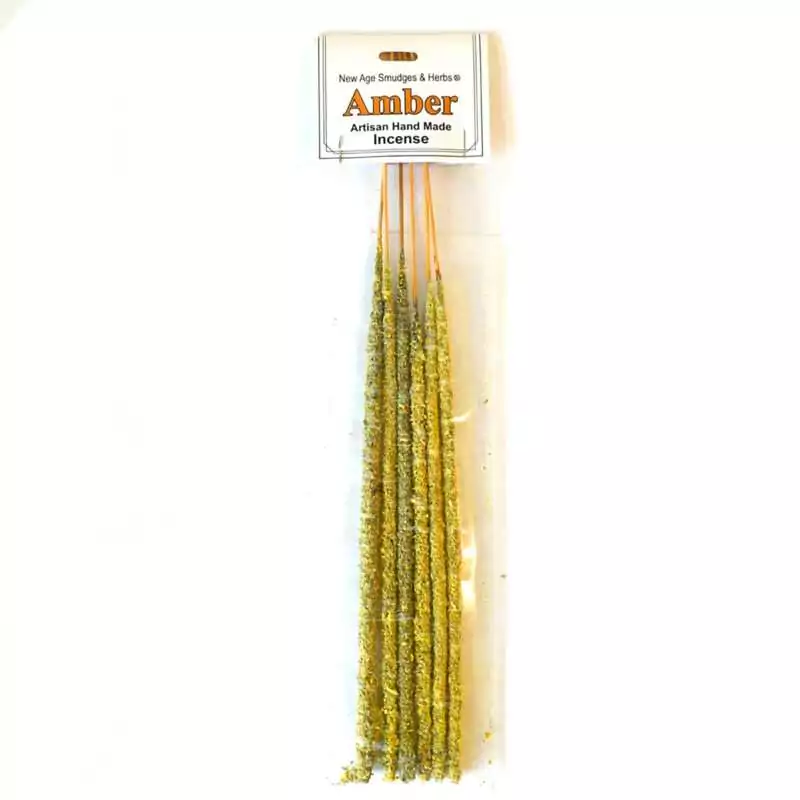
- Scent Profile: Warm, rich amber resin
- Pack Size: 6 incense sticks
- Style: Hand-dipped stick incense
- Weight: 0.1 lb
- Traditional Association: Protection, grounding, meditation
- Best For: Meditation, relaxation, daily ritual
- Burn Time: Approx. 30-45 minutes per stick (typical)
Amber’s Ancient Roots as an Offering Incense
Amber has one of the longest incense histories of any material still in common use, with fossil-resin fragments used in ritual contexts stretching back to the Neolithic period. The Baltic region is where much of the world’s amber originates, traded outward along ancient routes that carried it as far as Egypt and Greece. Egyptians prized amber highly enough to place it in royal tombs, while the Greeks connected its warm, honeyed glow to Apollo and burned it in his temples, treating the resin’s scent as a fitting offering to a sun god. Across these different cultures, the through-line is remarkably consistent: amber’s smoke was considered protective, capable of warding off harmful spirits, and its scent was valued for the sense of calm it brought to meditation and ritual alike.
Amber also carried a specific reputation as a guardian for children, worn as beads and strung around the neck in the belief that it kept harm at a distance. That protective association sits alongside amber’s use in divination, where practitioners read the shape and movement of smoke rising from burning resin as a source of omens. None of these are modern inventions. They’re documented across literary and archaeological sources spanning thousands of years, which is part of what makes amber one of the more historically grounded scents in the incense world rather than a recent trend.
As stick incense, amber trades the raw resin-on-charcoal method for something more convenient without losing the fragrance’s core character: warm, sweet, and a little smoky, closer to the smell of tree sap than to anything floral. Traditional amber incense blends often combined the resin with myrrh, sandalwood, or spices to round out the scent, and that layered, warm quality tends to carry through even in a simple dipped stick. It’s a fragrance that reads as old in the best sense, heavy enough to notice but not sharp or overwhelming, and it fills a room more thoroughly than a lighter herbal stick would over the same stretch of time.
I like amber for the slower end of a practice, meditation, evening wind-down, or any stretch of time where the goal is settling in rather than starting something new. It has a groundedness that lighter, greener scents like basil or mugwort don’t carry, which makes it a good complement to those sticks if you’re rotating through different incense for different moods across a week. Because amber’s history skews so heavily toward protection and offering, it also works well as a simple way to mark the opening of a ritual or meditation session, lit and left to burn while you settle into the actual work ahead of you, its scent doing the quiet job of signaling that the ordinary part of the day has ended.
Practical Ritual Applications
Amber incense fits naturally into any part of a practice built around settling and grounding rather than starting fresh. I light a stick before meditation most often, letting the smoke and scent build for a minute or two while I find a comfortable seat and let my breathing slow down. It works the same way ahead of a longer ritual, marking the transition from ordinary time into something more deliberate, echoing the ancient use of amber smoke as an offering meant to open a sacred space.
For altar work, a lit stick is a simple way to add protective, grounding scent without the extra step of a charcoal disc and raw resin. Anyone building out a dedicated space for spellcraft and ritual practice can treat amber as a steady, reliable addition alongside candles or crystals already in use. It also pairs well with other protective or grounding items if you’re assembling a broader herbal ritual kit, since amber’s traditional associations lean so consistently toward warding and calm rather than anything louder or more assertive.
How I Light an Amber Incense Stick
Amber burns the same way any stick incense does, but its heavier scent rewards a little extra attention to ventilation.
Amber burns the same way any stick incense does, but its heavier scent rewards a little extra attention to ventilation.
- Set up a stable, ventilated space
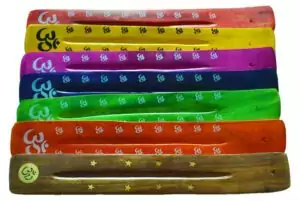
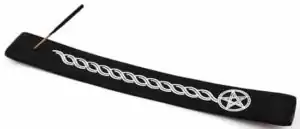
Place a heat-resistant holder with a proper ash tray on a flat surface well away from curtains, papers, and anything else flammable, and pick a room with some airflow. Amber’s scent runs warmer and heavier than a lot of other incense, so a space with even a little ventilation keeps it from feeling thick by the end of a full stick. I usually clear the immediate area first and crack a window if I’m planning to let the whole stick burn down during a longer meditation session.
- Light the tip and let the ember settle in
Hold a flame to the tip until it catches and glows steadily, then blow out any open flame so you’re left with just the ember. This is the moment I use to settle into whatever comes next, a meditation, a ritual, or just a few quiet minutes before the rest of the day starts. Amber’s fragrance builds gradually rather than hitting all at once, so give it a minute or two before deciding how much scent actually suits your particular space.
- Let it burn undisturbed and extinguish it fully
Leave the stick to burn in its holder for as long as your session runs, whether that’s the full length or just a portion of it, and don’t leave it unattended in an empty room. When you’re done, press the ember out completely against the holder’s tray rather than letting it smolder on its own, and give it a final check before leaving the room. This matters even more with a heavier resin scent like amber, since a stick left burning longer than intended will fill a small room faster than a lighter herbal incense would.
Tarot Fellow Standard
Amber is the incense I reach for when I want something that feels old and settled rather than bright or new. Its history runs back further than almost anything else I carry, offerings burned in temples, resin traded across ancient routes, beads worn for protection, and that weight comes through in the scent itself. I keep it stocked specifically for meditation and grounding work, the slower end of a practice rather than the starting-something-new end. If you’re putting together a dedicated ritual space, amber is worth having on hand as the steady, warm note that anchors whatever else your practice includes.
Frequently Asked Questions
Warm and resinous, closer to tree sap or a honeyed sweetness than to anything floral or fruity. Traditional amber incense was often blended with myrrh, sandalwood, or spices, and that layered, heavier character tends to carry through even in a simple stick form. It reads as an old-world scent rather than a bright, modern one, closer to something you’d find burning in a temple than in a candle aisle, and it lingers in a room longer than lighter herbal incense does.
Fossil-resin fragments show up in ritual contexts dating back to the Neolithic period, and by the time of ancient Egypt and Greece, amber was already established as a protective, offering-worthy material, prized enough to be placed in royal tombs and burned in temples dedicated to sun gods. That long, continuous use across unrelated cultures is part of what gives amber its reputation as one of the oldest true incense materials still burned today.
Amber tends to sit on the heavier end of stick incense, both in scent strength and in how noticeable the smoke feels in a small room. I’d suggest starting with a cracked window or a few minutes of burn time before committing to a full stick in an enclosed space, especially if you’re used to lighter herbal scents like basil or mugwort.
Yes, as long as the room has airflow and the holder is stable and out of reach of loose fabric or bedding. Keep the burning stick within sight rather than directly behind you where you can’t monitor it, and if you’re prone to headaches from strong scents, start with shorter sessions and a partial stick before burning a full one through an entire meditation, since amber runs heavier than most other incense you may already know.
Reviews
There are no reviews yet