
Quick Specs
- Material: Amethyst and ametrine (quartz)
- Quantity: 1 lb lot of tumbled stones
- Finish: Tumbled and polished
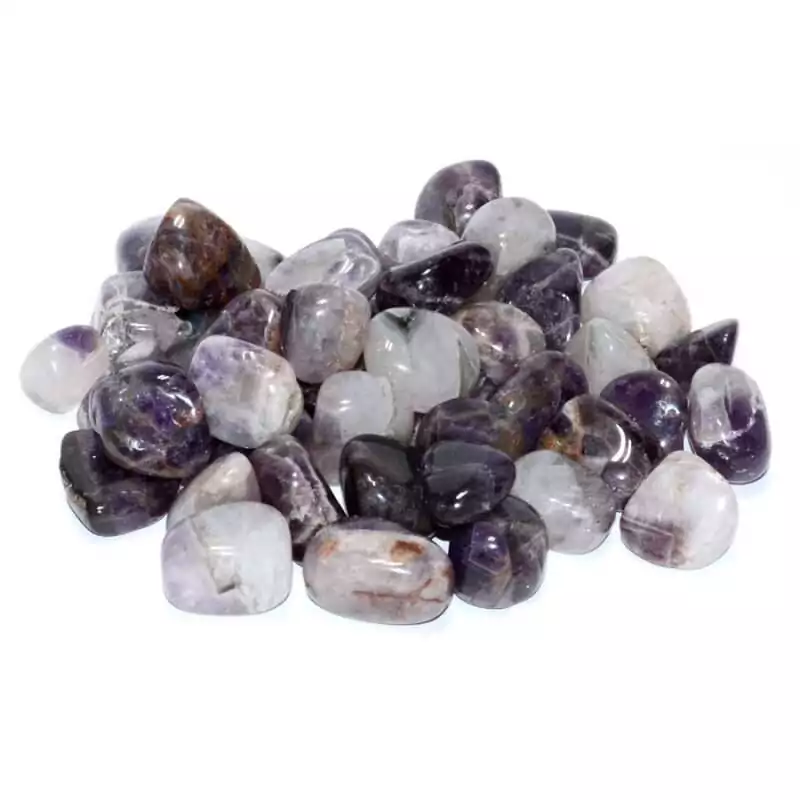
- Color: Violet to milky white and colorless, with a few brown-tinted pieces
- Mohs Hardness: 7
Amethyst and Ametrine: Purple Quartz in Bands and Patches
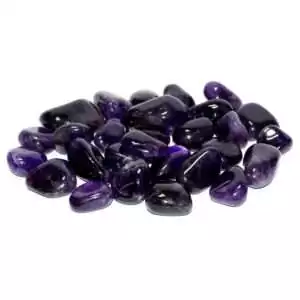
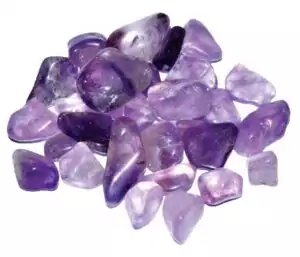
Amethyst is the violet variety of quartz. Its color comes from iron in the crystal and from irradiation, and because the iron settles unevenly as the crystal grows, a single piece can hold deep violet beside pale lilac or nearly colorless quartz. In a natural crystal the deepest color typically sits near the termination, the pointed end, which adds to the variety you see across a mixed pound. Here the stones run from dark violet to milky white and clear, with bands where purple gives way to pale and patches that fade toward the edges. A few stones carry a brown tint, and some of the pale ones lean lavender or grey with rusty streaks along their bands. In the rough, amethyst grows as six-sided crystals ending in pyramid points, lining cavities in rock, often in geodes. Tumbling grinds away those points and faces, then polishes what remains, so each stone is rounded and glossy. The banded pieces repay a slow turn in the light, since the line between violet and white shifts as the stone moves, and the translucent ones let light through where the purple thins out.
Quartz rates 7 on the Mohs scale, and amethyst has no cleavage. It breaks along smooth, curved surfaces, so tumbled pieces keep a lasting polish with no flat splits. The name comes from the Greek amethystos, meaning not intoxicated, because the ancient Greeks believed the stone protected its owner from drunkenness. In modern crystal practice the stone has taken on other meanings. Crystal guides link amethyst with the crown chakra and secondarily the third eye, and they link ametrine with the crown and third eye chakras, intuition and inner vision. Those are crystal-lore associations, offered here as symbolism. A pound of mixed stones gives you range within one material: the near-black violets look heavy and dark on a cloth, the pale lavender and white ones look soft beside them, and the banded pieces show how the color arrives in layers. Tumbling polishes every face, so you can look into the translucent stones from several angles and watch the zoning continue below the surface.
Practical Ritual Applications
Start by sorting the stones into three small piles: deep violet, banded and pale. Keep the violet pile in a shallow dish on your reading table and set one stone on each side of your deck while you shuffle. One way to use the banded stones is as markers beside the cards of a three-card spread, one stone for each position, gathered back into the dish when you finish. Rest a pale stone on your journal while you write down a dream or a question. A few stones around the base of a candle make a small violet border that catches the flame. Slip one into a pocket on days when you want a smooth, cool thing to hold. For other stones that suit a divination table, browse my intuition and spiritual development stones.
How to Work With Amethyst and Ametrine Tumbled Stones
Three steps for turning a pound of mixed purple quartz into a tidy working set.
- Sort by Tone in Good Light
Pour the stones onto a plain cloth near a window and turn each one slowly. Group them by tone: deep violet, banded, and pale or milky. Pick the darkest violet as your anchor stone and set it apart. The grouping takes a few minutes and shows you what the pound holds, so you can choose each stone for a layout by its look.
- Build a Small Layout Around the Anchor
Place the anchor stone in the middle of a flat, stable surface and ring it with three or four paler stones, spaced evenly. Add a Tarot card, a candle or a folded note with a question in the center if that suits your practice. Keep the layout away from the edge of the table where a sleeve could brush it. Leave it in place for a day or a week, then reshuffle the stones and build a new one.
- Store Away From Direct Sun
Keep the stones in a lidded box, a pouch or a drawer between sessions, away from windows. Wipe dust off with a soft cloth, or use a soft brush, mild detergent and warm water for a deeper clean, and dry the stones well. If you carry one in a bag, wrap it in cloth to keep it clear of keys and other stones.
The Tarot Fellow Standard
I stock this lot for people who want amethyst by the pound in more than one shade. The violet, white and banded stones give you range within a single material, which makes it easy to pick a favorite for your reading table and set the rest aside for grids, gifts or a bowl by the door. A full pound divides easily between your own altar and a few stones to hand to friends. If you want other stones sold by the pound, browse my bulk tumbled stones collection.
Frequently Asked Questions
Ametrine is quartz that shows purple amethyst zones and yellow to orange citrine zones in a single crystal. Both colors come from iron in different oxidation states, and the name joins amethyst and citrine. Nearly all commercial ametrine comes from the Anahí mine in Bolivia. Like amethyst it is quartz and rates 7 on the Mohs scale.
Water is fine for cleaning: use a soft brush, mild detergent and warm water, then dry the stones. Light and heat are the concerns. Amethyst can fade in tone if it's overexposed to light, and strong heat changes its color, turning it yellow, orange or brown. A drawer or lidded box between uses keeps the violet deep.
Amethyst is found in many countries. Between 2000 and 2010 the greatest production came from Pará and Rio Grande do Sul in Brazil, Santa Cruz in Bolivia, Artigas in Uruguay, Kalomo in Zambia and Thunder Bay in Ontario. Smaller amounts come from Indonesia, Spain, Argentina, Russia, Mexico and the United States.
Reviews
There are no reviews yet