
Quick Specs
- Material: Natural amethyst (silicon dioxide, SiO2)
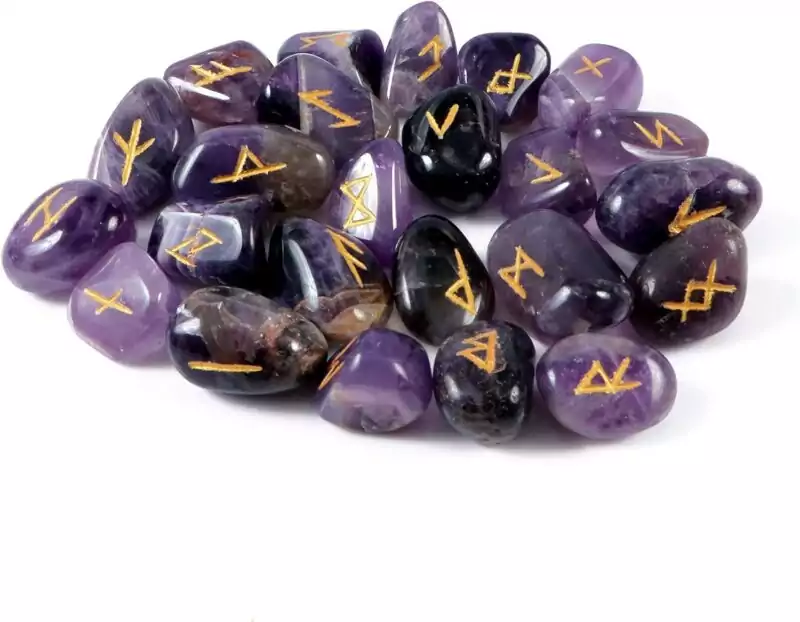
- Rune system: Elder Futhark — 24 runes plus 1 blank stone (25 pieces total)
- Stone size: Approximately 1/2 inch to 1 inch per stone (sizes vary naturally)
- Engraving: Carved symbols on polished amethyst
- Color: Purple to violet, ranging from pale lilac to deep grape depending on iron content
- Hardness: 7 on the Mohs scale
Quartz, Iron, and Ancient Sobriety: What Amethyst Actually Is
Amethyst is a variety of quartz — silicon dioxide (SiO2) — whose purple color comes from trace iron impurities (Fe3+) locked into the crystal lattice during formation, then altered by natural gamma radiation from surrounding rocks. That radiation shifts iron into a +4 valence state that selectively absorbs yellow wavelengths of light, leaving behind the violet we see. No two stones are exactly the same shade because the depth of color depends on iron concentration and how much radiation the crystal absorbed over millions of years inside a volcanic geode. What I find genuinely compelling about this set is that every stone carries a color earned slowly underground — not dyed, not treated.
The name comes from the ancient Greek amethystos, meaning “not drunk.” The Greeks believed the stone warded off intoxication — affluent drinkers would sip from carved amethyst goblets or stir powdered amethyst into wine. The poet Asclepiades of Samos referenced this use as far back as 320 BC. Dionysus and the nymph Amethystos appear in multiple versions of the origin myth. Today the stone is associated with the crown chakra (Sahasrara) and the third eye chakra (Ajna), and with the zodiac signs Pisces and Aquarius. Those associations feel coherent with a stone whose color and etymology both gesture toward clarity, restraint, and inner perception.
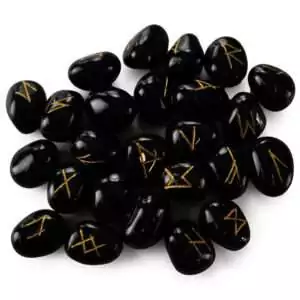
The Elder Futhark is the oldest known runic alphabet, used across northern Europe from roughly the 2nd to 8th centuries. Its 24 characters — organized into three groups of eight called aetts — served as both a writing system and a symbolic framework long before rune casting became a divination practice. The modern use of 25 stones (24 runes plus one blank) reflects Ralph Blum’s 1982 popularization of rune reading; historically, the blank rune has no Norse precedent. Many practitioners keep it as a spare or as a representation of the unknowable. On these amethyst stones, each character is carved directly into the polished surface — a process that requires the engraving tool to follow the natural grain of the quartz without fracturing it. The result is functional and clean, with the pale carved line reading well against amethyst’s purple ground. Compare this to our Black Onyx Rune Set, where white engravings stand out against near-black stone — a very different visual and energetic experience.
How to Do a 3-Rune Cast with Amethyst Stones
A simple three-rune cast for clarity on any question, using your amethyst rune set.
- Set Your Space and Draw Three Stones
Lay your cloth flat and place all 25 stones face-down. Hold your question in mind, breathe slowly, and draw one stone at a time. Do not rush the selection.
- Read the Runes Left to Right
Turn each drawn stone face-up and note its rune. Cross-reference the symbol with an Elder Futhark guide or trust your own reading instinct for the message.
- Close the Session and Store Properly
Return the stones to their pouch after each session. Store amethyst away from prolonged sunlight to preserve its color – heat can fade the purple over time.
The Tarot Fellow Standard
I source these rune sets from a supplier whose carved stone work I have inspected across multiple orders. The engraving on amethyst presents a real challenge that cheaper production skips: amethyst’s internal color zoning means the surface can shift from deep violet to near-clear within a single stone, and the carving depth has to account for that without cracking thin sections of crystal. The pieces in this set show consistent carving depth and clean symbol edges. What I cannot promise is color uniformity — amethyst is a natural material and no two stones will match exactly, which is part of what makes the set visually interesting but also something to know going in.
One practical note: amethyst is harder than many people expect (Mohs 7 puts it above steel files), so the stones will take ordinary handling well. The concern is not abrasion — it is heat and extended UV exposure, both of which disrupt the iron color centers and can turn a rich purple toward brown or yellow. Keep these away from windowsills and out of direct sun when not in use.
If you are drawn to rune divination and want to explore the full range of stone options, browse our crystal rune sets collection or see everything in our runes and rune products section.
Frequently Asked Questions
Yes. The 24 Elder Futhark runes plus one blank stone are engraved into natural amethyst. Sizes vary from roughly 1/2 inch to 1 inch per stone.
Amethyst rates 7 on the Mohs scale, making it durable for regular handling. Avoid dropping the stones on hard surfaces, as they can chip at thin engraved edges.
Rinse briefly under cool water, then pat dry. Avoid extended sunlight, which can fade amethyst over time. Selenite plates or moonlight work well for energetic clearing.
Both sets use the full Elder Futhark alphabet. Amethyst is linked to intuition and the crown chakra, while black onyx is associated with grounding and protection.

Reviews
There are no reviews yet