
Quick Specs
- Material: Bronze-tone metal on black cord
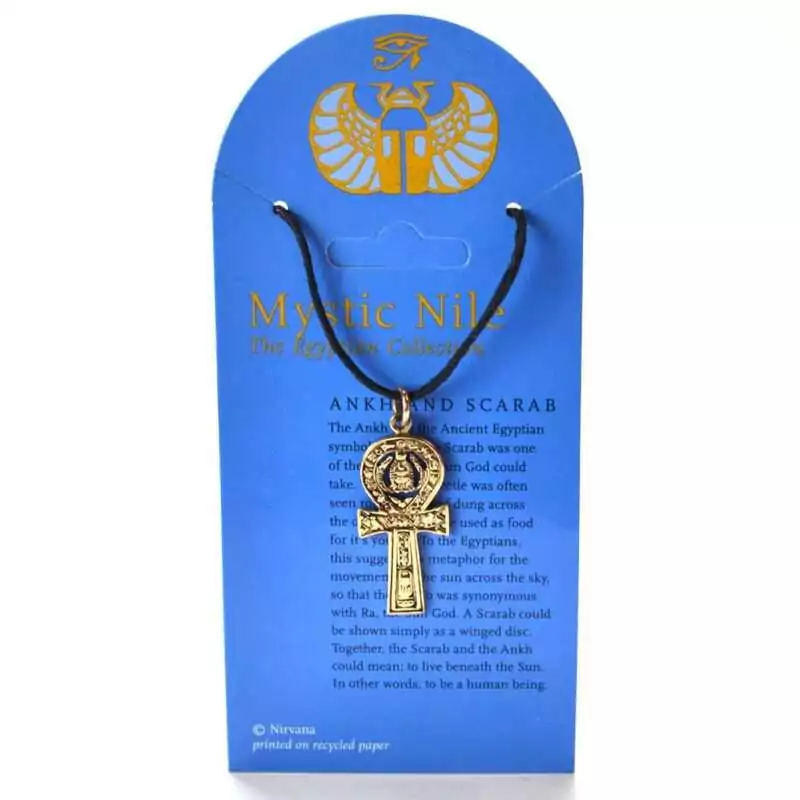
- Design: Ankh cross with a scarab beetle at the center
- Size: 1.25 inches long, cord included
- Best for: Life-force and vitality work, protection and renewal, ancient Egyptian practice
The Ankh and the Scarab, Two Symbols of the Sun God’s Movement
The Ankh is the Ancient Egyptian symbol of life itself, a looped cross whose form appears constantly across Egyptian art, temple carvings, and tomb inscriptions from the earliest dynasties onward. This pendant sets a scarab beetle directly into the center of the Ankh’s loop, pairing the two symbols deliberately rather than by coincidence. The scarab held its own specific meaning: it was one of the forms the sun god Ra could take, and Egyptians drew the connection from watching the beetle roll balls of dung across the desert, which it uses as food for its young. To Egyptian eyes, that rolling motion read as a direct metaphor for the sun’s movement across the sky, which is why the scarab became synonymous with Ra and why it sometimes appears in art simply as a winged disc.
Put the two symbols together and the combined meaning becomes more specific than either alone: to live beneath the sun, or put another way, to be a human being, existing under the sun god’s daily cycle of movement and renewal. The bronze-tone casting sits on a black cord ready to wear, and at 1.25 inches it reads as a clear, legible pendant rather than a small charm that gets lost against the chest.
Working with Ankh and Scarab Symbolism
Wear it for workings focused on vitality, renewal, and life force, especially at the start of a new project or a period you want to approach with fresh energy, echoing the scarab’s connection to the sun’s daily renewal. It also works as a protective piece, drawing on the Ankh’s broad association with life itself as something worth safeguarding. If your practice includes Egyptian deity work more specifically (Ra, Khepri as the scarab-headed god of the rising sun, or others in that pantheon), this pendant gives you a physical anchor for that practice. Browse my Necklaces and Pendants collection for other symbolic pieces that pair with this one.
How to Work with an Ankh and Scarab Pendant
The Ankh and scarab both carry solar, cyclical associations, so time your use of this pendant with beginnings and renewals when possible.
- Wear It at the Start of a New Cycle
Put the pendant on at the beginning of a new project, a new month, or any period you want to approach with renewed energy, echoing the scarab’s connection to the sun’s daily return. This timing gives the piece’s renewal symbolism something concrete to attach to.
- Hold It During Vitality or Protection Workings
For workings focused on life force, health, or protection, hold the pendant in your hand while stating your intention before putting it on, letting the Ankh’s core meaning (life itself) anchor the working directly.
- Pair It with Solar Timing
If you want to lean into the scarab’s solar association specifically, wear or charge the pendant at sunrise, echoing the beetle’s connection to Ra’s daily movement across the sky. This is optional rather than required, but it gives the solar layer of the symbolism a physical practice to attach to.
The Tarot Fellow Standard
I stock this pendant because pairing the Ankh and the scarab deliberately, rather than selling either symbol alone, gives you the fuller Egyptian reading: life and its daily solar renewal together rather than one concept in isolation. Browse my Spellcraft, Witchcraft and Magic collection for the wider vitality and protection working practice this pendant supports.
Frequently Asked Questions
The Ankh is the Ancient Egyptian symbol of life, appearing constantly across Egyptian art and temple inscriptions from the earliest dynasties. It’s one of the most consistently used symbols in the entire span of ancient Egyptian religious practice, tied directly to the concept of life itself rather than to any single deity or narrower meaning.
Egyptians observed scarab beetles rolling balls of dung across the desert to feed their young, and read that rolling motion as a metaphor for the sun’s daily movement across the sky. That observation made the scarab synonymous with Ra, and the beetle became one of the forms the sun god could take in Egyptian religious art.
Together, the two symbols suggest living beneath the sun, or being a human being existing under the sun god’s daily cycle of movement and renewal. Combining them gives you both halves of the concept, life itself through the Ankh and the sun’s renewing daily motion through the scarab, in a single piece rather than isolating one symbol from the other.
Reviews
There are no reviews yet