

Quick Specs
- Author: Normandi Ellis
- Type: Poetic translation and spiritual text
- Subject: Egyptian Book of the Dead (Book of Coming Forth by Day)
- Best for: Kemetic spirituality, Egyptian paganism, meditative reading, sacred text study
Awakening Osiris and the Problem with Literal Translation
The Egyptian Book of the Dead, properly titled the Book of Coming Forth by Day in its original Kemetic context, is a collection of spells, prayers, and ritual utterances compiled over centuries and placed in tombs from roughly 1550 BCE onward to guide the deceased through the Duat, the Egyptian underworld. E.A. Wallis Budge’s Victorian-era translation, long the standard English text, approached the papyri as a scholar of linguistics, producing a literal rendering that many modern readers find dense and emotionally inaccessible, the words present but the living meaning behind them absent.
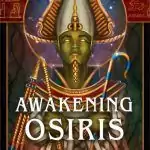
Normandi Ellis took a different approach when she published Awakening Osiris in 1988, working directly from hieroglyphic sources including the Papyrus of Ani and the papyri of Nebseni and Nekhet, but translating them as a poet rather than as a philologist. Ellis writes in the introduction that she hesitates to call the result a translation at all, describing it instead as a meditation. The outcome is a text that reads with the rhythmic, first-person immediacy of ancient prayer, stripped of the bureaucratic stiffness that made Budge’s version feel like a legal document of the afterlife.
Who This Book Is For and How It Differs from Other Egyptian Texts
Awakening Osiris serves a different function than a practical magic guide to ancient Egypt. Readers looking for specific spellwork, ritual instructions, or magical techniques drawn from Egyptian tradition should seek a practitioner-oriented text. What Ellis provides is the sacred text itself, rendered in language that practitioners of Kemetic reconstruction, eclectic paganism, and spiritually motivated secular readers can engage devotionally. Multiple reviewers describe returning to specific chapters repeatedly as a meditation practice rather than reading the book once and setting it aside.
The text is structured around the understanding that an “Osiris” is not only the god of the dead but any soul following in his pattern of death and renewal. This means the prayers in the book are written for the living to speak as much as for the dead to carry. Sections like “Becoming the Crocodile” or “Becoming the Hawk” are not decorative metaphors but invocations of divine qualities the practitioner draws into themselves. This participatory structure is what Ellis’s poetic approach restores that Budge’s literal method obscures.
This edition includes a new introduction and study guide by Ellis not present in the original 1988 release. A correspondence table at the back maps each chapter to its source in the original papyrus, and a bibliography supports further study. For practitioners who already own a Kemetic deity or mythology reference, Awakening Osiris pairs naturally as the experiential complement, the text you read alongside the scholarship rather than instead of it.
How to Use Awakening Osiris
How to approach Awakening Osiris as a spiritual text and daily meditation resource.
- Read the Introduction First
Ellis's introduction explains her translation methodology and the source papyri she used. Reading it before the main text sets the interpretive frame and clarifies what the book is and is not, preventing misreadings of its poetic approach.
- Read Sections as Daily Meditations
The chapters are short enough to read one at a time as a morning or evening spiritual practice. Select a chapter related to your current situation, such as chapters on becoming or renewal, and sit with it for several days before moving on.
- Use the Source Table for Deeper Study
Compare Ellis's rendering with Faulkner's or Budge's to see how interpretive decisions work. The back of the book maps each chapter to its source in the original papyrus. This comparative reading deepens both scholarly and devotional understanding.
The Tarot Fellow Standard
I stock Awakening Osiris because Ellis’s version is consistently the translation that practitioners in Kemetic and Egyptian pagan communities point newcomers toward first, ahead of the Budge literal edition and ahead of the Faulkner academic translation. It is the text that makes the Book of Coming Forth by Day feel alive rather than archival, and that’s a meaningful distinction for someone building a serious devotional practice around Egyptian spirituality. Browse my spirituality and spirits book collection for related titles, and explore my esoteric and occult books for deeper study companions.
Frequently Asked Questions
Budge's version is a literal Victorian rendering many find emotionally flat. Ellis translates the same sources as a poet, producing prose that reads like prayer and restores the first-person immediacy of the original Kemetic ritual utterances.
Yes, it is a recommended starting point for practitioners entering Kemetic spirituality or Egyptian paganism. It is more accessible than literal academic translations and pairs well with mythology reference books for context on the gods and roles.
It is a poetic interpretation based on multiple papyri including the Papyrus of Ani, Nebseni, and Nekhet. Ellis maps each chapter to its source in the back. Some sections are meditative expansions rather than direct translations of specific spells.
Yes, many practitioners use it this way. The chapters are brief and written in first-person language suited to spoken recitation. Reviewers describe returning to individual chapters as a meditation or ritual practice rather than reading it once.





2 reviews for Awakening Osiris by Normandi Ellis — Poetic Egyptian Book of the Dead