
Quick Specs
- Material: Banded agate (chalcedony)
- Quantity: 1 lb lot of tumbled stones
- Stone Size: 20-25mm (about 0.8 to 1 inch)
- Finish: Tumbled and polished
- Color: Red-brown and orange with cream and white bands
- Mohs Hardness: 6.5 to 7
Banded Agate: Layers of Silica in Polished Form
Agate is banded chalcedony, a microcrystalline form of quartz, and the alternating bands are what name it. Most agate forms in gas-bubble cavities in volcanic rock such as basalt and andesite, where silica-rich groundwater seeps in and deposits thin layers one after another. The layers can follow the shape of the cavity wall or settle in level sheets, and each band marks a moment when the water carried slightly different impurities. Theophrastus, the Greek naturalist, wrote about agate around 350 BCE, and he and Pliny the Elder both tied the name to the River Achates in Sicily. Agate jewelry from Sumer dates to about 2500 BCE, and the German town of Idar-Oberstein has worked agate on an industrial scale since about 1375. Deposits are extensive, which keeps the stone widely available, and geology references call agate the most popular rough for tumbled stones. Beginners can tumble agate, and hobbyists load it into a rock tumbler with jasper and other quartz varieties.
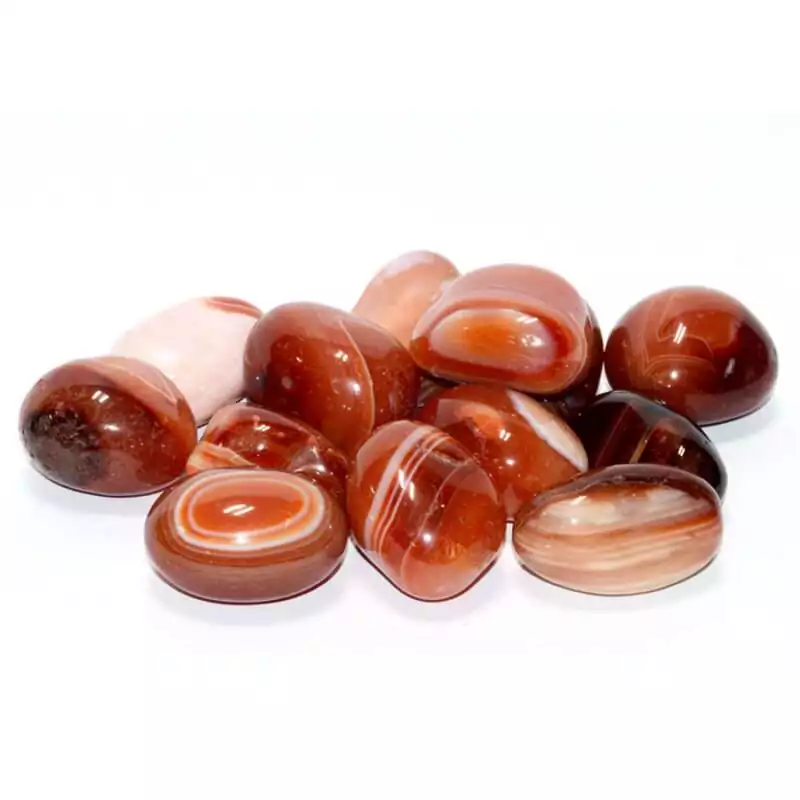
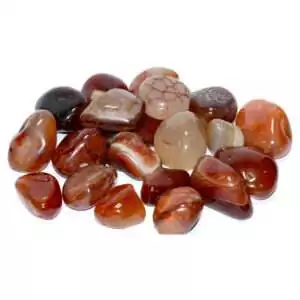
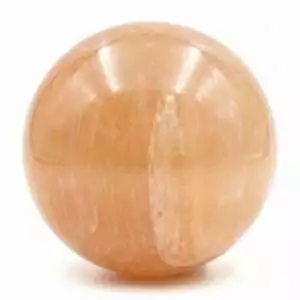
The stones in this lot measure 20 to 25mm, about 0.8 to 1 inch, and each one is polished to a high gloss. The ground color is red-brown to bright orange, and the bands run from cream to milky white. In natural agate, iron produces most band colors, and hematite often colors the red ones. On some stones the bands form oval rings that circle a small eye, and on others they run as parallel stripes, because each stone shows the layers from a different angle. A few stones are pale pink-white with a faint rust band, and one or two carry dark brown patches. Red and orange agate in the trade is commonly heated or dyed to deepen the color, since the stone is porous and takes up dye readily. Tumbling turns the stones in a barrel with abrasive grit, then finer grits and a polishing powder, and the final polish is what brings the banding out so clearly. At this size a stone fits easily in a closed hand or a small pouch.
Practical Ritual Applications
Crystal guides link agate with grounding and the root chakra, and sources from the ancient world describe agate used for seals and protective objects. Lay a handful on a cloth and sort them by pattern: ringed stones in one group, striped stones in another. Set a ringed stone at each corner of a work table, or line a few striped stones along the edge of an altar. Slip one into a pocket on a day that asks for patience, and keep the rest in a bowl beside your Tarot deck so you can swap stones as your purpose changes. Two stones that match in color make an easy pair to give a friend. For other stones that crystal practice connects with steadiness, browse my grounding and earth energy stones.
How to Work With Banded Agate Tumbled Stones
Three steps for turning a pound of banded agate into a working set.
- Read the Bands
Pour the stones onto a plain cloth beside a window and hold each one up to the light. Look for the thin cream layers and note whether the pattern forms rings or stripes. Sort the stones into three small piles: ringed, striped and mixed. Choose one favorite from each pile and keep the others in a dish. Handling every stone once gives you a feel for the lot, and you can return to the cloth whenever you want a different pattern.
- Set Four Around One
Choose a ringed stone for the center of a flat surface, such as a shelf, a tray or a corner of your reading table. Place four striped stones around it at the corners of a square. Put a written intention, a candle in a holder or a Tarot card at the center, depending on your practice. Leave the arrangement in place for as long as it suits your purpose, then reshuffle the stones and begin a new one.
- Rinse Briefly and Dry
When the stones need freshening, rinse them briefly in water and dry them with a soft cloth. Avoid sudden temperature changes, such as hot water on a cold stone, because they can stress the surface. Store the stones in a dish, a drawer or a cloth-lined box, and carry a single stone in a small pouch to keep it apart from keys and coins.
The Tarot Fellow Standard
Pattern is the reason banded agate has a place on my shelves. At 20 to 25mm each stone has enough surface to show its rings or stripes, and the red and cream coloring looks warm beside candles, wooden altars and a Tarot cloth. A pound gives you plenty to sort, keep and give away, and sorting is half the pleasure, since the ring and stripe patterns change from one stone to the next. For other stones sold by the pound, in other sizes and colors, browse my bulk tumbled stones collection.
Frequently Asked Questions
Agate forms when silica from groundwater fills a cavity in volcanic rock, and the bands record how the chemistry of that water changed over time. Wall banding follows the shape of the cavity, with fibers growing inward from the walls, and level banding forms horizontal layers near the base. Iron produces most band colors. Researchers still debate exactly how the banding forms, and it has never been reproduced in a laboratory.
They are close relatives. Both are banded chalcedony, a form of quartz. Onyx has straight, parallel bands, usually black and white, and wavy or curved banding is called agate. Black onyx in the trade is generally dyed. Banded agate has curved or irregular banding that follows the shape of the cavity where it grew, as in these stones.
Agate forms in volcanic rock around the world. Rio Grande do Sul in Brazil is a source of large agate nodules, and Idar-Oberstein in Germany imported Brazilian agate in large quantities from about 1900. Crystal references list Brazil, India and the United States as major origin regions. Agate that forms in cavities in rhyolite is known as a thunder egg.




Reviews
There are no reviews yet