
Quick Specs
- Botanical name: Arctostaphylos uva-ursi
- Form: Dried leaf
- Net weight: 2 oz
- Storage: Cool, dark place in a sealed container
- Sourcing: SQF & Kosher certified supplier
Bearberry Leaf: A Ground-Hugging Evergreen for Psychic Work
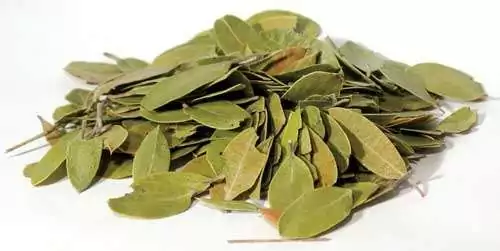
Bearberry, Arctostaphylos uva-ursi, is a low evergreen shrub in the heath family, the same family as blueberries, cranberries, and rhododendrons. It hugs the ground and creeps outward in dense mats, and it favors dry, well-drained, nutrient-poor places: open pine woods, sunny slopes, and rocky ledges. Where conditions suit it, it can be the dominant plant beneath lodgepole, ponderosa, and jack pines. The leaf is what you have in this packet. Each one is small, roughly half an inch to an inch long, with a smooth edge, a rounded tip, and a base that narrows into a short stem. The texture is thick and leathery, and the leaf keeps that texture after drying. In late spring the shrub carries nodding clusters of small white to pink flowers shaped like tiny urns. By autumn those have given way to bright red berries about a quarter inch across, each holding five small seeds, and they cling to the plant into winter, feeding birds and other wildlife when little else is available. Gardeners plant it as a year-round evergreen groundcover for the same mat-forming habit.
In modern herb magic, bearberry belongs to psychic work. Guides to magical herbs file the leaf under divination and intuition, most often as a pinch in a sachet kept near a reading table, a scrying mirror, or a tarot deck. Folk belief adds a protective thread: carrying the leaf is said to guard against evil spirits and ghosts. People who work with the bear as an animal ally often keep some on hand for that connection. Correspondence lists, the tables that pair herbs with elements, planets, and purposes, commonly place the plant under the earth element. Methods vary from writer to writer: a sachet, a pinch scattered around an altar, or a leaf set beside animal-themed talismans. The leaves can go into a sachet crushed or stay whole in a small dish on the altar, depending on which of these methods you choose. These are modern and folk associations gathered from herb-magic writing, so treat them as a starting point and let your own readings and notes build the rest.
Practical Ritual Applications
Keep a pinch of bearberry leaf in a small cloth sachet beside your tarot deck, pendulum, or scrying mirror, and carry it on the days you read for other people. Slip a few whole leaves into the box or bag where your deck lives. Crumble a little into a spell jar built around clear sight, layered with other herbs from my psychic powers and divination herbs. If you work with the bear as an animal guide, set a few whole leaves in a small dish on your altar as an offering. You can also drop a small pinch onto a lit charcoal disc resting on sand before a reading to mark the start of the session. Find discs, sand, and burning tools in my charcoal and sand collection, burn in a ventilated room, and stay with the dish until the charcoal is out.
How to Prepare Bearberry Leaf for a Divination Sachet
A cloth sachet is the simplest way to keep bearberry beside your divination tools, and it takes only a small bag and a length of thread.
- Measure and crumble a pinch
Take about a teaspoon of leaf, enough to fill a small sachet, and crush it lightly between your fingers or in a mortar so the pieces pack together. Hold it for a moment and name the work it's for, whether that's a reading, a stretch of scrying, or a dream journal practice. Close the packet again right away.
- Fill and tie the sachet
Spoon the crushed leaf into a small natural-fiber bag, add any other dry herbs you've chosen for the working, and draw the bag shut or tie it off with thread. Choose a cloth in whatever color you associate with clear sight. Say your intention aloud as you knot it so the sachet is tied to a specific purpose.
- Place it and renew it
Set the sachet near your cards, pendulum, or scrying tools, or carry it on days you read for others. When a working feels finished, or when a new moon begins and you want a fresh start, empty the leaf outdoors onto soil and fill the bag again. Keep a single sachet for one purpose so its meaning stays clear.
The Tarot Fellow Standard
I stock bearberry in this 2 oz size because a small packet suits how the herb is used: a pinch at a time, in sachets, jars, and the occasional charcoal dish. Kinnikinnick, the name for smoking mixtures that often include this leaf, belongs to the Native nations who developed it and who keep it as a living practice. This packet is the leaf alone, offered for your own modern ritual work, and those ceremonies remain with the teachers and communities who hold them. If kinnikinnick itself interests you, learn about it from the nations that practice it, then decide what role bearberry plays in your own path.
Frequently Asked Questions
Yes. Uva ursi is Latin for bear's grape, a nod to the red berries that bears eat, and bearberry is the English version of the same name. Both point to Arctostaphylos uva-ursi. The shrub also goes by mealberry, sandberry, mountain box, and kinnikinnick, so a label with any of those names usually means the same species, though kinnikinnick can also name a smoking mixture.
Kinnikinnick comes from an Algonquian word meaning mixture. It names smoking mixtures that several Native nations prepare, and bearberry leaf is a common ingredient alongside plants such as red osier dogwood bark and sumac leaf. Their uses vary from nation to nation and include spiritual ones. This packet holds one herb, the leaf alone, so it's not a kinnikinnick blend.
Bearberry is circumpolar, native to northern North America, Europe, and Asia. In North America it runs from Alaska and Canada south to New Mexico. In Europe it reaches from Iceland down into the mountains of Spain, where it grows in the Pyrenees and the Iberian System.
Very little. A pharmacopoeia from 1911 describes the dried leaf as having no odour, and today's dried leaf is much the same, with no traceable scent. That makes it a quiet herb in a sachet or on charcoal: it adds its associations and its look. If you want aroma in a blend, set a resin or an aromatic herb beside it.
Reviews
There are no reviews yet