

Quick Specs
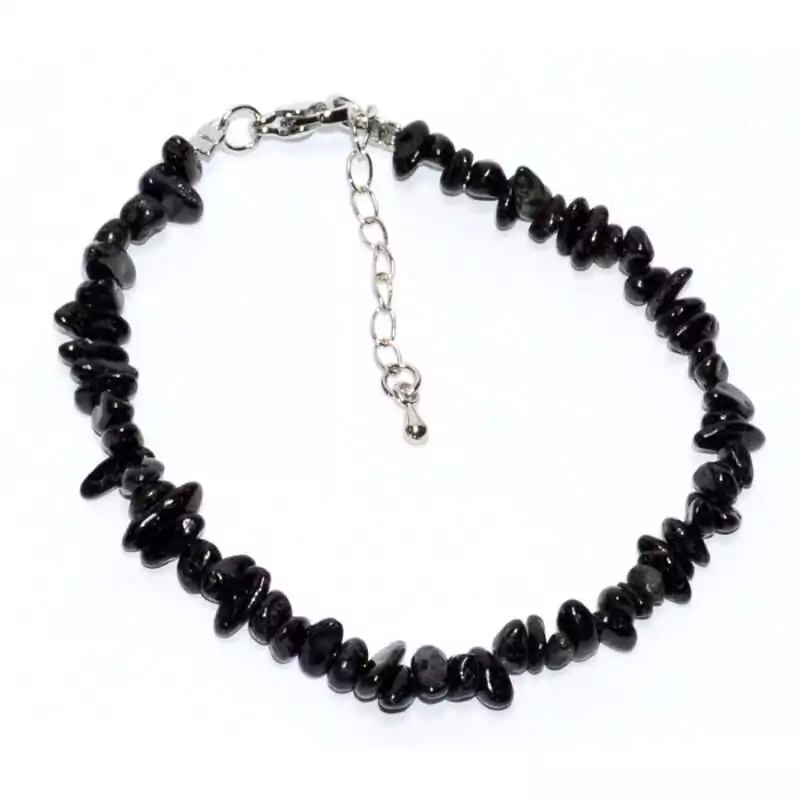
- Stone: Black tourmaline (schorl)
- Form: Irregular chips
- Color: Black
- Finish: Glossy
- Hardness: 7 to 7.5 on the Mohs scale
- Closure: Lobster clasp with extender chain
- Hardware: Silver-toned
Black Tourmaline Chips on a Clasp Bracelet
Black tourmaline is the mineral schorl, the iron-rich, black member of the tourmaline group, a sodium iron aluminum borosilicate. Minerals.net names schorl as the most common form of tourmaline and describes it as exclusively black, and GIA calls it typically black and rich in iron. That gives these chips their look: deep black from edge to edge, with a glossy surface where each piece catches the light. GIA adds that schorl forms in a wide variety of rock types and has been featured in mourning jewelry. Some chips have flat faces that give a clean reflection and others curve, so the shine moves along the strand. Every chip has its own outline. Some are flat and flake-like, some are stubby and rounded, and a few run long, so the strand has a pebbled, uneven profile. Tourmaline ranks 7 to 7.5 on the Mohs scale, which is hard enough for regular wear, and GIA rates its toughness as fair. A sharp knock can still chip a piece, and high heat or a sudden temperature change can crack the stone, so the bracelet is best taken off for heavy work and sports.
In modern crystal practice, black tourmaline is linked with the root chakra, the base of the chakra scheme, and with protection and grounding. Those associations belong to modern crystal lore, which took the chakra idea from Hindu and Buddhist traditions, and you can take them as symbolism. This bracelet closes with a silver-toned lobster clasp. A short extender chain ends in a small teardrop, and it gives you several places to catch the clasp, so the fit goes from snug to loose and the bracelet sits over a sleeve cuff or a bare wrist. The teardrop gives the loose end of the chain a neat finish, and the silver-toned hardware echoes the sheen along the edges of the chips. Black goes with nearly every other material you might wear, so the strand sits easily beside silver, gold, leather and wood. The irregular outline of the chips looks good beside a smooth metal cuff or a thin chain bracelet, and a pale stone strand worn on the same wrist makes the black look deeper.
Practical Ritual Applications
Put the bracelet on before an errand, a commute or a crowded event where you’d like a small reminder to stay steady, and touch one chip when you arrive. On an altar, loop it around the base of a black or white candle, or lay it in a small dish of salt, where the black chips mark a border around the space. By the front door, a dish holds it with your keys, so it’s the last thing you take and the first thing you put back. If you collect strands in several stones, my stone and crystal chip and nugget bracelets collection shows more bracelets with the same uneven outline. Fasten the clasp before you put the bracelet away so the chain stays untangled.
How to Wear and Care for Your Black Tourmaline Bracelet
Three steps cover setting the fit, using the bracelet as a daily cue, and cleaning it gently.
- Set the fit with the extender chain
Close the lobster clasp on the chain link that gives you a comfortable fit, snug enough to stay put and loose enough to move. If the chips twist, turn the strand until the glossiest faces point outward. Check that nothing pinches at the clasp, then give the bracelet a gentle tug to confirm the clasp is fully closed.
- Pair it with a short pause
Before you leave the house, rest your thumb on one chip and take three slow breaths. In crystal practice black tourmaline is tied to the root chakra, to grounding and to protection, so you can name the steadiness you want for the day in one sentence. Repeat it each morning and the bracelet becomes a habit marker.
- Clean it warm and gentle
Wipe the chips with a soft cloth dampened with warm soapy water, then dry them. GIA recommends warm soapy water for tourmaline and advises against ultrasonic and steam cleaners. Heat can damage the stone, so keep the bracelet away from radiators and hot cars. Store it with the clasp fastened and the chain laid flat.
The Tarot Fellow Standard
I stock this bracelet because it keeps black tourmaline simple: glossy black chips, a lobster clasp and a short extender chain, with nothing else added. The chips show schorl, the most common tourmaline, in its smaller fragments, and each chip adds its own shape to the strand. The clasp with its extender chain suits wrists and sleeves of different sizes. The root chakra and protection associations come from modern crystal lore, and I offer them as symbolism. For other stones that crystal practice links with protection, browse my protection and energy shifting collection.
Frequently Asked Questions
Yes. Schorl is the mineral name for black tourmaline, the sodium iron aluminum borosilicate member of the tourmaline group. Minerals.net describes it as exclusively black and the most common form of tourmaline. GIA lists schorl among the five major tourmaline species, alongside elbaite, liddicoatite, dravite and uvite, and notes that it forms in a wide variety of rock types.
Tourmaline is pyroelectric and piezoelectric, which means a change in temperature or pressure produces an electric charge in the crystal. Minerals.net notes that dust particles cling to the crystal ends when this happens, and it lists both properties among the marks that identify tourmaline. A soft cloth wipes the dust away from the chips whenever you notice it.
GIA names warm, soapy water as the best cleaning method for tourmaline and advises against ultrasonic and steam cleaners. High heat can damage the stone, and a sudden temperature change can fracture it. Tourmaline ranks 7 to 7.5 on the Mohs scale with fair toughness, so wipe the chips with a soft cloth, dry them, and keep the bracelet clear of hard knocks and hot surfaces.




Reviews
There are no reviews yet