
Quick Specs
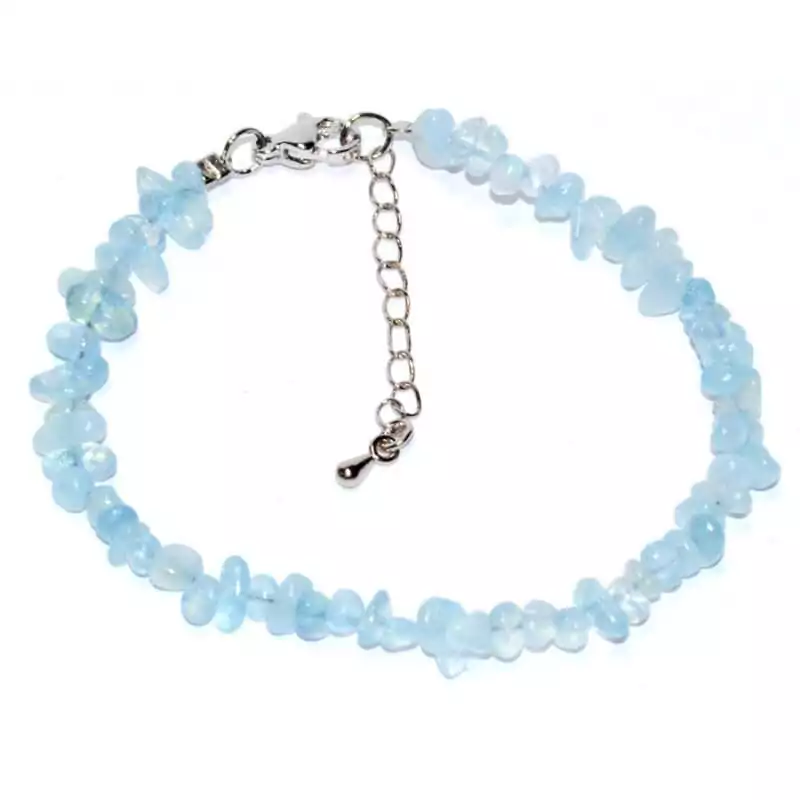
- Stone: Aquamarine
- Form: Irregular chips
- Color: Pale sky blue, translucent to near-clear
- Closure: Lobster clasp with extender chain
- Hardware: Silver-toned
Aquamarine Chips on a Clasp Bracelet
Aquamarine is the blue to blue-green variety of beryl, a beryllium aluminum silicate, and trace iron in the crystal gives it its color. The shade is usually a pale, pastel blue, softer than the deep tones of a swimming pool, and these chips follow that pattern: soft sky blue in some pieces, close to clear in others, with a few milky patches where the stone isn’t fully see-through. A handful of chips lean toward green-teal, which fits a stone defined as blue to blue-green. Some chips look translucent and glassy while others read soft and watery. The name means sea water, a good fit for a stone that looks like shallow tide over sand. Chips are small, irregular fragments, so the strand has a pebbled, uneven outline. Each bracelet differs slightly from the next, and no two chips share the same shape or depth of blue. Beryl is hard, 7.5 to 8 on the Mohs scale, and that suits a bracelet that will brush against desks, doorframes and sleeves, though GIA advises protecting it from hard knocks.
Crystal guides link aquamarine with the throat chakra, calm and clear speech. Those associations come from modern crystal lore, which took the chakra scheme from Hindu and Buddhist traditions, and you can take them as symbolism. If you give a talk, read for others, or have a conversation you’ve been putting off, a stone with that reputation can serve as a small reminder to speak at your own pace. This bracelet closes with a lobster clasp, and a short extender chain with a small teardrop at its end lets you choose where the clasp catches, so the fit adjusts to your wrist and to the sleeves you wear. The teardrop gives the loose end of the chain a neat finish. Because the chips are small and irregular, the strand catches light from many angles and has a soft, pebbled look, not the uniform shine of polished round beads. Silver-toned metal and pale blue make a cool, low-contrast pairing, which keeps the bracelet quiet and easy to wear with other jewelry.
Practical Ritual Applications
Put the bracelet on before a day when you’ll be speaking: a presentation, a hard conversation, a reading you’re giving at a table. Touch the chips once before you begin, as a cue to slow down. For a water-themed altar, lay it on a blue or white cloth beside a shell, a bowl of water or a piece of sea glass, and let the pale blue stand for the shore. If you keep a journal for speaking or writing practice, lay the bracelet on the page while you draft the first lines. To layer it with other chip strands, my stone and crystal chip and nugget bracelets collection shows more stones that share the same uneven outline. Take it off before heavy work or cleaning, and fasten the clasp before you put it away so the chain stays untangled.
How to Wear and Care for Your Aquamarine Bracelet
Three steps cover fit, a short pause before wearing, and gentle cleaning.
- Set the fit with the extender chain
Close the lobster clasp on the chain link that gives you a comfortable fit, snug enough to stay on your wrist but loose enough to move. If the chips twist, turn the strand until the pale blue pieces lie face up, then check that nothing pinches at the clasp.
- Pause before you put it on
Hold the bracelet in your open hand for a breath before you wear it. In crystal practice aquamarine is tied to the throat chakra and to clear speech, so you can name one thing you want to say or one thing you hope to release. Keep it short; a single sentence is enough.
- Keep it clean and cool
Wipe the chips with a soft cloth dampened with warm soapy water, then dry them. Skip ultrasonic and steam cleaners as a precaution, since they can damage stones with inclusions or fractures, and keep the bracelet away from radiators and hot cars, because heat isn't recommended for aquamarine. Store it with the clasp fastened.
The Tarot Fellow Standard
I stock this bracelet because it keeps the focus on the stone: pale aquamarine chips, an adjustable clasp and no decoration added. The soft blue stays within aquamarine’s usual pastel range, and the chip form shows the stone’s translucence more openly than a tightly polished bead does. The throat chakra and sea associations come from modern crystal lore and old folklore, and I offer them as symbolism you can take or leave. For other jewelry made from stones, my crystal and stone jewelry collection gathers bracelets, pendants, rings and earrings in one place.
Frequently Asked Questions
They are the same mineral, beryl, and the difference is the color and the trace elements behind it. Aquamarine is the blue to blue-green variety, colored by iron. Emerald is the green to bluish-green variety, colored by chromium and sometimes vanadium. Beryl also includes morganite, a pink variety colored by manganese, and heliodor, a greenish-yellow one. Gem experts differ on how green a stone must be before it counts as emerald instead of green beryl.
Yes. Most aquamarine on the market is heated to shift a greenish or yellow tint toward a cleaner blue. Gem dealers call the treatment very common and undetectable, and the trade accepts it when it is disclosed.
Warm soapy water is always safe for aquamarine, so wipe the chips with a soft cloth dampened that way and dry them. Heat isn't recommended for the stone. Ultrasonic and steam cleaners are usually safe unless a stone has liquid inclusions or fractures so skipping them is the cautious choice for a strand of chips. Despite its hardness, protect the strand from scratches and hard knocks.
Western folklore ties aquamarine to the sea. Tradition holds that sailors, fishermen and travelers carried it as a protective charm, and an old tale calls it treasure from mermaids' chests. The name itself means sea water.



Reviews
There are no reviews yet