
Quick Specs
- Material: Pewter
- Size: 3/4 inch
- Origin: Made in USA
- Best for: Meditation focus, pocket carry, altar use, and mindfulness practice
Shakyamuni Buddha as a Pocket Meditation Companion
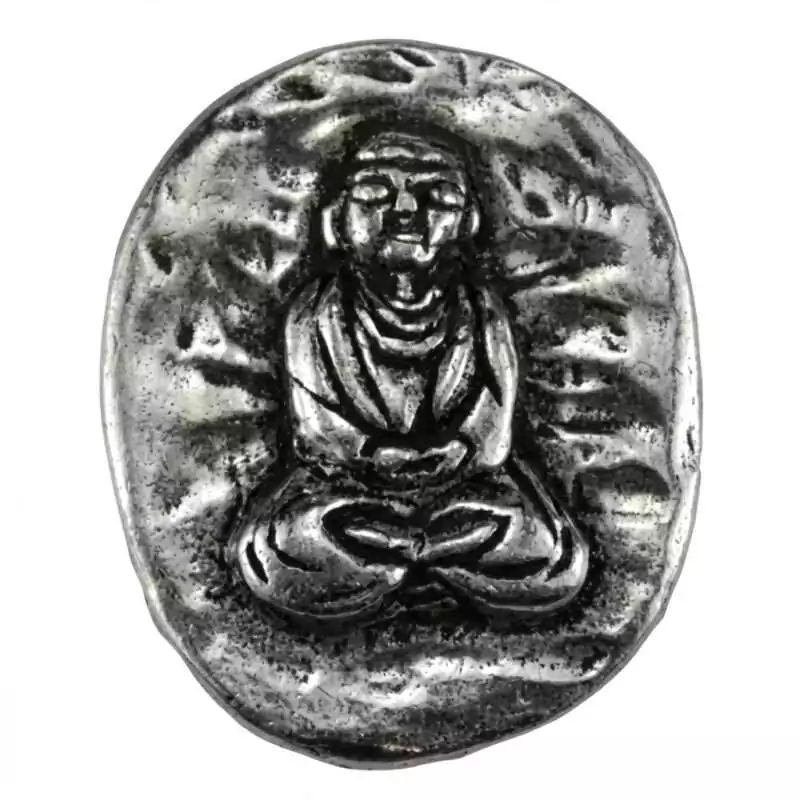
This small pewter pocket stone carries the image of Siddhartha Gautama, the historical Buddha, known in Buddhist tradition as Shakyamuni, meaning “Sage of the Shakya clan.” Born approximately 563 BCE in present-day Nepal, Gautama renounced royal privilege to seek liberation from suffering and, after years of meditation, attained enlightenment beneath the Bodhi tree. His teachings on the middle way and the cessation of suffering became the foundation of Buddhism across dozens of traditions worldwide. The figure on this stone reflects that contemplative lineage.
It is worth distinguishing this from the round, laughing figure commonly sold as a “Buddha” in decor shops. That figure is Budai, a 10th-century Chinese Chan monk celebrated in folk tradition as a deity of luck, abundance, and contentment. Budai is a compelling figure in his own right, but he is not the same as Shakyamuni. This pocket stone features the meditative, serene depiction of the historical Buddha, making it more directly connected to the contemplative practice of stillness and the middle way.
Pocket Stones and Tactile Grounding Practice
Pocket stones are held, not displayed. Their function is tactile: the smooth, cool surface of a small object in the palm gives the nervous system something concrete to register when the mind is busy or anxious. Research in sensory grounding supports the mechanism, showing that deliberate tactile focus interrupts the feedback loop of anxious thought by redirecting attention to immediate physical sensation. A 3/4 inch pewter stone is compact enough to keep in a front pocket or bag at all times.
In Buddhist practice, small devotional objects have long been used to maintain continuity of practice across daily life. Carrying this stone is not a substitute for formal sitting, but it creates a moment of recollection throughout the day, a physical cue to pause, breathe, and return to the present. Browse my chakra and meditation collection for complementary tools to deepen a seated or portable practice.
How to Use the Buddha Pocket Stone
Three ways to integrate the Buddha pocket stone into a daily mindfulness or meditation practice.
- Set Your Intention
Hold the pewter stone in your palm and close your eyes. Think of a quality you want to cultivate, such as patience, contentment, or clarity. The Buddha image is a reminder to return to the present moment and the middle way during your day.
- Carry It Daily
Slip the stone into a pocket, bag, or small pouch so it stays within reach. When stress arises, take it out and rub the surface slowly between your thumb and forefinger. Tactile focus on a smooth object interrupts anxious thought patterns quickly.
- Use It in Meditation
Place the stone on a meditation cushion, altar, or palm-up hand at the start of a seated practice. Its weight and smooth pewter surface serve as a tactile anchor that helps the mind settle before moving into breath work or silent sitting.
The Tarot Fellow Standard
I stock this stone because it’s a well-made, uncluttered devotional piece with a clear purpose. Pewter holds detail nicely, the size is genuinely pocket-friendly, and the image is the meditative Buddha rather than a decorative rendering. For anyone building a practice around mindfulness, presence, or Buddhist-adjacent contemplation, this is a low-barrier, high-utility object worth having within reach. If you want to pair it with statuary or larger devotional pieces, explore my statues collection for seated and standing Buddha figures in a range of sizes.
Frequently Asked Questions
The stone depicts Siddhartha Gautama, the historical Buddha, and serves as a reminder to seek inner peace and the middle way. It is not a depiction of Budai, the folk deity often called the Laughing Buddha, who represents luck and abundance.
It is cast in pewter, a durable tin-based alloy used for centuries in amulets and devotional objects. The smooth, polished finish makes it comfortable to hold during meditation and sturdy enough for everyday pocket carry without tarnishing quickly.
Hold the stone in your palm or between thumb and forefinger at the start of your session. Focus on its weight and texture to anchor your attention. This simple tactile grounding practice is especially useful for people new to seated meditation.
No. This stone features Shakyamuni Buddha, the historical founder of Buddhism. The Laughing Buddha is Budai, a 10th-century Chinese monk associated with luck and prosperity. The two figures carry very different meanings in Buddhist tradition.




I love my coin it causes conversation. I love silver so it works for me
Husband loves it!