

Quick Specs
- Brand: Llewellyn Publications
- Type: Paperback book, 432 pages
- Size: 9.3″ x 7.7″ x 1.4″
- Size/Quantity: 9.3 x 7.7 x 1.4 inches
- Best for: Morrigan devotion, Celtic reconstructionism, shadow work, advanced practitioners
Morrigan Devotion and Celtic Dark Goddess Mythology
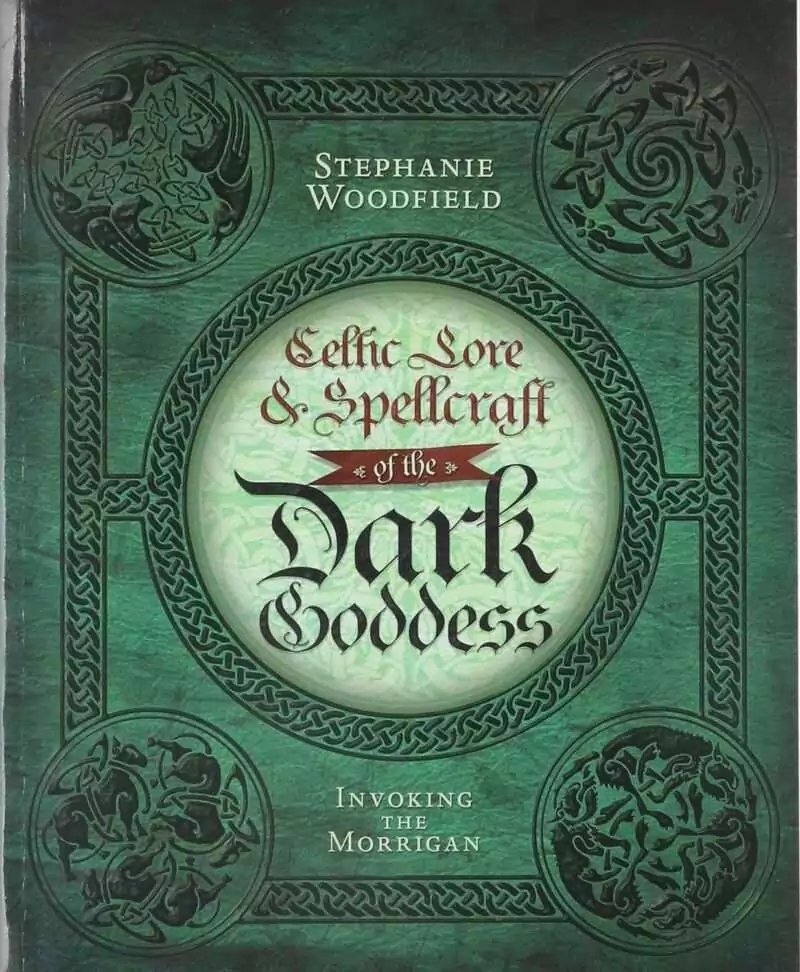
Stephanie Woodfield’s Celtic Lore and Spellcraft of the Dark Goddess is a rigorous devotional study centered on the Morrigan and her triple aspects: the Badb, the crow goddess of battle and prophecy; Macha, sovereign earth goddess of Ulster; and Anu, the nurturing land goddess whose name survives in the twin hills of County Kerry known as the Paps of Anu. Woodfield draws directly from primary Irish mythological texts including the Ulster Cycle and the Book of Invasions, giving each aspect a grounded historical foundation rather than a purely contemporary Pagan framing.
The scope extends to Morgan le Fay, the Arthurian figure who shares significant mythological DNA with the Irish Morrigan. Woodfield traces the connections between Irish and Brythonic goddess traditions with care, treating the British material as distinct but related rather than conflating the two. This comparative rigor sets the book apart from goddess-focused titles that blend traditions without acknowledging the differences.
Ritual Structure, Pathworkings, and Initiatory Rites
The practical content spans pathworkings, initiatory rites, seasonal rituals aligned to the Celtic festival calendar, and spell work appropriate to the Morrigan’s domains: sovereignty, battle, transformation, prophecy, and death. Woodfield structures the devotional work progressively, building from foundational practice through deeper initiatory engagements with the goddess. Each section pairs mythological context with actionable ritual, making the book functional as both a reference and a working text.
Shadow work is woven throughout as a core theme. The Morrigan is a goddess who does not permit practitioners to avoid confrontation with their own darkness, and Woodfield frames this directly and without softening. Practitioners drawn to this path specifically because of its demands will find the book meets them at that level. I stock this for readers who want my Celtic and Druidry collection to include titles with genuine mythological depth.
How to Use Celtic Lore and Spellcraft of the Dark Goddess
A guide to working through this devotional text for maximum practical and spiritual benefit.
- Start with the Mythology Chapters
Read Part One before touching any ritual. Woodfield grounds each Morrigan aspect in Irish mythology, giving the spellcraft in later chapters real historical context and weight rather than modern framing.
- Work the Pathworkings Sequentially
The pathworkings are initiatory and build on each other. Work through them in order rather than jumping ahead. Each one deepens the relationship with a specific aspect of the goddess before moving to the next.
- Pair with a Dedicated Journal
The initiation rites generate strong personal material. Keep a dedicated journal to record impressions, dreams, and shifts in practice. This record becomes a meaningful part of the devotional work over time.
The Tarot Fellow Standard
I carry this title because it sets a high bar for Celtic goddess scholarship while remaining a practical working resource. Most Morrigan books either read like academic texts with no ritual content or offer ritual with no mythological grounding. Woodfield does both, and the 432-page scope gives her room to develop each aspect properly. If you’re building a serious Celtic practice, this belongs on the shelf. Browse my spellcraft and witchcraft books for more titles at this level of depth.
Frequently Asked Questions
Woodfield’s book is tagged for advanced practitioners and assumes familiarity with Celtic mythology. Readers new to the Morrigan will benefit more from introductory Celtic texts before working this challenging material.
Yes. Woodfield dedicates full chapters to Badb, Macha, and Anu, tracing each through primary Irish mythological sources. Morgan le Fay receives her own section examining the Arthurian connections to Irish tradition.
Woodfield writes from a Celtic reconstructionist and devotional polytheist perspective. The rituals reflect contemporary Pagan practice built on Irish mythological scholarship rather than a single initiatory lineage.
Most rituals and pathworkings are written for solitary practitioners, though group adaptations are possible. The initiatory structure works particularly well as a personal devotional practice carried out over several months.
Amazing