


Quick Specs
- Type: Keychain with a polished stone
- Stone: Citrine, a yellow to orange variety of quartz
- Finish: Polished, rounded
- Color: Cream, pale yellow and amber orange
- Fittings: Small metal loop, short chain and split key ring
- Mohs hardness: 7
A Polished Citrine in Cream and Amber
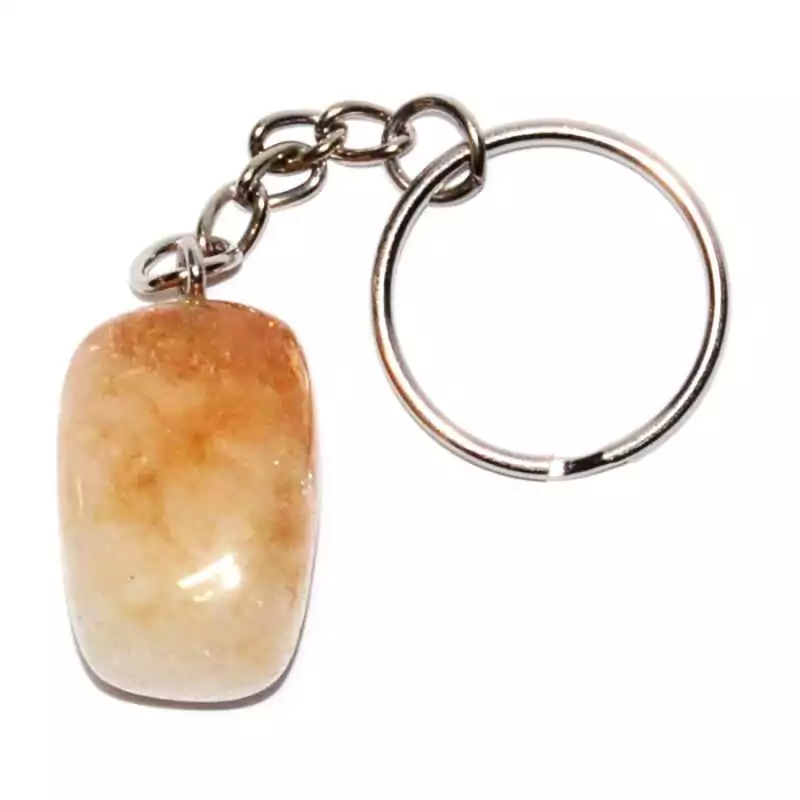
The stone is a polished, rounded piece, taller than it is wide, with softened corners, a little like a small pillow, and its glossy surface holds a bright highlight near the base. The color moves in soft clouds: cream and pale yellow across most of the face, with patches of amber orange gathering toward the top and along the left edge. Where the cream meets the amber, the edges blur into each other. A small metal loop at the top of the stone joins it to a short chain of silver-toned links, and the chain ends at a split key ring that goes straight onto your keys. The chain is short, so the stone sits close to the ring. The colors are pale and warm, so the stone looks soft against a dark bag or a jacket, and the amber patches give it a sunlit look all by themselves. Citrine takes its name from the Latin citrus, for the citron tree, and the cream, yellow and amber here sit inside the range GIA gives for the stone, pale yellow to brownish orange.
Citrine is a variety of quartz, silicon dioxide, and GIA says a trace of iron in its structure gives the yellow to orange color. In the days before modern gemology it was often confused with topaz, since many cultures used the name topaz for any golden yellow stone. Natural-color citrine is rare in nature, and GIA, Wikipedia and geology.com all say most citrine on the market is amethyst that has been heated to turn it yellow or orange. Brazil is the leading source of both kinds. In Bolivia, GIA notes, amethyst and citrine colors can occur together in one crystal, a stone called ametrine. GIA calls citrine durable enough for jewelry when it is cared for properly, a quality it shares with other quartz. Citrine has long carried the nickname merchant’s stone, which Wikipedia and Fire Mountain Gems both mention, and Wikipedia ties it to a superstition that the stone would bring prosperity. In modern crystal practice citrine is linked with abundance and prosperity, and astrology.com calls it the stone of abundance. These are associations from crystal lore, offered as symbolism.
Practical Ways to Carry It
Clip it to your keys so the stone rides with you through the day, or to a bag strap or zipper pull where you can see it. The nickname merchant’s stone makes it a fitting small gift for someone opening a shop, starting a business or beginning a new job, or for a November birthday, since GIA lists citrine alongside topaz as the birthstone for that month. At a desk, loop the ring over a drawer handle or a lamp pull, where the cream and amber sit well beside wood and paper. In a pocket, give it a pouch of its own, since GIA notes that sand and dust are mostly quartz and that citrine needs care against scratching. For other pieces linked with abundance in crystal practice, see my abundance, prosperity and money collection.
How to Carry and Care for the Citrine Keychain
Three steps cover checking the fittings, carrying the stone and cleaning it.
- Check the Loop and Chain
Hold the key ring and let the stone hang. Look at the small metal loop where it meets the stone, the chain links and the split ring, and give the stone a light tug to feel that the fitting holds. A loose link or loop is easier to fix before the keychain goes onto your keys.
- Carry It Where You See It
Thread the ring onto your keys or a bag clip. The stone hangs at the end of the chain, so a bag strap or a zipper pull gives it room to swing freely. In a pocket it rides best in a small pouch, away from other gemstones that could scratch it. Pick a spot you see each day so the cream and amber stay in view.
- Clean and Store
GIA says citrine can be cleaned safely with warm, soapy water, and advises against steam cleaning. Wipe the stone with a soft cloth dampened in mild soapy water, wipe again with a cloth wet with plain water, and dry it before it goes back on your keys. Between uses, a pouch or a drawer keeps it out of long, intense light.
The Tarot Fellow Standard
I stock this keychain because it puts one polished citrine on the ring you reach for every day, on a split ring that goes straight onto your keys. The merchant’s stone nickname and the solar plexus link come from modern crystal practice, and I offer them as symbolism you can take or leave. Because the stone is polished and rounded, it sits smoothly in the hand each time you pick up your keys. For more things to carry on a ring, see my key chain and ash chamber collection.
Frequently Asked Questions
GIA says a trace of iron in citrine's structure is responsible for its yellow to orange color, and Wikipedia notes that the cause in natural citrine is still debated and that natural citrine tends to be pale. Natural-color citrine is rare. Most citrine on the market is amethyst heated to a deeper yellow, orange or brown, a treatment GIA and geology.com both describe, and the heated stone is still quartz.
Crystal guides link citrine with the solar plexus chakra, the third chakra, said to sit in the area above the navel, and with themes of personal power and confidence. Astrology.com names the solar plexus chakra, and Crystal Vaults lists it first, with the sacral and crown chakras after it. These pairings come from modern crystal practice and vary from guide to guide.
GIA says some citrine color can fade with prolonged exposure to intense light, and that abrupt temperature changes can cause citrine to fracture. Fire Mountain Gems also advises keeping citrine out of prolonged sunlight and away from intense heat. A pouch or a drawer between uses keeps a keychain stone out of long, bright light.



Reviews
There are no reviews yet