
Quick Specs
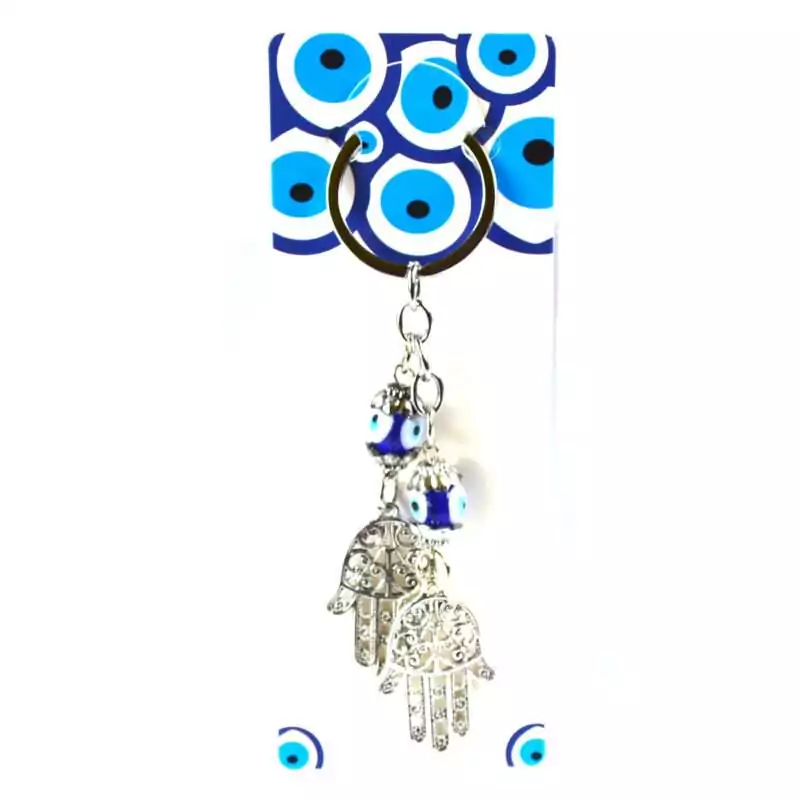
- Type: Evil eye keychain with double Hamsa (Hand of Fatima) charm
- Size/Quantity: One keychain
- Best for: Amplified protective warding, blessing and defense in one piece, daily carry
Double Hand of Fatima: Amplified Hamsa Protection
The Hamsa, known as the Hand of Fatima in Islamic tradition and the Hand of Miriam in Jewish tradition, is among the most enduring protective symbols in the Middle Eastern and North African world, with clear archaeological evidence dating to Carthaginian and Phoenician cultures in the first millennium BCE. The paired or mirrored hand design appears in traditional Moroccan and Tunisian decorative arts as a symbol of amplified protective power, doubling the warding capacity of the single-hand form. This double-Hamsa keychain translates that traditional amplification into a portable daily-carry piece.
The doubling of a protective symbol is understood to reinforce both its warding and blessing functions simultaneously. Some practitioners interpret the double Hamsa as having one hand facing outward for deflection and one facing inward for drawing blessings, creating a two-direction flow of protection and attraction within the same talisman. This dual-action reading is common in North African folk practice and has been carried into diaspora communities across Europe and the Americas.
The Evil Eye Pairing and Cross-Traditional Use
Combining the double Hamsa with an evil eye bead creates a piece where multiple protective symbols reinforce one another. The evil eye nazar provides the specific function of deflecting envious gazes, while the Hamsa addresses broader spiritual threats and invites positive energy. In Turkey, Greece, and across the Mediterranean, it is extremely common to see Hamsa and nazar combined in a single piece of jewelry or decor, because practitioners recognize that the two symbols address overlapping but distinct protective concerns. For more protective amulet options, browse my full amulets and talismans collection.
The keychain format keeps this piece in constant contact with the bearer’s daily energy field. Many people prefer carrying a talisman on the person rather than storing it at home, since continuous proximity keeps the intention present through consistent daily contact and attention.
How to Use Double Hand of Fatima Evil Eye Keychain
Three steps for activating and maintaining your double Hamsa evil eye keychain.
- Carry It on Your Person Daily
Attach the keychain to your keys, bag, or coat zipper. A common idea in talisman work is continuous proximity, so keeping this piece on or near your body throughout the day is what activates its ongoing protective function.
- Work With Both Functions Intentionally
The double Hamsa addresses both defense and attraction. When setting an intention, specify both: state what you want to ward off and what you want to draw in. This dual-intention approach fits the symbolism of the two hands.
- Cleanse After Difficult Periods
If you go through a difficult week or feel surrounded by negative attention, pass the keychain through frankincense smoke and leave it on coarse salt overnight. This clears protective debris and resets the piece for continued use.
The Tarot Fellow Standard
I stock this double Hamsa keychain because the doubled-hand design has genuine roots in North African decorative and protective art traditions, not just modern commercial design. Paired with the evil eye nazar, this is a piece with real symbolic depth that requires no special ritual knowledge to carry effectively. It’s accessible, portable, and culturally grounded. For practitioners who want to see the full range of evil eye warding options available, browse my evil eye collection.
Frequently Asked Questions
The doubled Hamsa is interpreted as amplified protection, with roots in North African and Levantine decorative arts. Some folk traditions read the two hands as working in opposite directions: one deflecting harm and one drawing blessings.
The Hamsa appears in Islamic, Jewish, and Christian communities across the Middle East and North Africa, with pre-Islamic origins in Phoenician culture. It is not exclusive to any single faith and is widely seen as a protective symbol.
The doubled design amplifies the traditional protective function. Repeating a symbol is thought to reinforce its intent. Some practitioners use the doubled form to work with both the warding and blessing aspects of the Hamsa at once.
Yes. Placing it near a doorway or entry point when at home extends its traditional protective function to the household space. In Mediterranean folk tradition, the Hamsa is used in both personal carry and home-warding applications.
Reviews
There are no reviews yet