
Quick Specs
- Author: Scott Cunningham
- Type: Herbal magic encyclopedia, reference format
- Publisher: Llewellyn Worldwide
- Best for: Practitioners building a serious herbal magic reference library
Cunningham’s Herb Magic Book: The Definitive Reference
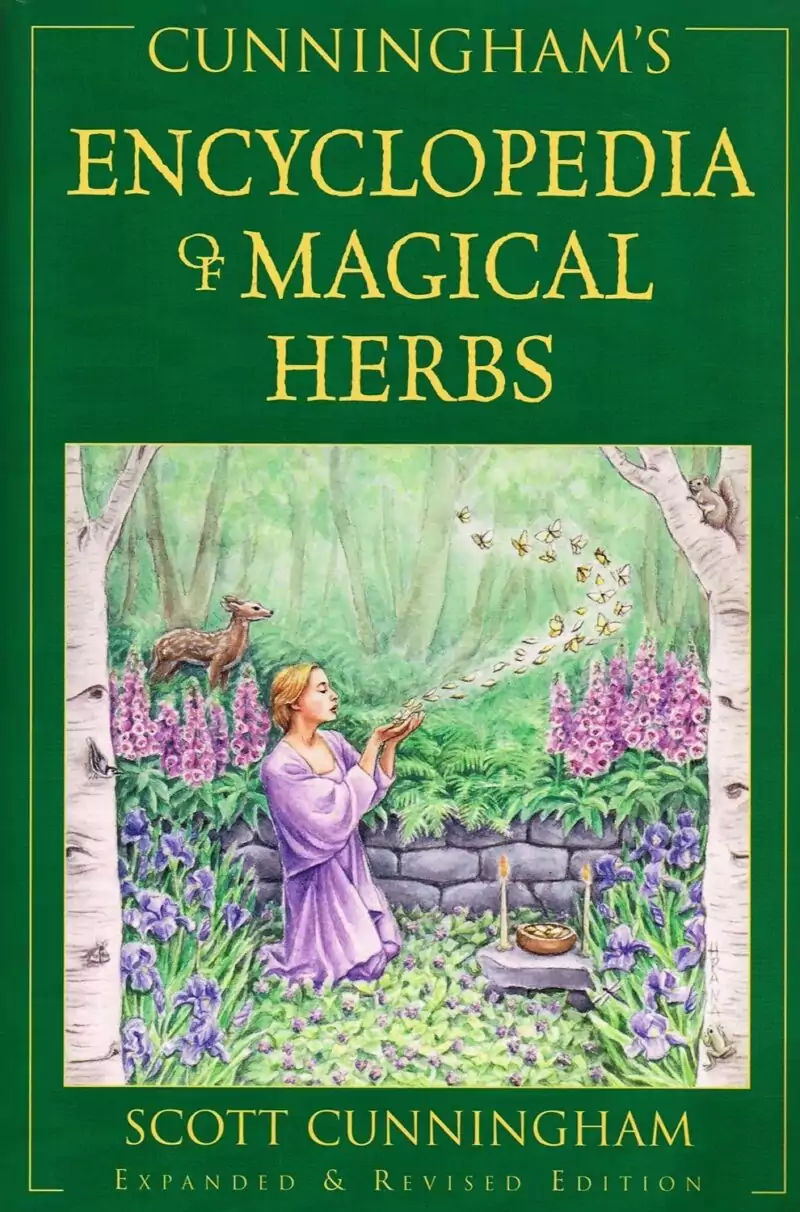
Cunningham’s Encyclopedia of Magical Herbs is, without qualification, the most consulted single-volume herbal reference in contemporary Wiccan and pagan practice. First published in 1985 by Llewellyn and expanded to a 15th-anniversary edition, it has sold over 500,000 copies. The book covers more than 400 herbs, flowers, trees, and common plant materials, each entry structured identically for quick lookup: common name, folk names, Latin species name, gender, planetary ruler, element, associated deities, magical powers, and ritual uses. That consistent format is what practitioners return to again and again.
The entry structure matters because it makes cross-referencing efficient. If a working calls for a plant governed by Venus and associated with the water element, you can identify candidates in minutes. The folk name index, which Cunningham himself described as one of the most valuable features, translates archaic spell-book terms: “bats’ wings” resolves to holly, “lapstones” to potato. This cross-reference alone makes the book worth keeping on the shelf, especially if you work from older published grimoires or inherited handwritten formulas.
Magical Herbs Encyclopedia: Depth of the Correspondence System
A strength of Cunningham’s system is the precision of its correspondence framework. Each plant is assigned a planetary ruler (Sun, Moon, Mars, Mercury, Jupiter, Venus, or Saturn), an element (Earth, Air, Fire, or Water), a gender polarity, and in many cases an associated deity from multiple traditions. These assignments follow a structured magical logic drawn from Western herbal tradition, with some influence from folk practices across Europe and the Americas. Practitioners who work in Wicca or ceremonial magic all use this reference as a common foundation.
This book is not a field guide or a medical herbal. It contains no botanical illustrations detailed enough for plant identification, no medicinal dosing information, and no foraging guidance. Its scope is specifically magical: how to select, prepare, and use plant materials within spell work, sachets, incense blends, and ritual practice. If you’re looking for a guide to aroma oil blending or a hands-on aromatics workbook, that is a different category of resource. As a magical correspondence reference, this book combines breadth, clarity, and usability. Browse my herbs and accessories collection to pair this reference with the actual botanicals it covers.
How to Use Cunningham’s Encyclopedia of Magical Herbs
Use this encyclopedia as a practical lookup tool for selecting and blending herbs in magical workings.
- Look Up by Intention First
Start with the tables at the back, which list herbs by magical purpose: protection, love, prosperity, purification. Select two or three plants whose correspondences align, then read their full entries before committing to one.
- Cross-Reference Folk Names Before Sourcing
Before purchasing any herb, check the folk name index to confirm the correct species. Many spell formulas use archaic names that refer to entirely different plants, and this index prevents dangerous or costly substitution errors.
- Build Blends Using Planetary and Elemental Alignment
For sachets, incense, or ritual baths, combine plants that share a planetary ruler or elemental association to reinforce a single magical intention. Cunningham's entry format makes this alignment visible at a glance for easy blending.
The Tarot Fellow Standard
I stock this title because it works well as a reference. It combines breadth, entry-level accessibility, and structured correspondence data in a single volume. It’s the book I recommend first to anyone building a serious magical practice with plant materials, and it’s the one most practitioners keep returning to even after adding more specialized texts. Take a look at my full books and journals collection for additional resources to build out your practice library.
Frequently Asked Questions
Yes. The entry format is consistent and readable, and Cunningham includes an introductory section on magical theory and herb preparation before the encyclopedia begins. No prior herbal or magical knowledge is needed to use it.
Cunningham's encyclopedia is a reference organized alphabetically by herb, covering 400 plants with correspondence data. Blackthorn's book is a working guide focused on aroma oil blending. They serve different purposes in a library.
No. This encyclopedia covers magical correspondences and ritual uses only. It does not provide medicinal dosing, safety information, or culinary guidance. A botanical or medical herbal is the appropriate resource for those topics.
The folk name index translates archaic ingredient names from older grimoires into botanical identities. For example, 'bats' wings' means holly. It makes the book essential for working with traditional spell formulas using old naming conventions.
This book has been so helpful especially with me learning more about the right herbs that work with and for my clients.