

Quick Specs
- Theme: Buddha, enlightenment, mindfulness
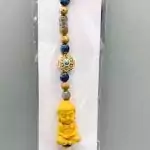
- Type: Pendant necklace
- Style: Spiritual and devotional jewelry
- Best for: Meditation practice, mindfulness reminders, respectful Buddhist-inspired wear
The Buddha as Symbol: Awakening, Compassion, and the End of Suffering
Siddhartha Gautama, the historical Buddha, was a prince of the Shakya clan in present-day Nepal who renounced royal life around the 5th century BCE, practiced intense asceticism, and attained enlightenment beneath a Bodhi tree at Bodh Gaya in present-day Bihar, India. The Sanskrit word “buddha” means “the awakened one,” referring not to a divine being but to a human who achieved complete understanding of the nature of suffering, its causes, and its cessation. This is the central insight of the Four Noble Truths, the foundational teaching that has shaped Buddhist philosophy across Theravada, Mahayana, and Vajrayana traditions for over two thousand years.
Buddha pendants carry different meanings depending on their design. A seated Buddha in the Dhyana mudra, with hands folded in the lap, represents deep meditation and the attainment of stillness. The Bhumisparsha mudra, with one hand touching the earth, depicts the moment of enlightenment itself. The Abhaya mudra, with the right hand raised in a gesture of reassurance, conveys protection and the absence of fear. In Mahayana Buddhist countries including Tibet, China, and Japan, wearing a Buddha pendant is a devotional act, a portable reminder of the Buddha’s path, rather than wearing a deity’s image for supernatural protection.
Wearing a Buddha Necklace in Modern Spiritual Practice
For practitioners who are not ethnic or cultural Buddhists, wearing a Buddha pendant is most respectfully framed as a genuine engagement with the teachings rather than purely aesthetic use. The Buddha’s image as a focal point for mindfulness, compassion, and non-attachment resonates across secular meditation communities, yoga traditions, and broader spiritual practice outside formal Buddhism. Many practitioners wear a Buddha pendant as a tactile cue during meditation, a reminder to return to presence when the mind wanders, or as a dedication piece worn during a period of focused practice or study.
The necklace makes a thoughtful gift for anyone who meditates, practices yoga, studies Buddhist philosophy, or has a connection to any of the many traditions influenced by the Dharma. Basic cultural literacy adds depth: the elongated earlobes on most Buddha depictions reference the heavy earrings of his princely youth, the topknot or ushnisha represents wisdom and spiritual attainment, and the serene downcast gaze signifies meditative absorption rather than sleep or indifference.
How to Use the Enlightenment Buddha Necklace
How to wear and use the Enlightenment Buddha necklace as a mindfulness and meditation tool.
- Choose a Meaningful Way to Wear It
Wear the Buddha necklace as a daily mindfulness anchor and reminder to return to presence. Many practitioners briefly touch the pendant before stressful situations as a grounding gesture, or hold it during breathing pauses as a meditation cue.
- Use as a Meditation Focus Object
Before seated meditation, hold the pendant in your palm and set a clear intention. After meditating, placing the necklace back on marks the transition from formal practice back into daily life, reinforcing the connection between both.
- Gift with Context and Care
When giving this as a gift, include a note about the mudra or posture depicted. Most recipients appreciate knowing whether the image shows the moment of enlightenment, a protective gesture, or meditative absorption, as each carries distinct meaning.
The Tarot Fellow Standard
A Buddha necklace is worth carrying because the image points somewhere real. The historical Siddhartha Gautama is one of the most documented contemplative figures of the ancient world, his teachings have been tested across cultures and centuries, and a pendant bearing his image carries that depth whether the wearer is a practicing Buddhist or simply someone who finds value in what the figure represents: the possibility of waking up. Browse my mixed genre necklace collection for more Buddhist and mindfulness pieces, and explore my statues collection for complementary figures and altar pieces.
Frequently Asked Questions
A Buddha pendant represents the historical Siddhartha Gautama, who attained enlightenment in 5th-century BCE India. The Sanskrit word buddha means awakened one. The pendant serves as a reminder of clarity, compassion, and freedom from suffering.
Wearing a Buddha necklace with genuine respect for the teachings is widely considered appropriate. Most Buddhist teachers distinguish decorative use from intentional wear as a mindfulness anchor. Approach with cultural awareness.
The Dhyana mudra, hands folded in the lap, represents meditation. Bhumisparsha mudra, one hand touching earth, depicts enlightenment. Abhaya mudra, right hand raised, conveys protection. Each posture reflects a key moment in Buddha’s story.
Yes. Many practitioners hold or touch the pendant before and after seated meditation as a grounding ritual. It serves as a tactile reminder of intention and a transition marker between formal practice and daily life, used alongside mala beads.
Reviews
There are no reviews yet