
Quick Specs
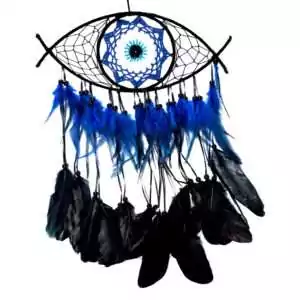
- Type: Evil eye dreamcatcher wall hanging with one hoop
- Size: 6 inches in diameter, 15 inches long
- Hoop: Blue-wrapped hoop with a blue thread web
- Eye: Stitched eye at the center of the web, in navy, white, light blue and black
- Trim: Five strands of cream-colored beads and fluffy blue feathers
One Blue Hoop and a Single Stitched Eye
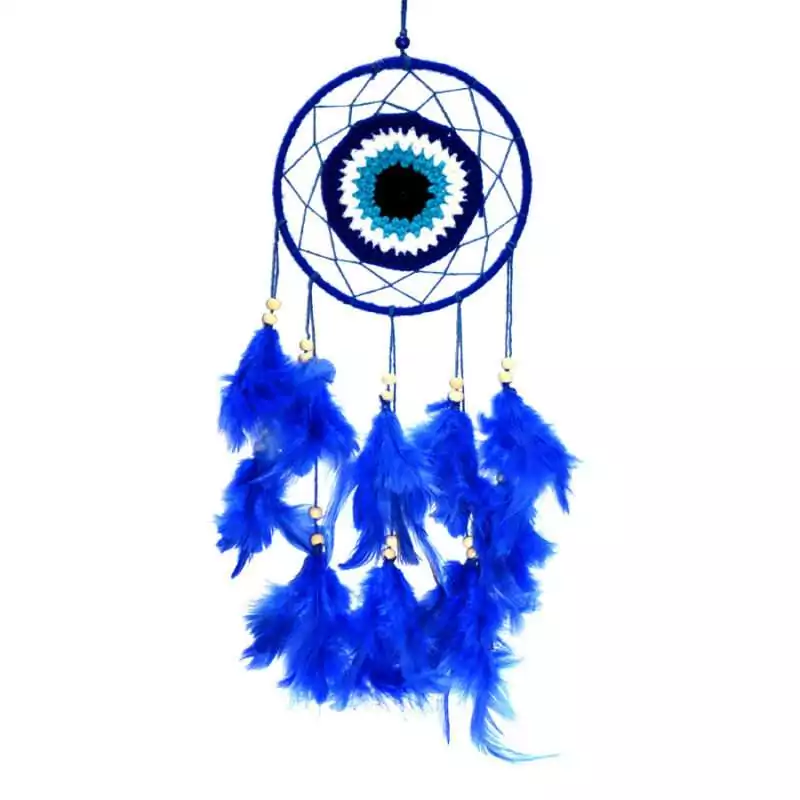
A single blue-wrapped hoop carries the whole design. A web of blue thread crosses it in a spoked pattern, and at the center sits a stitched eye: a navy outer ring, a scalloped white ring, a ring of light blue and a black pupil. Five strands drop from the lower rim, each with cream-colored beads above fluffy blue feathers, and they hang at different heights so the feathers fall in two loose tiers. A short cord and one small blue bead at the top form the hanger. The feathers are full and soft, with loose barbs that move in a draft. From hanger to feather tips the piece is 15 inches long and 6 inches in diameter. The royal blue of the feathers matches the wrapped hoop, and the cream beads add small points of light color along the strands. With one hoop and one eye, the piece is quick to read: a round blue frame, a bright eye at its heart and a fall of feathers beneath. The stitched rings have a textured surface that stands out from the flat web around them.
The stitched eye follows the nazar, the best-known form of the evil eye amulet. The evil eye is the belief in a curse brought about by a malevolent glare, usually inspired by envy, and glass eye beads are among the commonest amulets against it, found especially around the Mediterranean, Central Asia and the Middle East. The belief goes by many names: nazar in Turkish, mati in Greek, mal de ojo in Spanish and al-ʿayn in Arabic. A traditional nazar bead is handmade glass, made of a mixture of molten glass, iron, copper, water and salt, with concentric circles in dark blue, white, light blue and black. The web’s eye copies that sequence from the outside in, with a navy edge, a white ring, a light blue ring and a black center. In Turkish belief, blue acts as a shield against evil and absorbs negativity, and the ingredients of the bead are thought to shield people from evil as well. The hoop and the feathers come from another craft, the dreamcatcher, and the hanging joins the two as a decorative piece.
Practical Ways to Display It
Hang it where you’ll pass it every day: beside a front door, in a hallway, over a bedroom window or in a reading corner. At 6 inches across it suits a narrow stretch of wall, the side of a bookcase or the inside of a closet door, and the 15-inch drop gives the feathers room to move. A nail or a small hook takes the cord at the top. The blue shows best against a pale or neutral wall, and the cream beads pick up the tone of wood shelves. It also makes a simple gift for someone settling into a new room, since it needs no setup beyond a hook. Keep cords and feathers away from candle flames. For more pieces made to hang, see my wind chimes, sun catchers and dream catchers collection.
How to Hang and Care for the Blue Eye Dreamcatcher
Three steps cover checking the strands, hanging the cord and keeping the feathers in good shape.
- Check the Strands
Hold the hanging by the cord and let the five strands fall free. Run your eye down each one and look at how each bead and feather is attached. Feathers bend and lose color when rubbed, so keep your touch light, and if a feather hangs crooked, ease it back into place by the quill.
- Hang It and Let It Settle
Set a small nail or hook into the wall at the height you want and slip the cord over it. Let the piece settle for a minute, then check that the hoop sits level and the strands fall straight. Leave a hand's width on each side so the feathers can sway in a draft without catching on a door edge or a curtain.
- Keep Light and Damp Away
Conservation guidance says dyed and brightly colored feathers fade quickly under strong light and that dampness damages them. Hang the piece out of direct sun and away from showers, sinks and steam. Check the feathers once or twice a year for signs of moths or carpet beetles, which feather objects attract, and take the piece down before painting or cleaning the wall around it.
The Tarot Fellow Standard
I stock this dreamcatcher with one hoop and one eye because it is simple to hang and easy to place in a small room. The hoop-and-web form belongs to Anishinaabe culture, and the evil eye is a living folk belief in Turkey, Greece and many other places, so the piece is a decorative reference to two traditions, a way in and never a replacement for what their people teach. To learn what a dreamcatcher is and how one is meant to be made and given, begin with Anishinaabe teachers and makers. If the nazar is part of your family’s tradition, follow the customs you were taught. See my evil eye collection for more pieces that carry the eye.
Frequently Asked Questions
A traditional dreamcatcher was a willow hoop with a net, and early webs were made from sinew or plant cordage. An account of Ojibwe pieces describes nettle-stalk cord, with dark red yarn taking its place by the early 1900s. Hoops could be decorated with sacred items such as certain feathers or beads. This hanging uses a blue-wrapped hoop and thread, and the people who make traditional pieces are the best source on their materials and meaning.
Accounts describe nazars hung in houses, shops and cars, pinned to a newborn's clothing, worn as jewelry and used on horses. A reference work shows one on a newborn's hospital room door in Turkey and notes that nazars are found in or on houses and vehicles or worn as beads.
No. Sources describe two separate customs. The dreamcatcher comes from Anishinaabe culture, with the Ojibwe as the people in the recorded origin account. The evil eye belief is found across the Mediterranean, Central Asia and the Middle East, among other regions. This hanging joins them as a decorative design, and each part keeps the history of its own tradition.



Reviews
There are no reviews yet