
Quick Specs
- Material: Black soapstone, hand carved
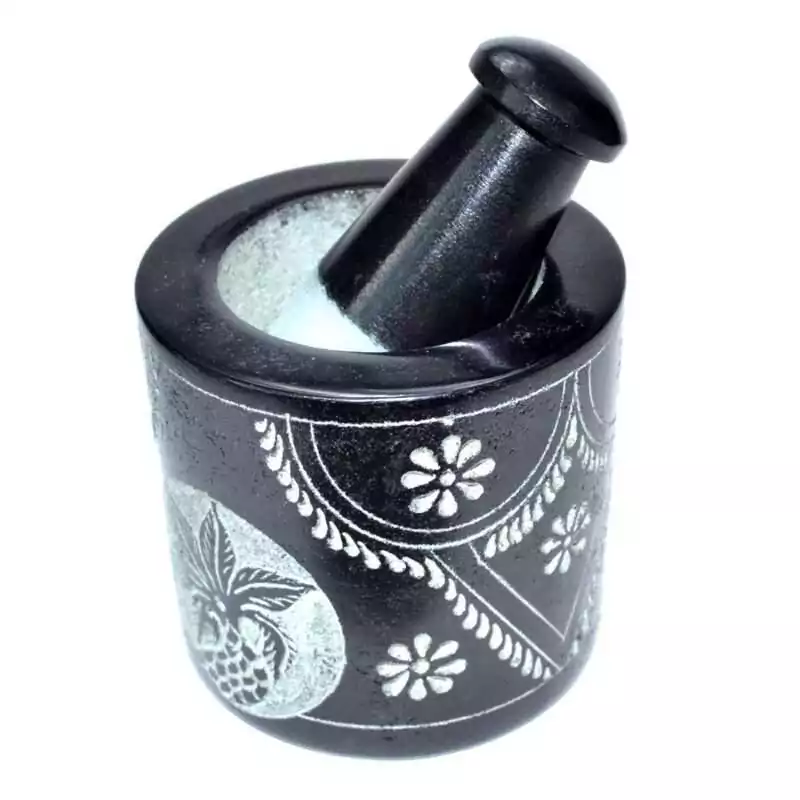
- Design: Floral engraving around the exterior bowl
- Size: Approximately 3 inches high by 3 inches wide
- Best for: Grinding dried herbs, resins, spices, and incense ingredients
A Hand-Carved Soapstone Mortar and Pestle for Working Herbs
A mortar and pestle is one of the oldest tools in any working herbal practice, older than most of the traditions that use it today, and soapstone has long been a favored material for the bowl specifically because of how it handles grinding. The stone’s density gives it enough weight and friction to break down dried leaves, resin chunks, and whole spices without the bowl skating across your work surface, while the surface stays cool and doesn’t absorb strong-smelling oils the way a porous wood bowl can over repeated use. This set carries a floral engraving around the exterior of the bowl, a garlanded band of small blossoms above a diagonal leaf motif, purely decorative and separate from the grinding surface itself, which stays smooth and unadorned for actual use.
At roughly 3 inches in both height and width, this is a working-size mortar meant for single-session batches rather than bulk grinding: a portion of incense resin for one working, a pinch of dried herbs for a sachet, whole spices for a kitchen-adjacent ritual blend. The pestle is carved from the same stone, weighted enough to do the work of crushing without you needing to lean into it. Like any carved soapstone piece, this one is hand finished, so small variations in the engraving depth and the bowl’s exact curve are normal rather than a defect.
Practical Uses for a Soapstone Mortar and Pestle
Grind resin incense (frankincense, myrrh, dragon’s blood) down to a workable size before blending it with other ingredients, crush dried herbs for a sachet or a working bath, or break whole spices down for a kitchen-witchcraft recipe that calls for fresh-ground rather than pre-powdered ingredients. The bowl’s small size makes it easy to portion exactly what a single working needs rather than grinding more than you’ll use. Browse my Herbs By Magical Use collection for the resins and herbs this mortar is sized to grind.
How to Use and Care for a Soapstone Mortar and Pestle
A soapstone mortar rewards a light touch and regular cleaning between different ingredients, especially when you’re grinding strongly scented resins.
- Grind with a Rocking Motion, Not Brute Force
Use a combination of downward pressure and a rocking or circular motion with the pestle rather than pounding straight down. This breaks resin and dried herb down more evenly and is easier on both the stone and your wrist than repeated hard strikes.
- Grind Resins Before Delicate Herbs
If you’re grinding both resin and delicate dried herbs in the same session, do the resin first and wipe the bowl clean before moving to anything you don’t want carrying a resin scent. Resin oils can linger in the stone’s surface texture even after a wipe-down, which matters if the next ingredient needs to stay scent-neutral.
- Clean Dry Between Uses
Wipe the bowl and pestle with a dry or barely damp cloth after each use rather than washing with soap and water, which can work into the stone over repeated washes and dull its surface. A dry brush works well for clearing fine powder residue from the bowl’s interior.
The Tarot Fellow Standard
I stock this mortar and pestle because grinding your own resin and herbs, rather than buying everything pre-powdered, actually changes how a working feels: freshly crushed frankincense smells different from resin that’s been sitting ground in a jar for months. The floral engraving makes it a piece worth leaving out on an altar rather than tucking away in a drawer between uses. Browse my Spellcraft, Witchcraft and Magic collection for the working practice this tool supports.
Frequently Asked Questions
Soapstone mortars are used for both culinary and ritual grinding in various traditions, and the stone itself is food-safe. If you plan to use the same mortar for both, grind ritual resins and food spices in separate sessions with a thorough dry cleaning between, since resin oils can leave a lingering scent that you likely don’t want carrying into a spice blend for cooking.
Soapstone’s density gives it enough weight to stay put on a work surface while you grind, and its non-porous surface doesn’t absorb oils and scents the way wood can over repeated use. Ceramic mortars can chip more easily and often have less grinding friction than soapstone’s naturally slightly textured surface.
At approximately 3 inches across, this is sized for single-working batches rather than bulk grinding: a portion of resin for one incense blend, a pinch of herbs for a sachet, a small handful of whole spice. If you regularly grind large quantities, a bigger mortar will serve you better; this size is built for precision, not volume.
Reviews
There are no reviews yet